page top



F
P
Apr 03, 2026
Apr 03, 2026
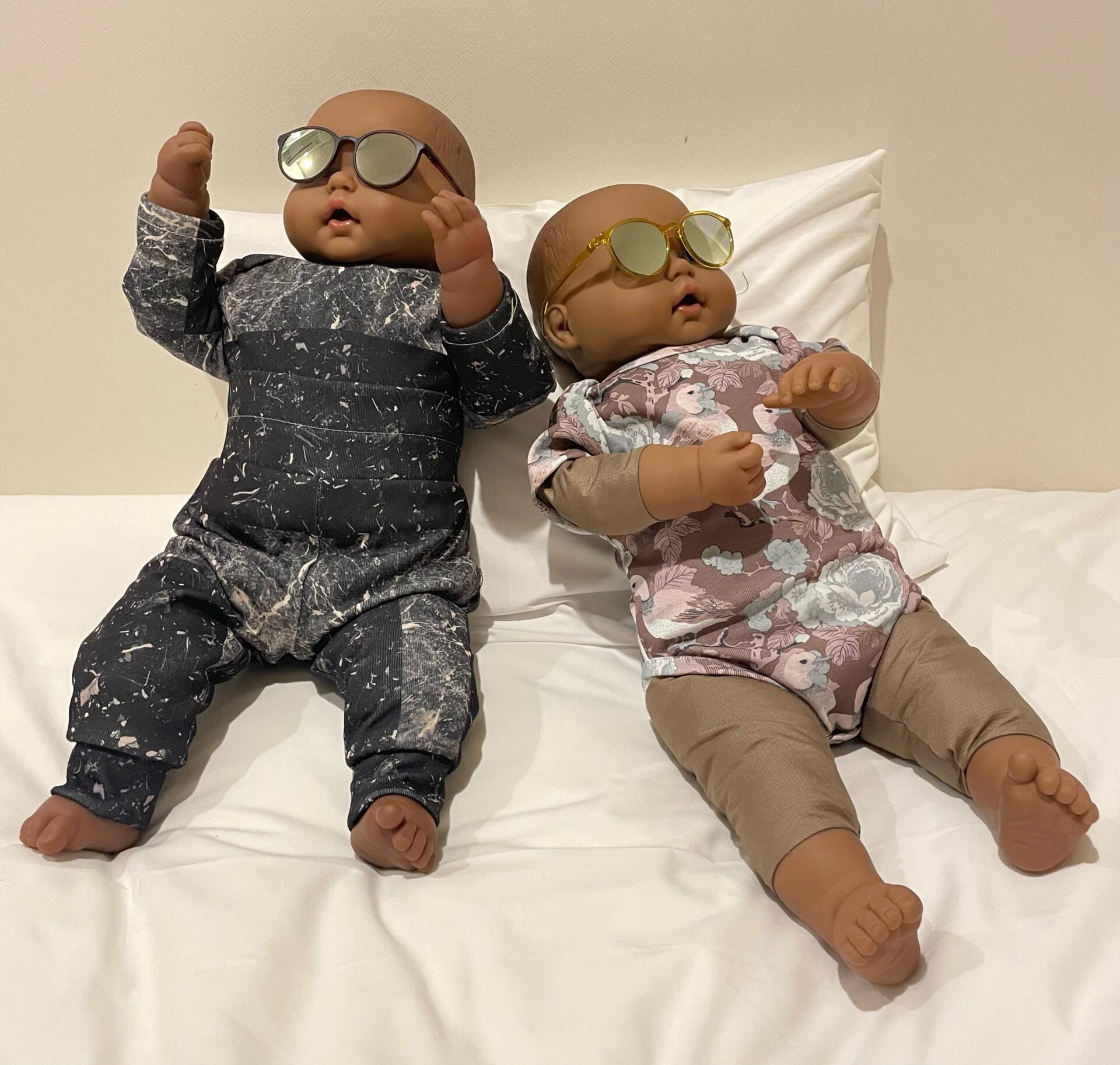
ロサンゼルス中心部の住宅街。
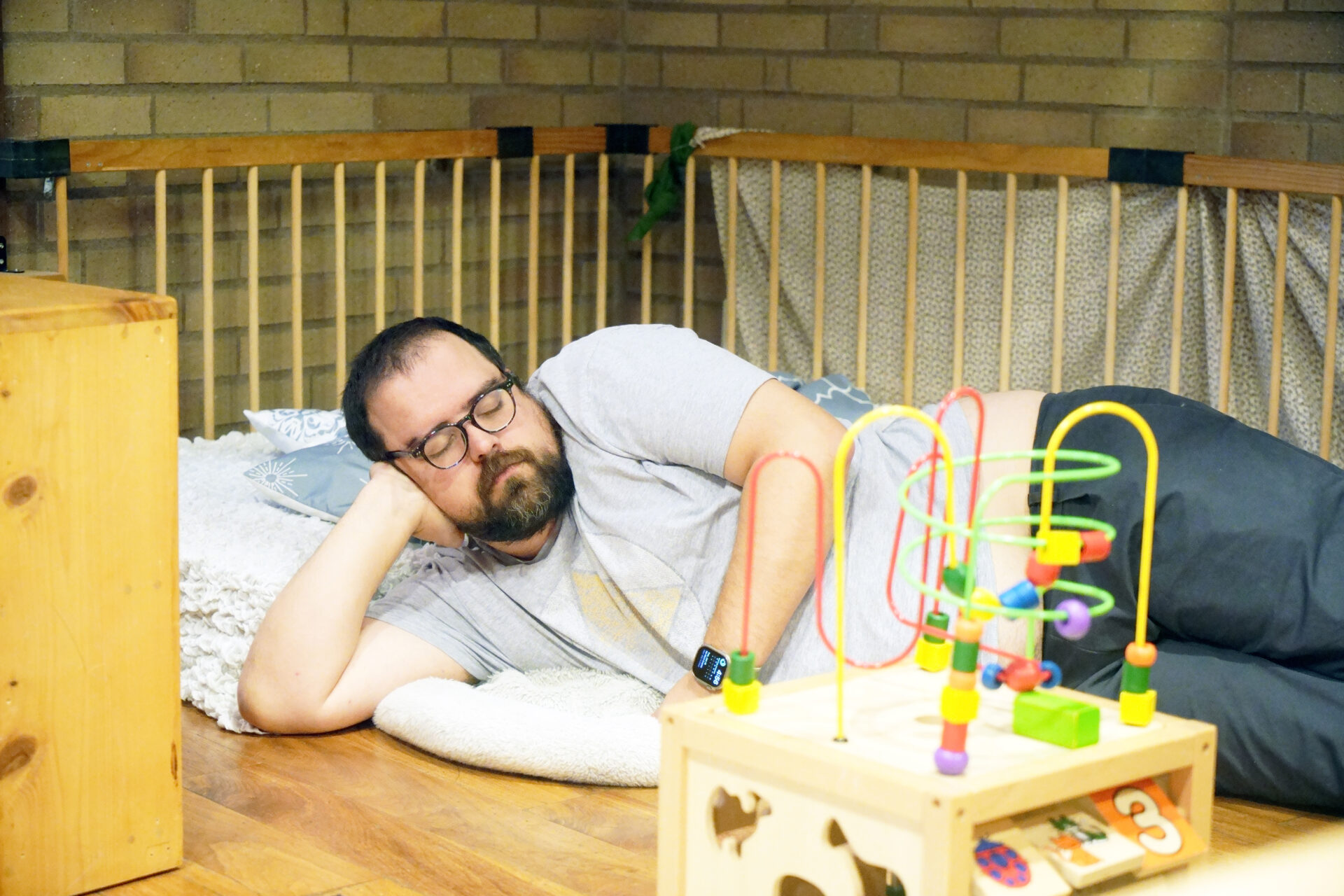
パフォーマンス・アーティストの荒川ナッシュ医は、日本とのオンライン会議に接続したまま、生後間もない双子のおむつを替えていた。
忙しく手を動かしながら、ひとつの問いが頭をよぎる。
「日本人はいつ日本人に、アメリカ人はいつアメリカ人になるのだろうか。」
In a sunlit residential neighborhood in central Los Angeles, performance artist Ei Arakawa-Nash was busy changing the diapers of his newborn twins while remaining logged into an online meeting with Japan.
As his hands moved quickly from one task to the next, a question crossed his mind:
When does one become Japanese? When does one become American?

Photo: 荒川ナッシュ医
Photo: Ei Arakawa-Nash
医とパートナーのフォレストは、2024年12月に代理懐胎によって双子を迎えた。日本にルーツを持つ日系一世のダディと、ヴァージニア育ちのアメリカ人のパパ、その二人のもとに育つ双子。この子たちは、どこで、誰として育つのか。
荒川ナッシュ医は1977年福島県いわき市に生まれた。学童保育に勤める母と中学教師の父、2歳上の兄。地方都市の典型的な家庭で育った。保育園時代の記憶はほとんどない。だが中高では生徒会長を務め、早くから集団の中で役割を引き受ける子どもだった。1998年、20歳で渡米。ニューヨークでパフォーマンス・アーティストとしてのキャリアを築く。
フォレスト・荒川ナッシュは1987年バージニア州に生まれた。幼少期は、兄と妹とともに自宅裏の森で遊んで過ごした。「森の中のいろんなものが遊び相手だった」という。母はイタリアの幼児教育レッジョ・エミリア思想のプリスクールを運営し、家は常に誰かの創造性で満ちていた。大学卒業後、2008年に現代アートの展覧会の記録を国際的に配信するプラットフォーム「Contemporary Art Daily」を立ち上げ、編集長として展覧会情報の掲載から、世界の展示会場のデータベース化までをこなした。2015年にロサンゼルスに移住し、庭付き3LDKの一軒家で柴犬と静かに暮らしていた。
二人の出会いは2010年にさかのぼる。共通の知人を介して互いの存在は認識していたが、最初の接点はフォレストがニューヨークで行った医への取材だった。それから約10年後、二人とも長い恋愛関係に終止符を打ったタイミングで再会し、交流は自然にパートナーシップへと変わっていった。2019年1月に交際を始め、東海岸と西海岸を行き来をする日々を過ごすようになる。やがて医は8月にはロサンゼルスへの移住を決意した。この決断は、フォレストを含む周囲を驚かせた。
In December 2024, Ei and his partner Forrest Arakawa-Nash welcomed their twins through surrogacy. Raised by their same-sex parents—one a first-generation Japanese American, the other born and raised in Virginia—where and how will they first encounter the world, and in what ways will it shape who they become?
Ei Arakawa-Nash was born in 1977 in Iwaki, Fukushima Prefecture, Japan. He grew up in what might be described as a typical middle-class family in a Japanese countryside household: a mother who worked in after-school childcare, a father who taught junior high school, and a brother two years his senior. With both parents working full-time, he was enrolled in a Japanese public daycare by the age of one. By junior high and high school, he was already taking on responsibility, serving as student body president and learning early how to operate within a group. At twenty, in 1998, Ei moved to the United States and built his career as a performance artist in New York.
Forrest Arakawa-Nash was born in 1987 in Virginia, USA. He spent much of his childhood playing in the woods behind his house with his brother and sister. “Most of my playmates were in the forest,” he recalls. His mother ran a small preschool inspired by the Italian early childhood education philosophy of Reggio Emilia. Their house was always filled with someone’s creativity. After graduating from college, Forrest founded Contemporary Art Daily in 2008, an online platform that distributed documentation of contemporary art exhibitions around the world. As editor-in-chief, he oversaw the publication of exhibition listings while also developing a global database of exhibition venues. He moved to Los Angeles in 2015, living quietly with his Shiba Inu in a three-bedroom house with a sunny garden.
Their paths first crossed in 2010. They were aware of each other through mutual acquaintances, but their first direct encounter came when Forrest interviewed Ei in New York. Nearly a decade later, at a moment when both had recently ended long-term relationships, their path reconnected. Their interactions naturally evolved into a partnership. They began dating in January 2019, shuttling back and forth between the East and West Coasts to spend time with each other. That August, Ei made the decision to move to Los Angeles—a choice that surprised almost everyone around him, Forrest included.
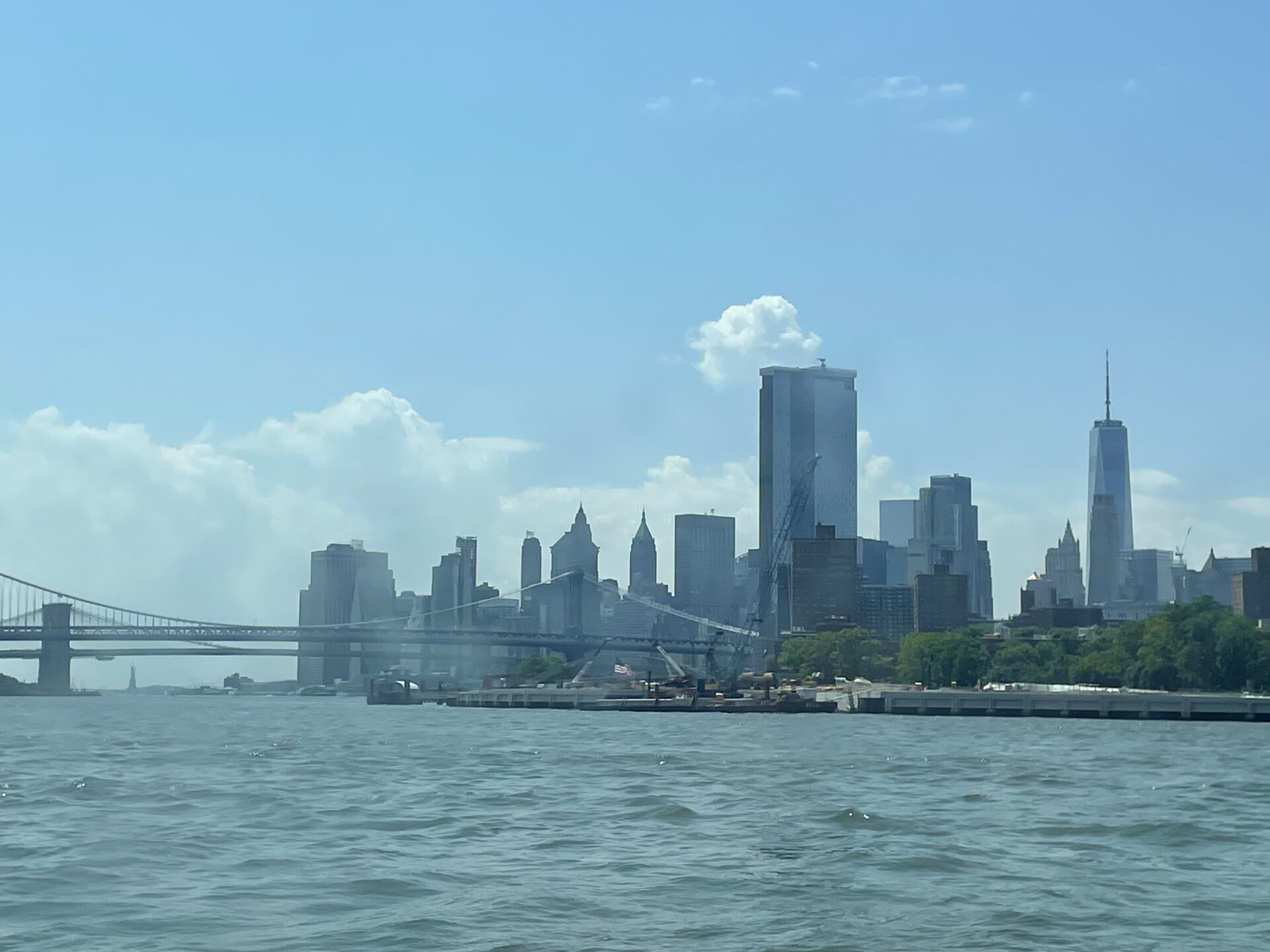
Photo: 荒川ナッシュ医
Photo: Ei Arakawa-Nash
医は20代と30代を過ごしたニューヨークを第二のふるさとだと言っていた。仲間と共同で暮らしたブルックリン中心部のベッドスタイ地区にある元縫製工場のロフトは、常に雨漏りしていたが家賃は相場の半分だった。ビルのセントラルヒーティングは水道凍結を防ぐために一日数時間しか作動しない。甲状腺の弱い医は、毎年喉が腫れ上がるほどの風邪をひいた。
しかしそんなタフな生活環境の中でも、友達や恩師、アーティストとしてのキャリアの基盤の全てがあるニューヨークを離れることは「一度も考えたことがなかった」という。だが40代に突入し、フォレストとの関係性が深まるうちに、ニューヨークを離れる決意をした。
「結果、QoLが爆上がりしました」
米国に移住して21年目、初めて冬のない気候で過ごせた。引っ越した月、医は米国国籍を取得する。さらにその翌月、世界はパンデミックによるロックダウンが始まった。国家、移動、自由が一斉に凍結された時間の中で、二人は「家族」を作ることを話し始めた。
もともと、医はゲイであることから子どもを持つ将来は考えたことがなかった。「パフォーマンス・アートは儚いメディア。死んだ後何も残らないのも、らしいかな」 しかし40代になると周りのアーティストの友人たちは子育てのために郊外へ引っ越したり、母国に帰国していった。フォレストの両親は、二人に熱心に代理懐胎を勧めてきた。
ロサンゼルスに移住してから医はアート・センター・カレッジ・オブ・デザインでフルタイム教員に着任した。中心部から北東郊外に車で20分ほどに位置するパサデナ市にある美大だ。授業で若い学生を教える立場になった。人生で初めて得る定期収入は、穏やかな暮らしをもたらした。
New York, Ei often said, was his second hometown. In Bed-Stuy, Brooklyn, he had lived communally in a former garment factory turned loft. The rent was half the market rate, but the roof leaked constantly. Central heating ran only a few hours a day, just enough to keep the pipes from freezing. With a weak thyroid, Ei caught severe colds every winter—serious enough that his throat would swell shut. Even so, he says, he had never once considered leaving the city. Friends, mentors, and the foundations of his artistic career were all there.
It was only in his forties, as his relationship with Forrest deepened, that the idea of leaving New York became a possibility. “The result,” Ei says, “was a dramatic, almost startling transformation in my quality of life.”
Twenty-one years after first moving to the United States, he experienced a winterless climate for the first time. The month he relocated, Ei obtained U.S. citizenship. The following month, the world went into pandemic lockdown. As nations, movement, and freedom froze simultaneously, the two began to talk—quietly, and seriously—about building a family.
Originally, Ei had never imagined having children. As a gay man, the future he envisioned did not include parenthood. “Performance art is an ephemeral medium,” he once said. “Nothing remains after you’re gone. Somehow, that feels about right.”
In his forties, however, something began to shift. Artist friends started moving to the suburbs for childcare, or returning to their home countries. Forrest’s parents were persistent in encouraging the couple to consider surrogacy.
After relocating to Los Angeles, Ei accepted a full-time teaching position at ArtCenter College of Design, a private art school in Pasadena, about a twenty-minute drive northeast of the city center. Living in a residential neighborhood in central Los Angeles, he found that teaching younger students full-time brought a new rhythm to his life. For the first time, he had a stable income. It made daily life calmer and more predictable.
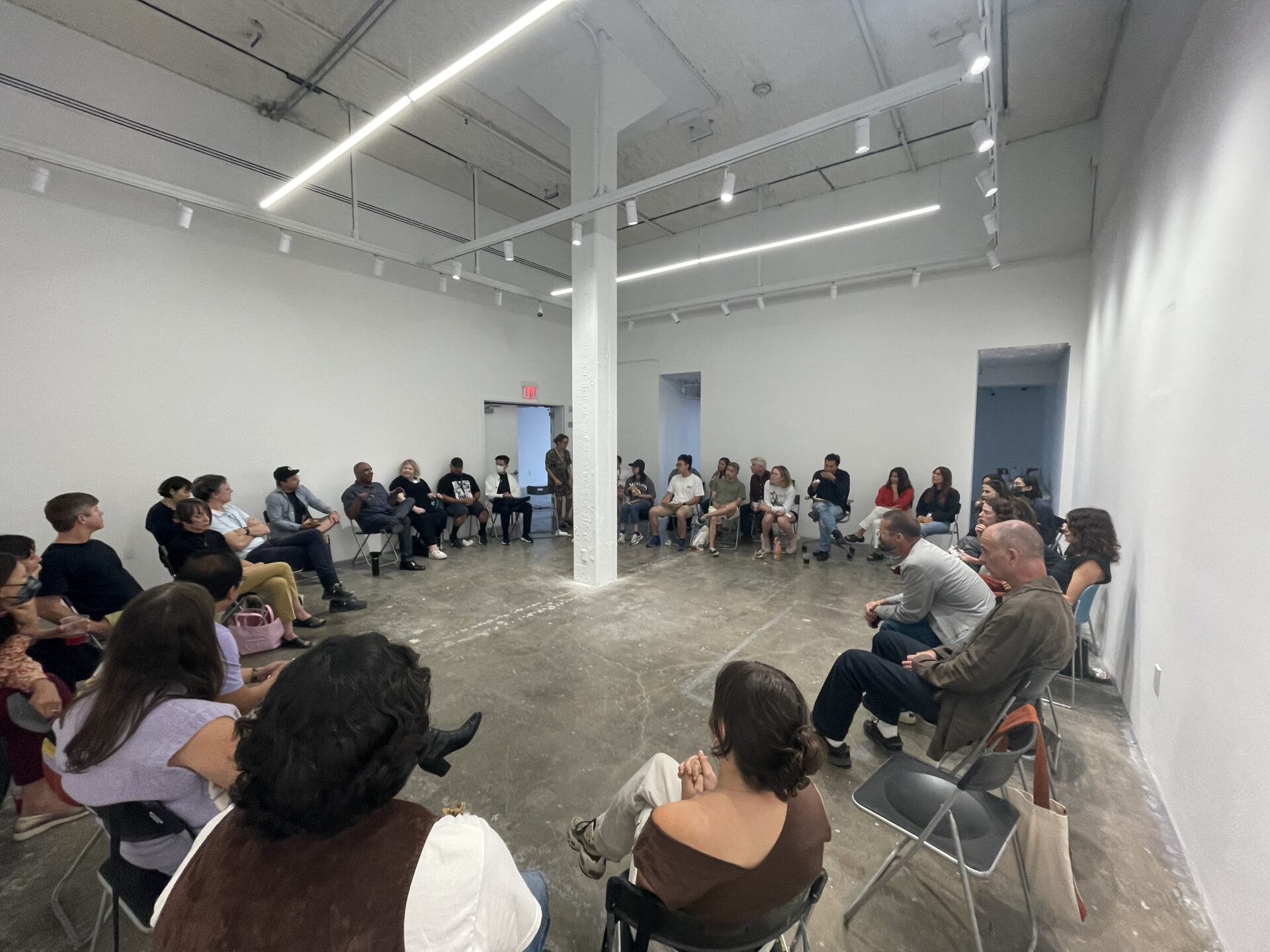
Photo: 荒川ナッシュ医
Photo: Ei Arakawa-Nash
子どもを育てることが自然と現実味をおびてきた。しかし、育児に時間を取られるなか、アーティストとしてのキャリアは並行できるのだろうか?パフォーマンス・アーティストとして世界中の美術館や国際展を飛び回ったニューヨーク時代、年間150日以上を米国外で過ごした。ゲーム感覚で2006年から貯め続けたユナイテッド航空のマイルは、2022年に最上級のミリオンマイラーへ到達していた。その当時と比べると移動は多少なりとも減ったものの、米国外での活動の場は広がる一方だ。2026年5月には第61回ヴェネチア・ビエンナーレ国際美術展の日本館代表として参加が決定。翌2027年には日本での凱旋展覧会も決まっている。これから家族を持つこと、この世界に子どもを迎えること。二人は何度も慎重に話し合いを重ね、やがて心を決めた。
「新たな人生の冒険になるかな?」
願ってもいない双子の誕生を喜ぶのは、フォレストの両親といわき在住の医の高齢の母だ。遠くいわきで暮らす母の時間軸と、双子の成長曲線。その重なりを少しでも長く保ちたい。二人は日本での短期育児を現実的に考え始めた。
Raising children, once abstract, began to feel possible.
Still, one question lingered: could an artist’s career run parallel to parenting?
During his New York years, Ei traveled constantly for performances, museum projects and international exhibitions, spending nearly half the year outside the United States. What began as a game—accumulating United Airlines miles since 2006—culminated in Million Miler status in 2022.
His intense travel schedule has slowed since then, but his international work has only expanded. In May 2026, he is set to represent Japan at the 61st Venice Biennale. A major exhibition in Japan is scheduled to follow in 2027.
Starting a family, bringing children into the world—these were decisions the couple discussed carefully, repeatedly, until they were ready. “Hey, this could be a new adventure in life. Why not?” Finally they made the decision of a lifetime.
The arrival of the twins was celebrated most enthusiastically by Forrest’s parents, and by Ei’s elderly mother who lives in Iwaki, Fukushima. The couple wanted as much overlap as possible between their children’s earliest years and their parents’ later years. Therefore, the idea of spending a short period raising the children in Japan began to feel realistic.
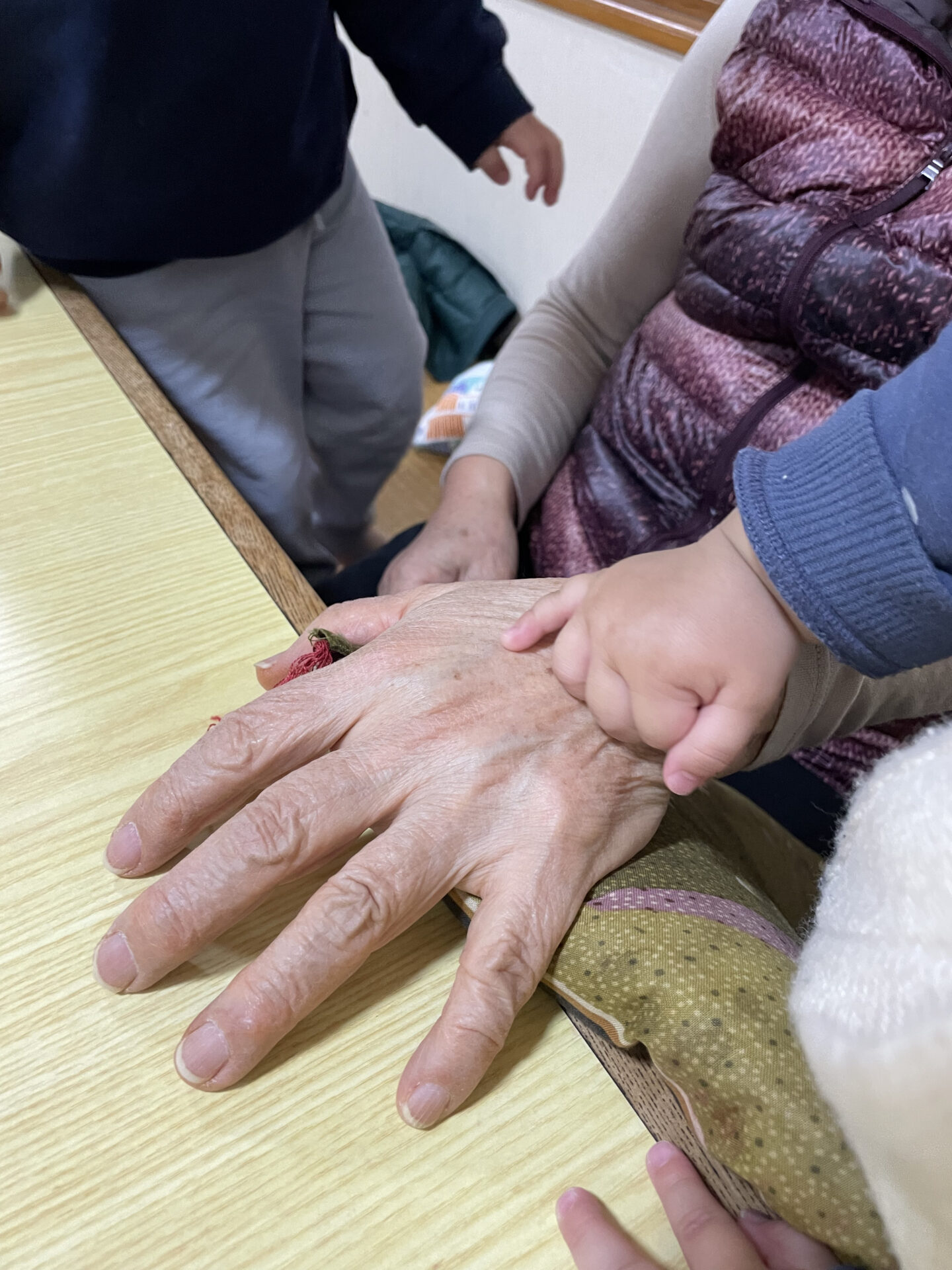
Photo: 荒川ナッシュ医
Photo: Ei Arakawa-Nash
初めての双子育児に奮闘する日々の中で、二人には共通の願いがあった。
「子どもたちに、日本の育児や教育空間を体験してほしい」
言語だけではない。文化、空気、集団のリズム、たとえば日本特有の路地の狭さや空間、そして「出汁とか定食とか、そういうのとかね」——それらを幼児期に身体で知覚してほしい。理想を言えば、保育園から大学までそれぞれの段階で日本で学ぶ経験をさせたい、そう医は考えていた。しかし現実には制度と費用の壁があった。
医は米国籍を取得する際に、日本の制度上、日本国籍を放棄せざるを得なかった。そして代理懐胎は日本の制度には存在すらしない。その結果、双子は「日本国籍の子ども」という枠組みの外側に置かれることになった。
日本の義務教育は小学校から中学校までは無償で、東京都では18歳まで医療費助成があるなど、子育て支援は手厚い。なかでも幼児保育制度は国際的に見ても鉄壁の福利厚生だ。国籍を問わず、日本に住民票があり保護者が共働きであれば、朝8時から夕方6時まで無償で子どもを預けることができる。多くの園には調理室があり、年齢に応じた和食中心の給食が提供される。東京都在住の未就学児約52万人のうち、およそ6割にあたる32万人が行政の支援する保育園に通っている。共働き、親族が遠方に住んでいる、シングルファミリー、介護中といった条件を満たせば、ほぼすべての家庭に門戸が開かれている。
一方、米国には日本のような行政による無償幼児保育制度は存在しない。低所得層向けの就学前教育の補助システムや就労支援はあるものの、全家庭を対象としたサービスには至っていない。乳幼児のケアは、必要に応じてベビーシッターを自宅に呼ぶのが一般的だ。ロサンゼルスのシッター時給は平均で30ドル(約4,800円)前後。双子の場合、全ては単純に2倍になる。二人とも頼れる両親や親戚は遠方だ。いまは幸運なことに時給25ドル(約4,000円)で日本語が話せるベビーシッターを週に数時間依頼し、大学の仕事や在宅業務をこなすが、費用面の負担は重くのしかかってくる。
Amid the exhaustion of first-time parenting twins, the couple shared a quiet hope. They wanted their children to have as much of their childhood in Japan as possible, to absorb not only the language, but the culture—the air, the rhythm of groups, the narrow alleys and spatial density unique to Japan and to experience these elements physically from an early age. Even food: “dashi broth, set meals in a Japanese local diner, that sort of thing,” Ei said with a grin.
Reality, however, was not so simple. Systemic and financial barriers stood in their way—ones they had never anticipated.
Under Japanese law, when Ei acquired U.S. citizenship, he was required to renounce his Japanese nationality. The twins were born in the United States and are American citizens by birth. Yet Japan, where surrogacy remains legally unrecognized and nationality is determined by parentage, offered no equivalent recognition. In the eyes of the law, Ei was no longer Japanese—and neither, therefore, were his children.
This means the twins lacked the jūminhyō—the residency registration that functions as the key to Japan’s social support system. In Japan, it was a communal masterpiece of public service—if only they could find a way inside.
Japan’s government-subsidized daycares (both public and privately run) are treated not as educational institutions, but part of the social welfare system. Enrollment is limited to families who can demonstrate need, typically because both parents work full-time. Overseen by the Ministry of Health, Labour and Welfare rather than the Ministry of Education, these facilities function less as standardized institutions and more as collective support for families.
For children with a jūminhyō whose parents work full-time, daycare is largely subsidized, often making it virtually free on weekdays from morning to evening, with freshly prepared Japanese meals cooked on site. Of approximately 520,000 preschool children in Tokyo, around 320,000 attend such daycares.
In LA, childcare was a staggering private expense. While there are programs for low-income families, infant care is typically handled privately. In Los Angeles, they must rely on babysitters who typically charge around $30 an hour. With twins, everything doubles. For now, they rely on a Japanese-speaking babysitter who helps a few hours a week at $25 an hour. Even so, the financial strain is significant.
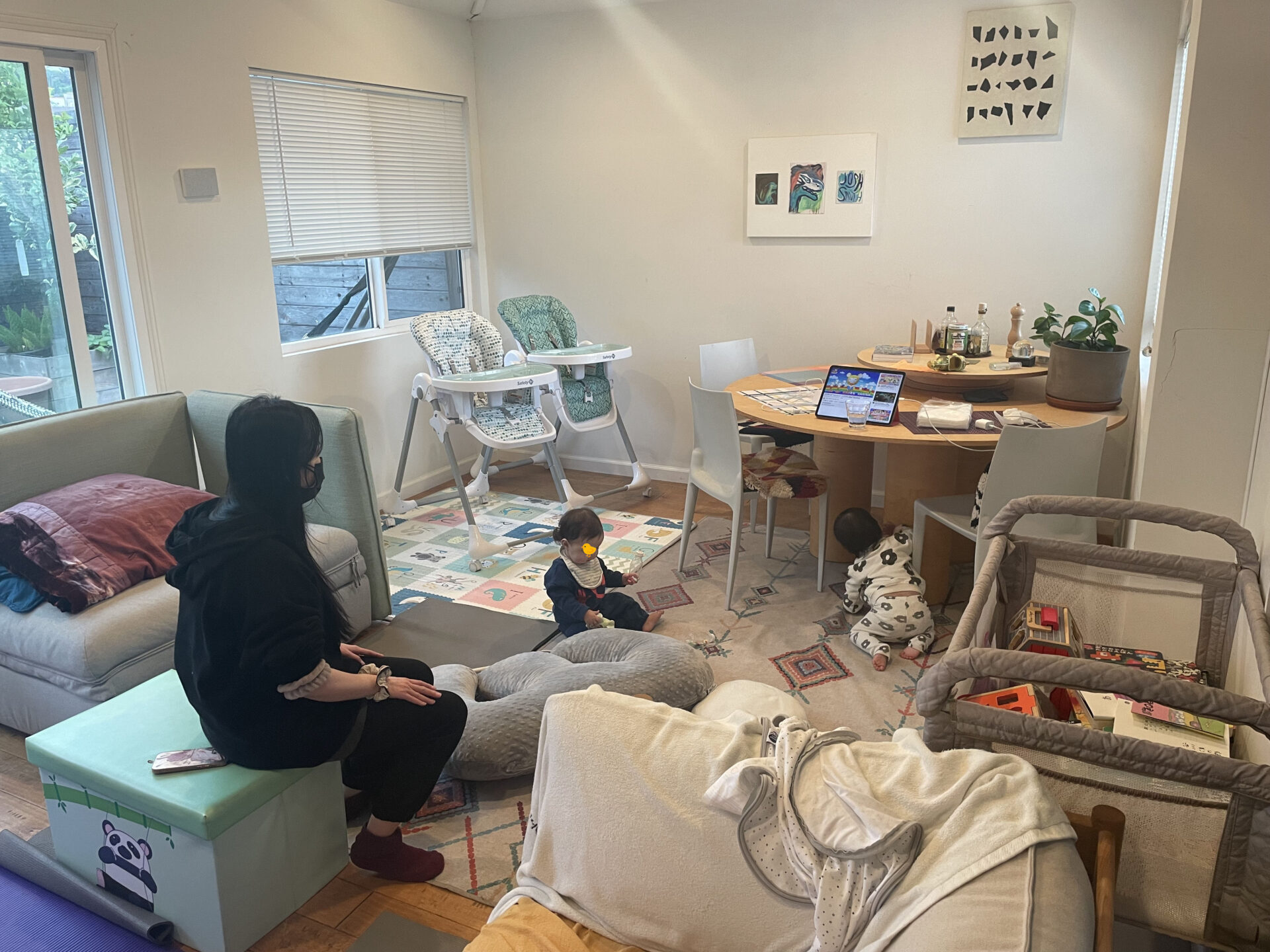
Photo: 荒川ナッシュ医
Photo: Ei Arakawa-Nash
彼らが住むエリアの家賃は月平均5000ドル(80万円)で、4人家族の平均生活費は100~180万円/月だ。二人の世帯月収は9000ドル(140万円)、年収にして約11万ドル(1700万円)と不定期のギャラリーや作品の収入が年2万ドル前後。東京都の40代の年収中央値700万円から考えると倍以上だが、4人家族を養うには決して余裕はない。大学教員としての収入は安定しているものの、アートは社会情勢の影響を受けやすく、収入の振れ幅も大きい。
ロサンゼルス在住の年収24万ドル(約3700万円)の友人アーティスト夫婦は、子ども二人の日本の保育園のような保育サービスに毎月3000ドル(約47万円)を支払っている。とてもじゃないけど彼らの収入では現実的ではない。育児支援の乏しさと費用の高さから、欧州へ移住するアーティスト仲間もいた。ブルックリン時代の友人は、5歳の子どもを連れ、妻の母国スウェーデンへ移住した。東京での生活費用は、家賃や物価が上昇しているとはいえ、行政サポートのある保育園という選択肢が存在しない米国に比べれば保育費の差は歴然だ。日本で数カ月間、子育てをしながら仕事を続けることは、保育費、移動費、滞在費を含めても、決して非現実的な選択ではなかった。
生活が不安定なアーティスト世帯も、これだけの支援があれば子どもを持つことを考えられるかもしれない。日本に住民票さえあれば。
しかし、住民票のない子どもにも無償ではないものの「一時保育」という柔軟な制度が存在することを二人は知った。大学が夏季休暇に入る5月から8月の間の1カ月、医は日本でプロジェクトを行い、フォレストはフルリモートで対応する。その間、双子を日本の保育園に預ける——理論上は完璧だった。
Rent in their area averages $5,000 a month, and a four-person household in Los Angeles typically spends between $7,000 and $12,000 monthly. Their combined monthly income is about $9,000, with additional irregular income from art sales and commissions. Art income is often unstable, as it is highly sensitive to social and economic conditions. While Ei’s teaching position is stable, raising a family leaves little margin.
A friend—an artist couple earning $240,000 annually—pays $3,000 a month for childcare comparable to Japanese daycare. For Ei and Forrest, that was simply out of reach. Some artist friends have relocated to Europe for better childcare support. A former Brooklyn loft mate moved to his wife’s home country Sweden with their 5 year old.
So, raising children in Japan for a few months—factoring in childcare, travel, and lodging—did not seem impossible.
If only the twins had a jūminhyō.
Then they learned that a small number of daycares accept temporary enrollment, typically reserved for families facing sudden disruptions, such as returning from overseas or caring for an ailing parent, and in some cases enrollment is open even to those without a jūminhyō, though without government subsidies and therefore not free.
From May to August, during the university’s summer break, they’d be based in Japan, Ei could continue his artistic projects while Forrest worked remotely, and the twins could attend daycare for a month while they worked, experiencing what’s uniquely possible in Japan — Theoretically, it seemed a perfect plan.
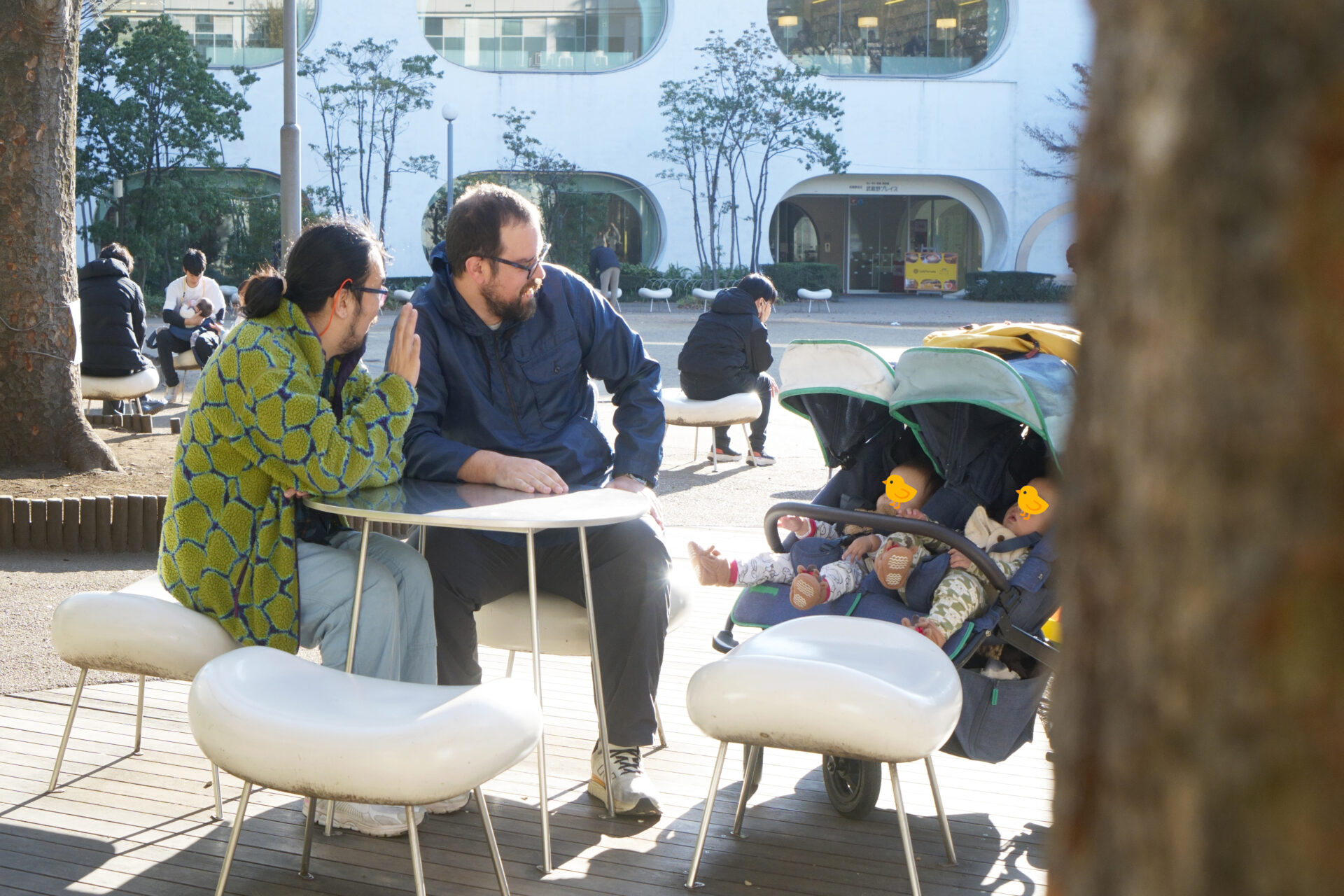
二人は都内の一時保育が可能な保育園を三つに絞り込んだ。通常、自宅や通勤ルートに最適な条件から三園を選ぶが、二人にとっては東京都全体が対象となり候補は膨大で、選定作業は想像以上に骨が折れた。そうして選ばれた三園は、保育方針も立地条件もまったく異なる園だった。医の母、美和子も同行し、三日間で三園すべてを回る計画を立てた。
初めての日本の保育園見学。日本社会で、二人のパパとダディがいる子どもは、他の保護者や子どもたちに受け入れられるのだろうか?言葉がわからなくても短期間で友達ができるのだろうか?おもちゃとか内装が水色とピンクのペアで分かれてたらどうしよう。
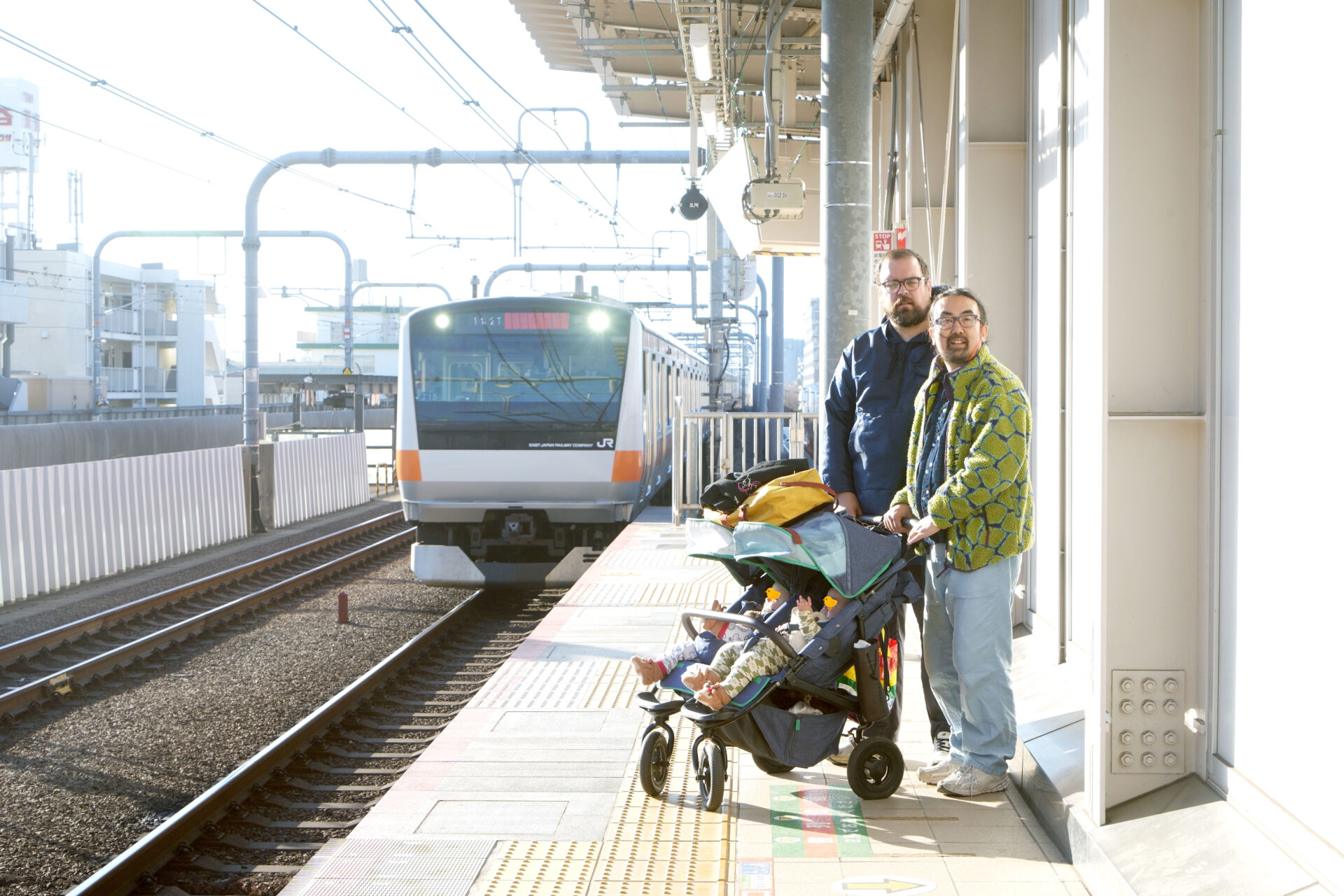
緊張のせいかベビーカーを押す手に自然と力が入った。しかし育児は制度ではなく、まず移動の問題として立ち現れた。
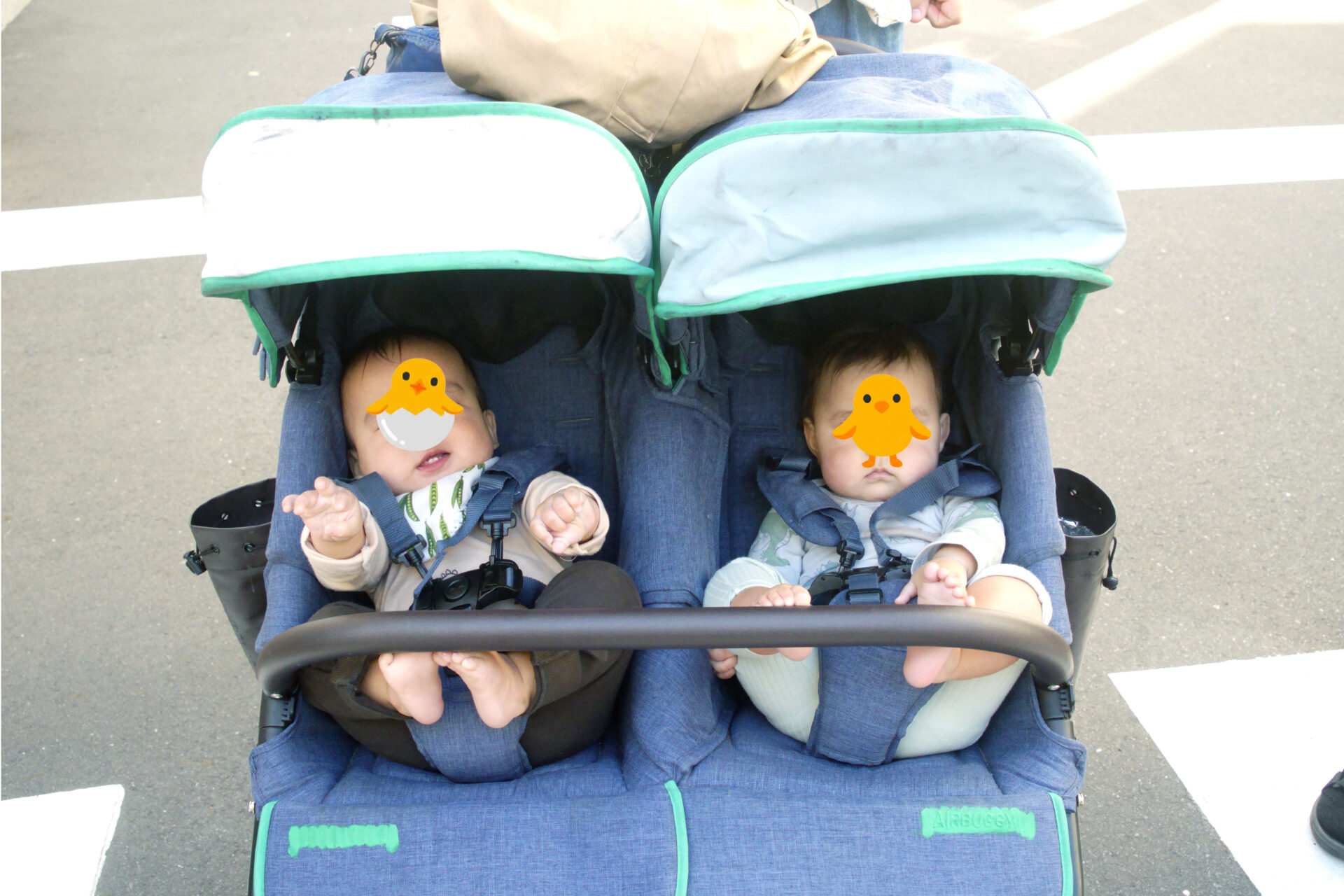
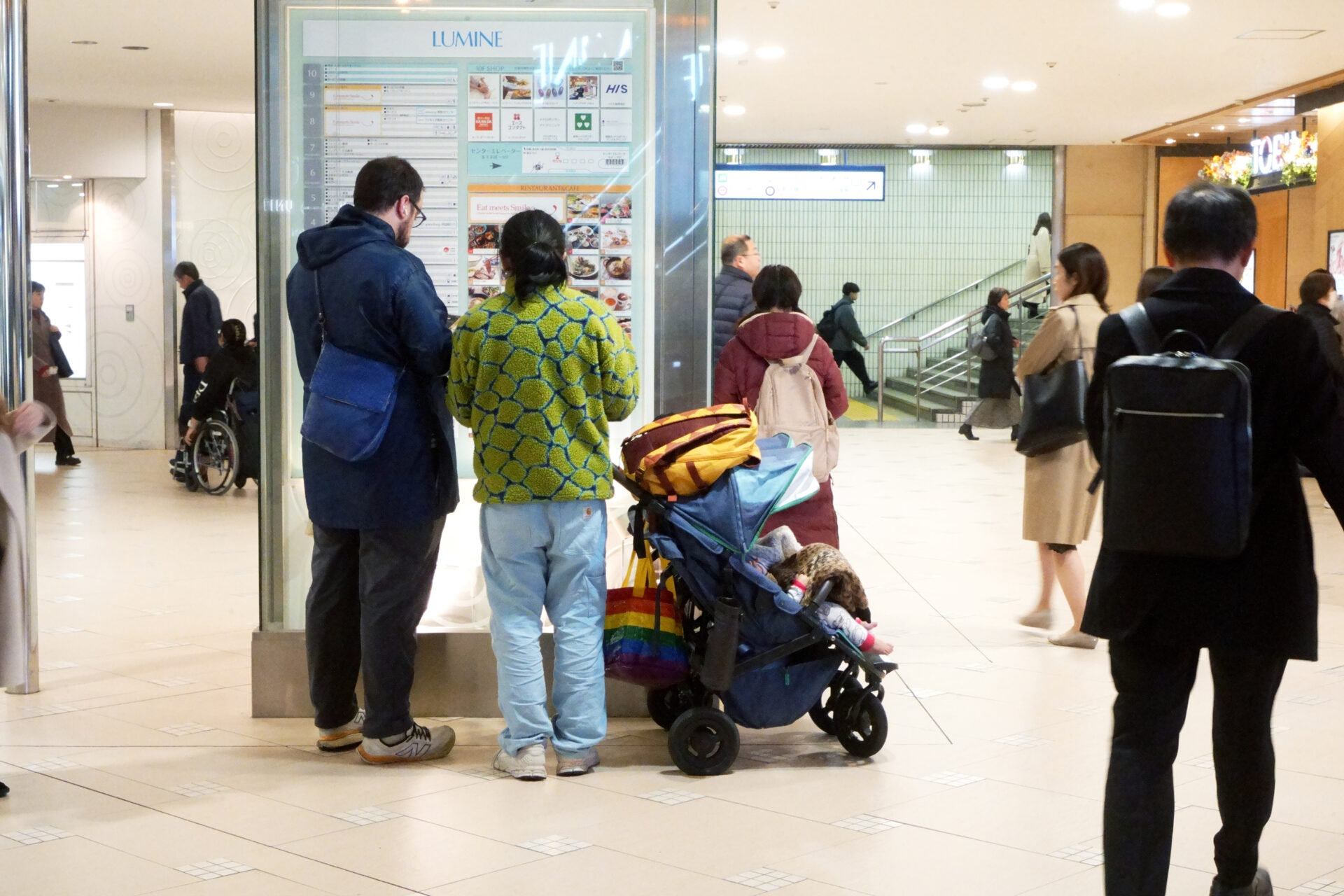
初めて双子とともに来日した日本は、移動の段階で別の顔を見せた。日本が誇る新幹線には、幅1メートル弱のダブルベビーカーで乗車可能な扉は1つしかないことも初めて知った。秒刻みで発車する新幹線の発車ベルが鳴り響く中、双子を片手に抱えたまま、ベビーカーと手荷物を全て投げ込み、転がり込んだ。「アクションムービーのような光景だった」とフォレストは振り返る。
東京の地下鉄でも双子用ベビーカーでの移動は想像以上に大変だった。
Thrilled with the plan, the two began working through an overwhelming list of government-subsidized daycares in Tokyo that accepted temporary enrollment. What most families would normally choose from among three nearby options expanded, for Ei and Forrest, to more than a thousand centers spread across all 23 wards. From that vast range—temple-affiliated, church-based, food-focused, or nature-oriented—they managed, at last, to narrow their search down to three.
Each required a pre-interview in November. Ei and Forrest took time off, booked flights, and carefully mapped out three visits over three days in Tokyo, joined by Ei’s mother, Miwako. The twins—a boy and a girl—were about to visit Japan for the first time and have their first encounter with a daycare. As the plan solidified, an unexpected nervousness crept in.
Would children with two fathers be accepted? Would the twins find friends without the language? What if the toys and playrooms were quietly divided into pink and blue?
But parenting in Tokyo revealed itself not first as a cultural issue, but as a logistical one.
Tokyo’s 23 wards form a vast yet tightly packed metropolis, home to roughly 10 million people in an area slightly smaller than New York City. Although they had spent some time in Tokyo, traveling through Japan with double strollers was unexpectedly demanding. The Shinkansen, one of Japan’s most celebrated technological achievements, had only one door wide enough for a double stroller. As the departure chime rang, Ei hoisted the twins, shoved luggage inside, and tumbled aboard. “It was like a scene from an action movie,” Forrest recalled.
In Tokyo’s railway system, the busiest in the world, transfers were vertical, not horizontal—stairs followed by crowds. Navigating elevators, ticket gates, and door widths required constant vigilance. During morning rush hour, the city’s density pressed directly against their bodies. All you could do is board with wry smiles.
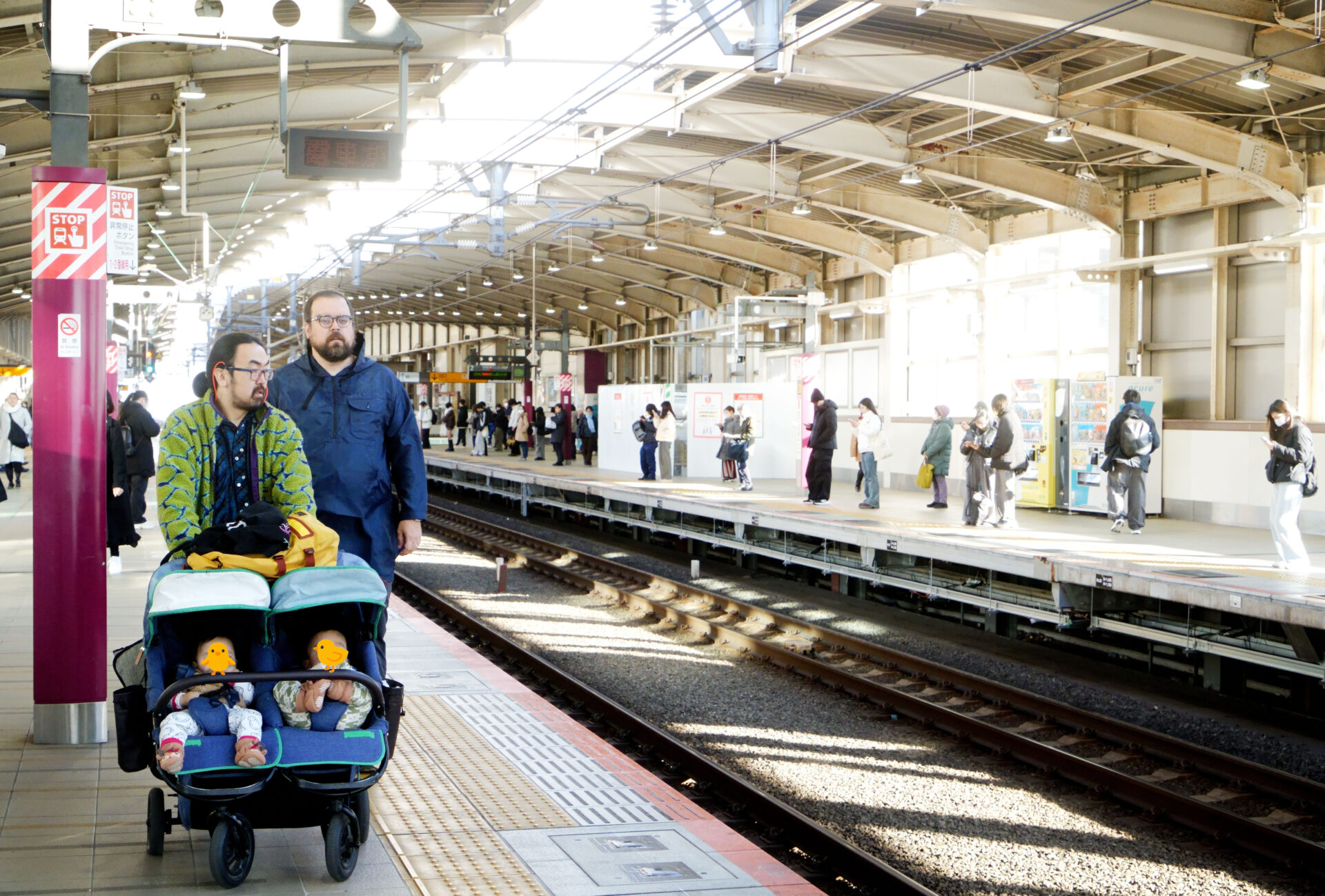
エレベーターの位置を探し、改札を選び、乗車する車両のドア幅に神経を張り巡らせた。乗り換えは水平に進まず、階段と人波が連続する。車内には優先席はあるものの、通学時間帯では都市の密度がそのまま身体にのしかかってくる。苦笑いしながら乗りこむしかない。
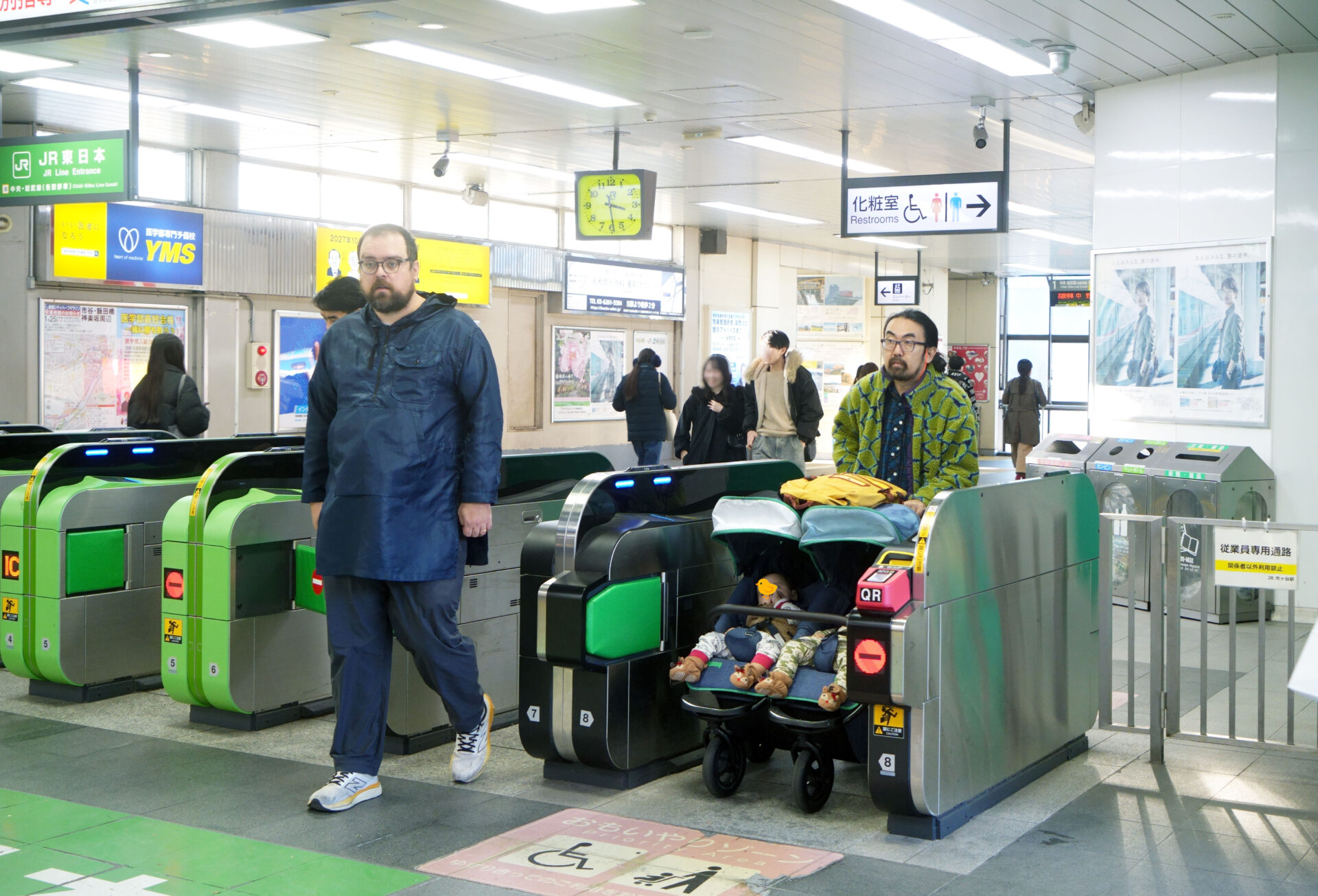
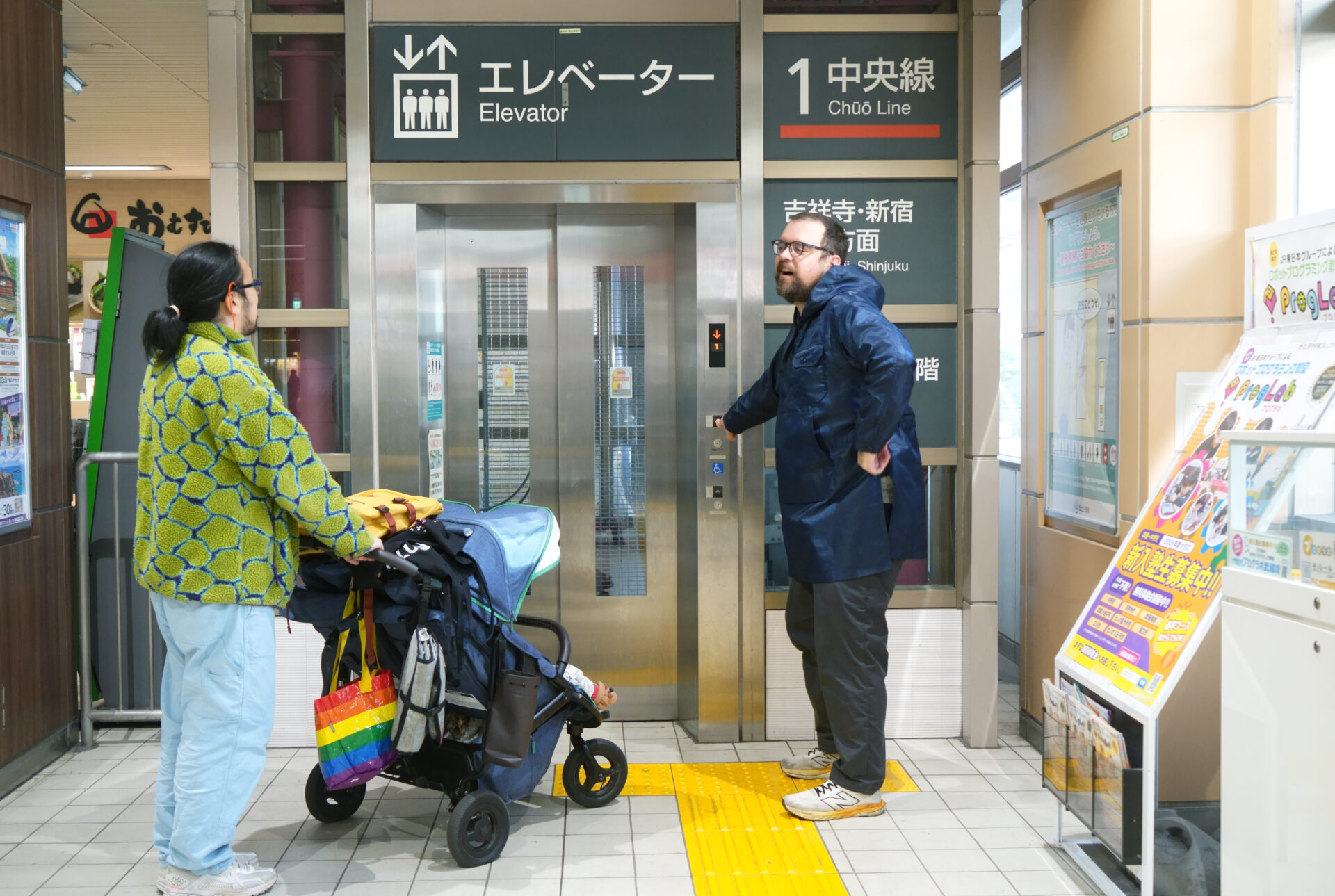
この街で、我々は毎日この通勤通学ラッシュの移動を繰り返せるだろうか。カリフォルニアの車社会に慣れた二人には、東京の保育園は米国にいた時より遠い存在に感じられた。いっそ東京を離れ、長野や北海道などの自然派保育園に入れた方が現実的なのではないか—そんな考えが、エレベーターの前で一瞬頭をよぎった。
Could we really do this daily? The two, accustomed to car-centered California, felt it was an impossible quest. Waiting for an elevator, Ei wondered if a nature-focused daycare outside the city, like in Nagano or Hokkaido, might be more realistic.
Tokyo daycare suddenly felt farther away than anything they had known in the U.S.
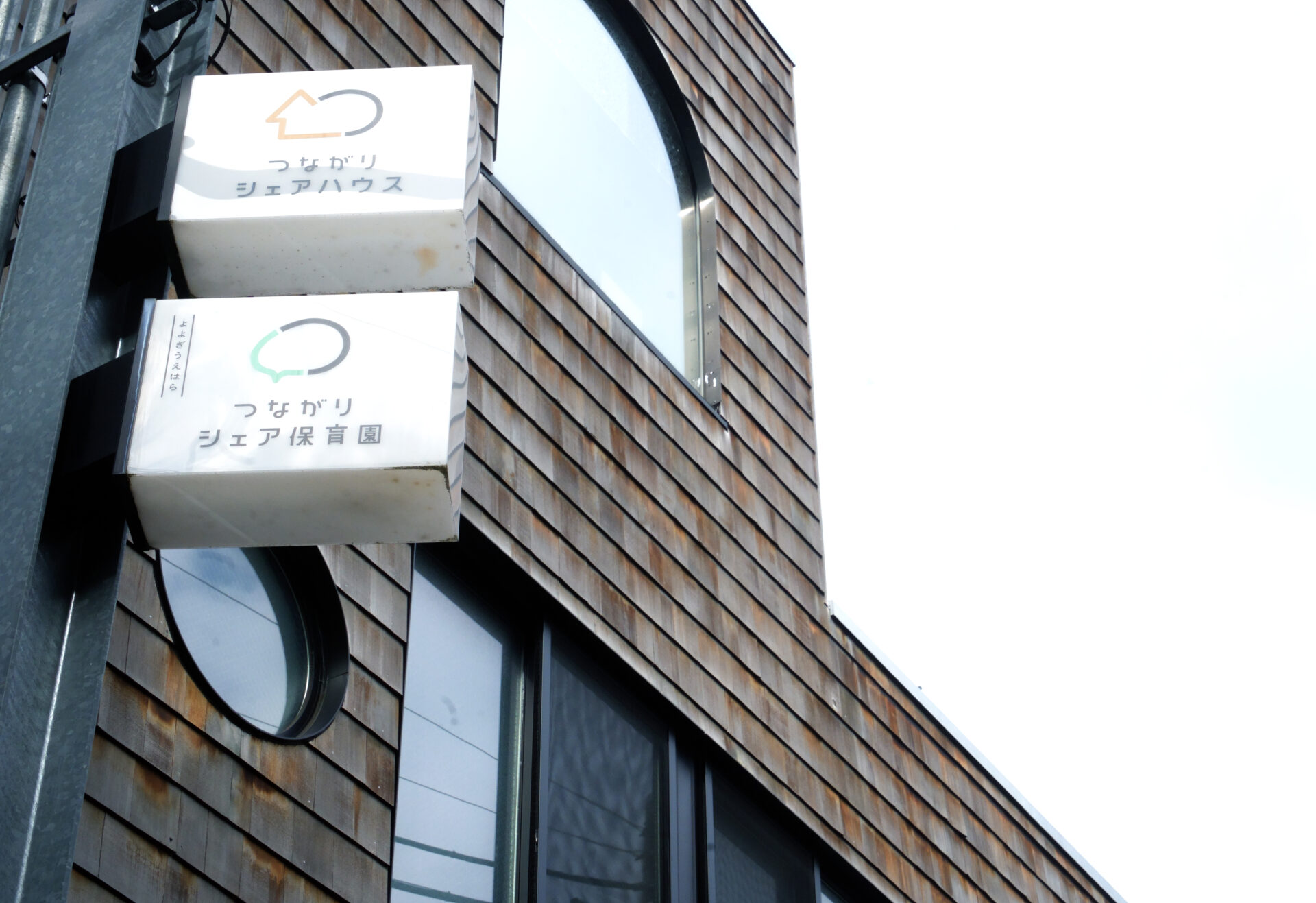
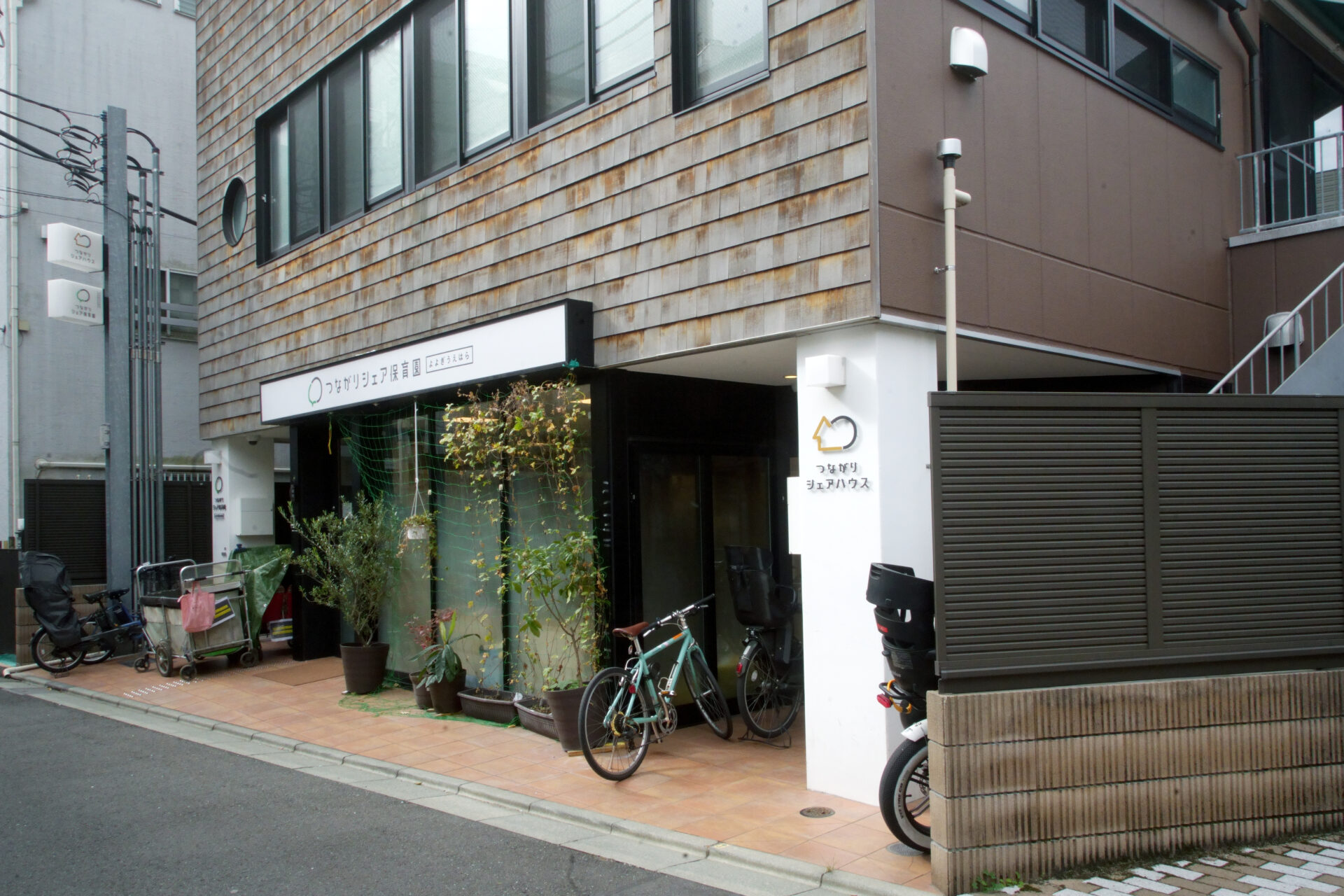
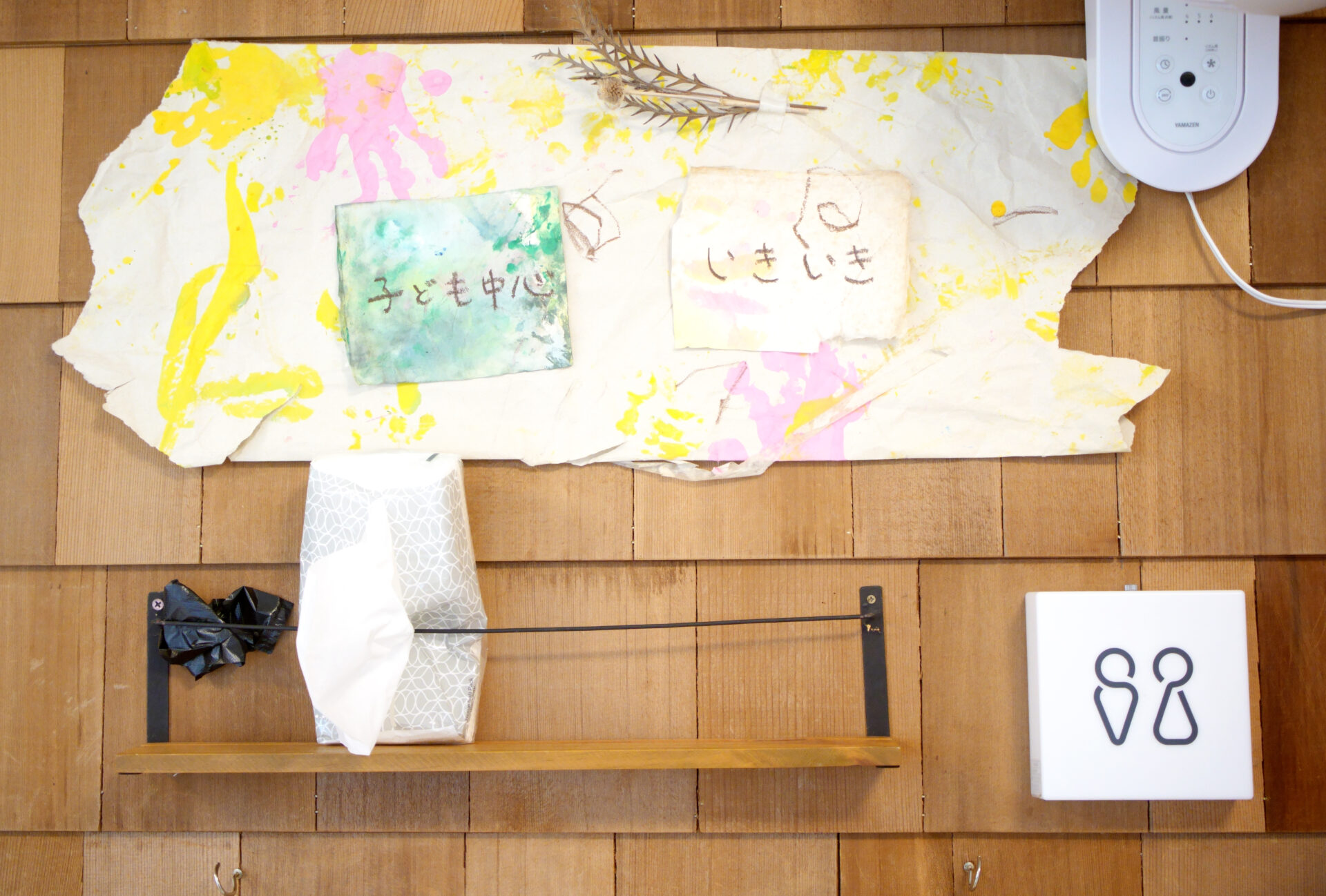
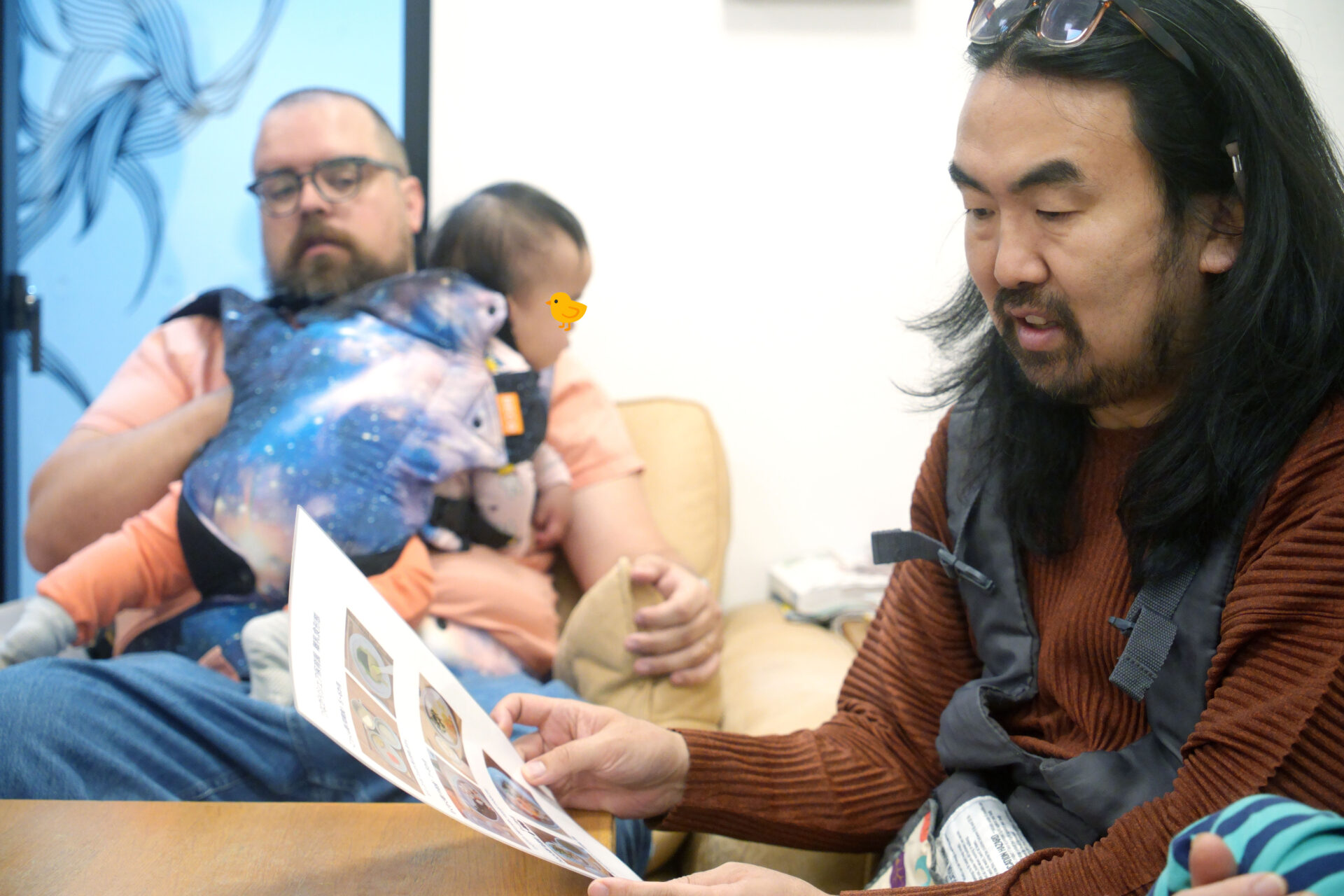
初日に訪れたのは、東京の西側、代々木上原。東京西側に広がる落ち着いた高級住宅街で、渋谷や原宿といった都心へのアクセスが良い一方、坂道や緑が多く、街全体に余白がある。個人経営のカフェやギャラリー、文化施設が点在し、子育て世帯やクリエイティブ職の住民が多いエリアだ。最寄り駅から階段を避けて坂道を双子用ベビーカーを押しながら歩くこと15分、「つながりシェア保育園・代々木上原」に辿り着いた。190平米の敷地に、クラウドファンディングで建てられた、シェアハウスと保育施設が一体化した保育園だ。外壁の木目が一際目立つ園舎の2階と3階の住居部分には単身者から子育て家庭まで5世帯が入居する。子ども、保育士、地域の大人たちの生活動線が緩やかに交差する設計だ。「クリーンで建物のデザインもいいね」とフォレストが言った。
Day One. The first visit was to Yoyogi-Uehara in Shibuya Ward, in western Tokyo.
This quiet, upscale residential area in Tokyo’s west offers good access to central districts like Shibuya and Harajuku, while also featuring many slopes, greenery, and a sense of spaciousness throughout the neighborhood. It’s dotted with independently owned cafes, galleries, and cultural facilities, and is home to many families with children and creative professionals.
Avoiding stairs, they pushed the double stroller uphill for fifteen minutes from the nearest station before arriving.
Built on a 190-square-meter site through crowdfunding, it’s a daycare uniquely integrating a shared house with childcare facilities. Its wood-grain exterior stands out. The residential sections on the second and third floors of the building house five households ranging from singles to families with children. The layout allows the daily routines of children, childcare workers, and local adults to intersect gently rather than collide. “The design definitely looks nice and clean,” said Forrest pleasantly.
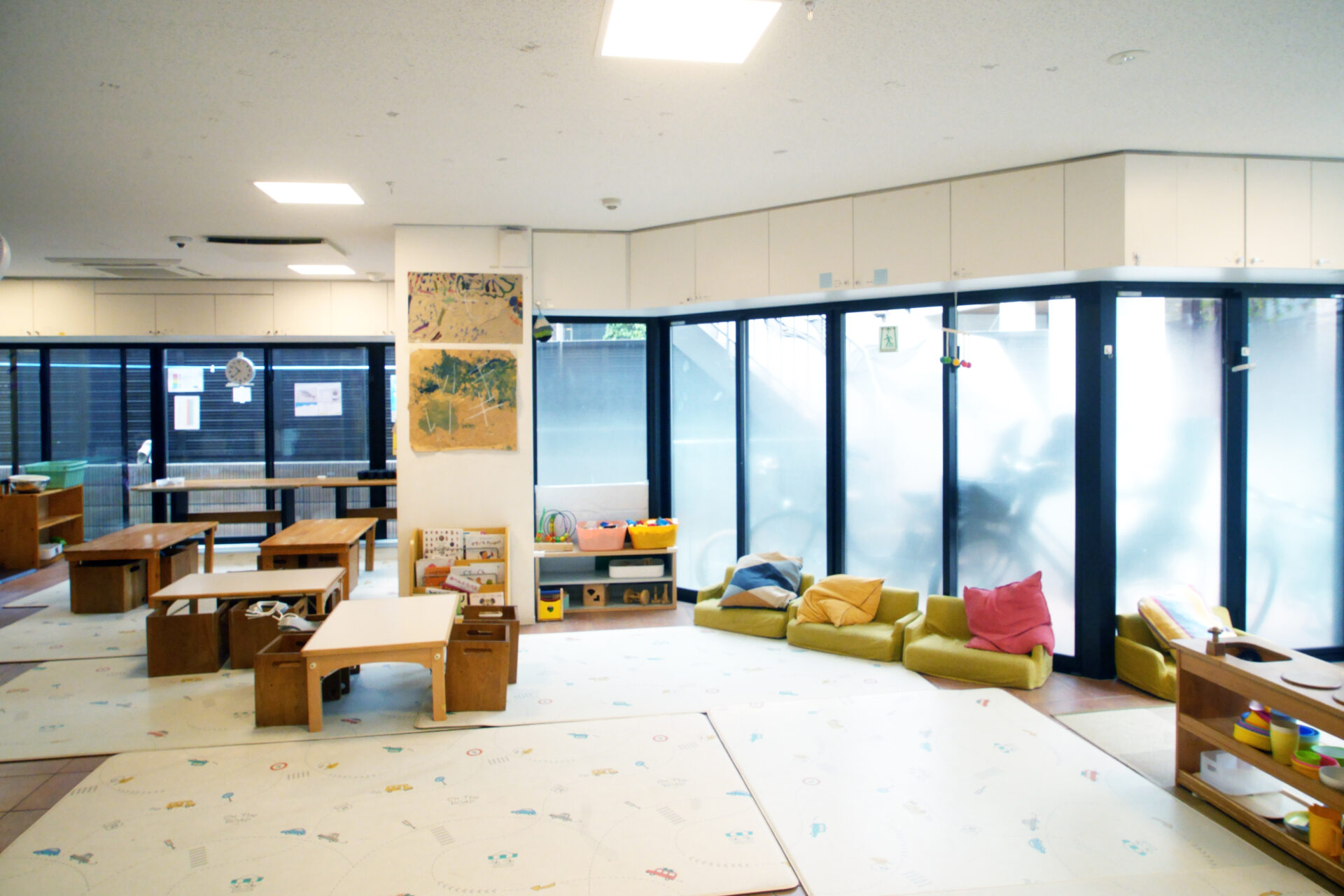
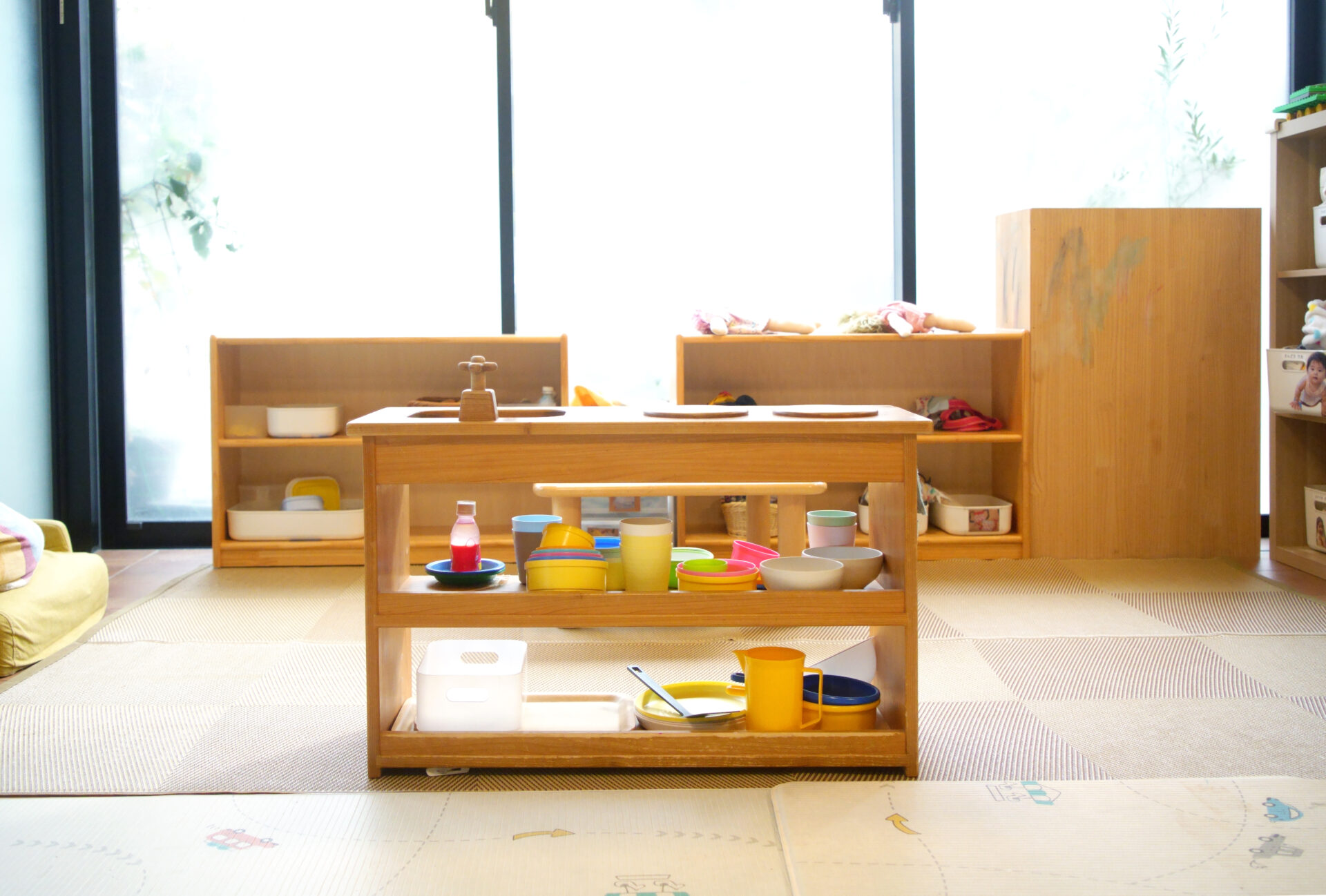
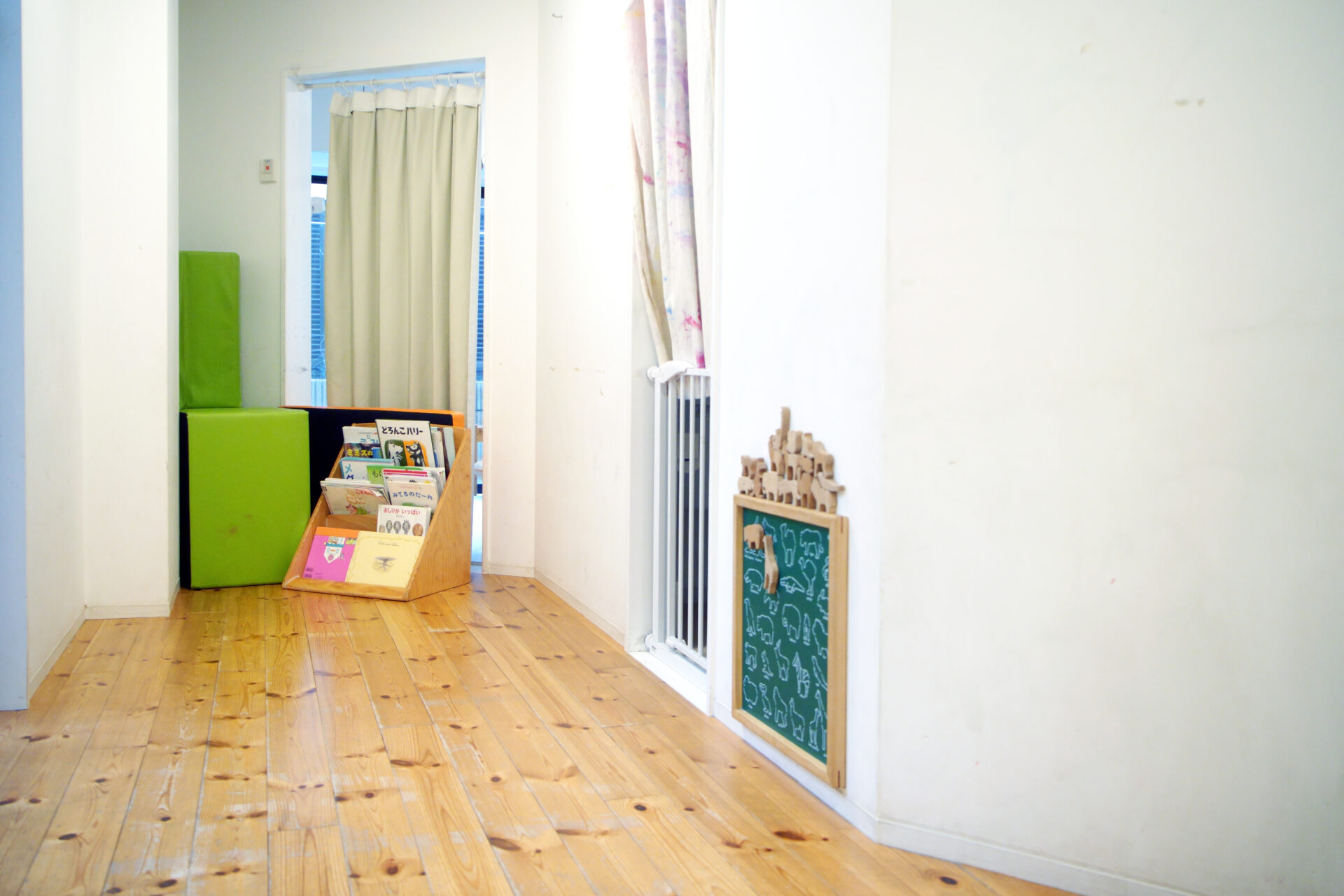
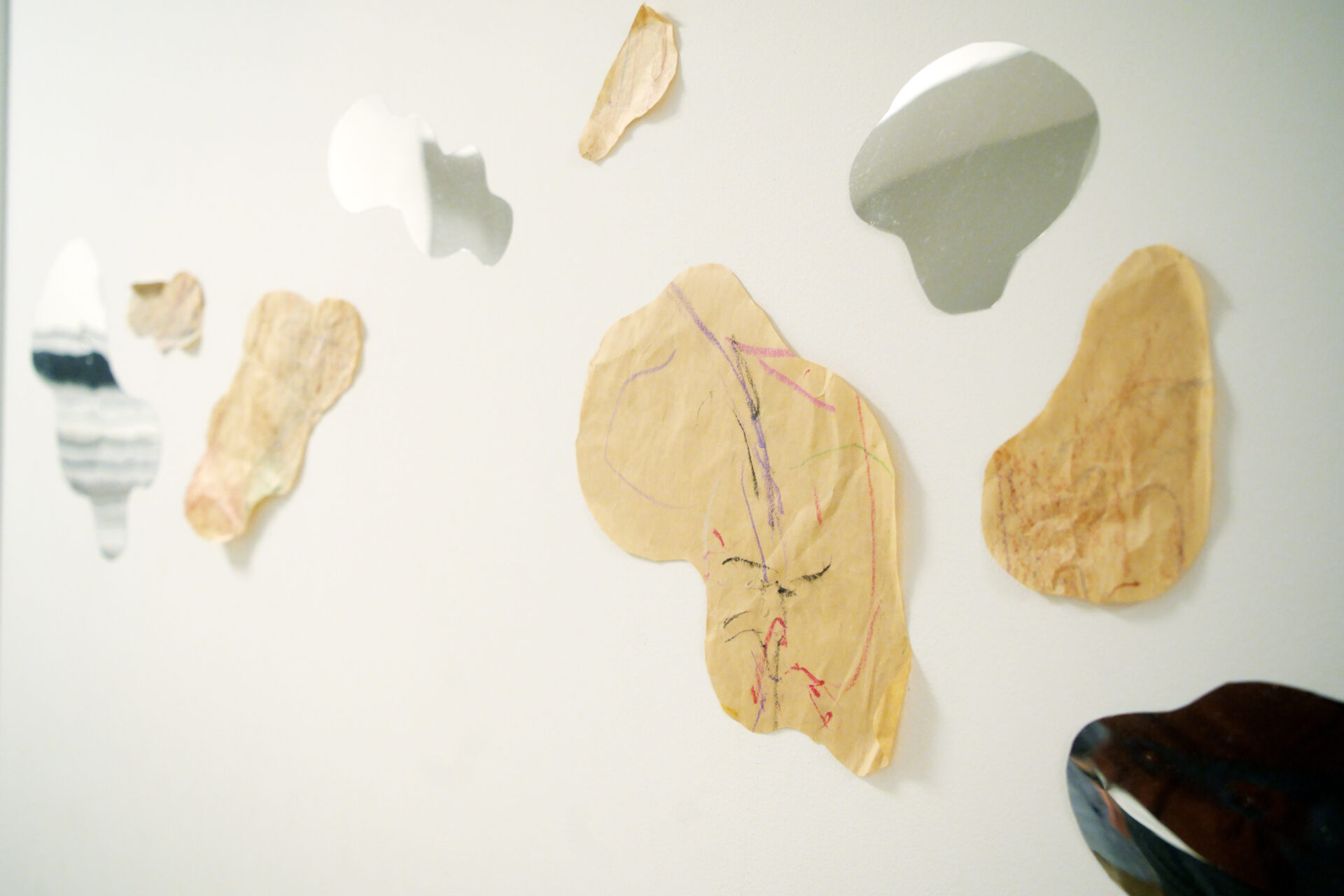
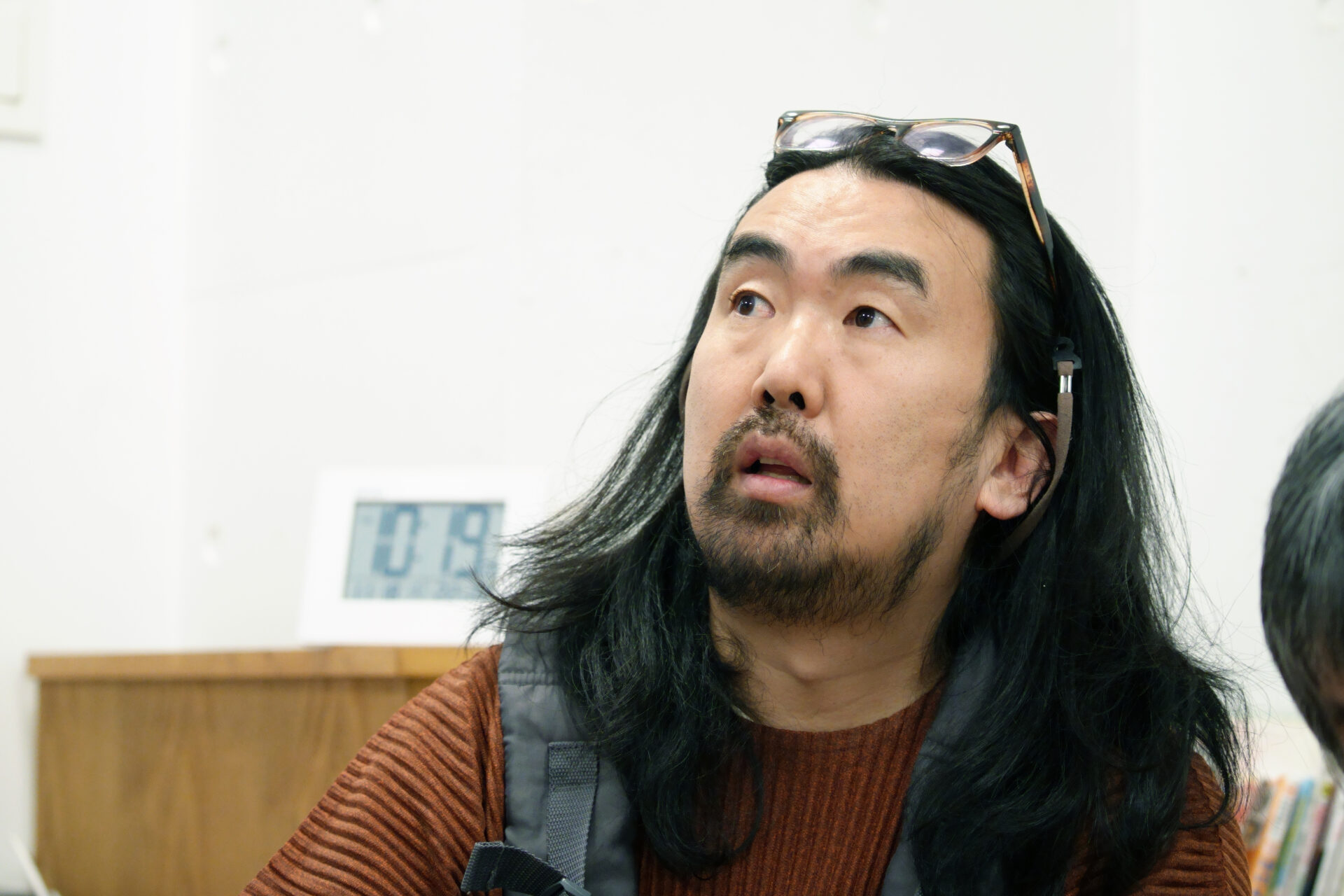
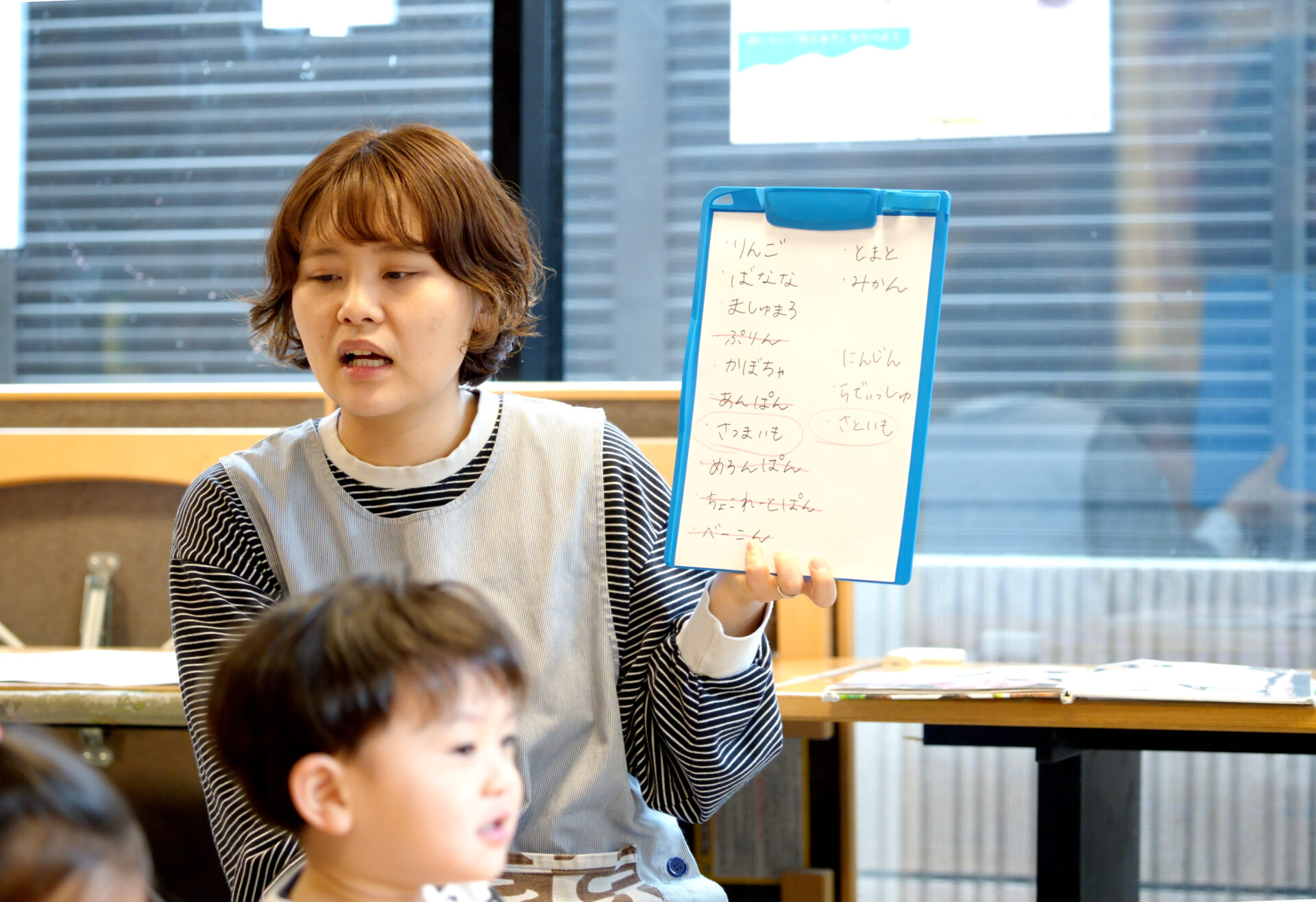
緊張の面持ちで中に入ると、仕切りのない開けた空間で、子どもと保育士が輪になっていた。近々開催されるBBQで焼く食材について議論をしている。園で育てているさつま芋、にんじん、マシュマロ、幼児たちは思い思いの食材の名前を口にだし、保育士は全員の意見を聞いている。「毎朝、子どもたちと保育士たちが輪になるサークルタイムという形式で、その日やりたいことを決めるんです。毎回、自分の意見が通るとは限らないことを学びます」と施設長の前田秀和氏は言う。
Inside, the atmosphere was unexpectedly open. Children and teachers sat in a circle, discussing what to grill at an upcoming barbecue. Sweet potatoes grown at the daycare, carrots, marshmallows—each child offered suggestions, all of which were acknowledged. “Every morning we form a circle time,” said the director, Hidekazu Maeda. “The children and teachers decide together what they want to do that day. They learn that their opinions matter—but that they don’t always get their way.”
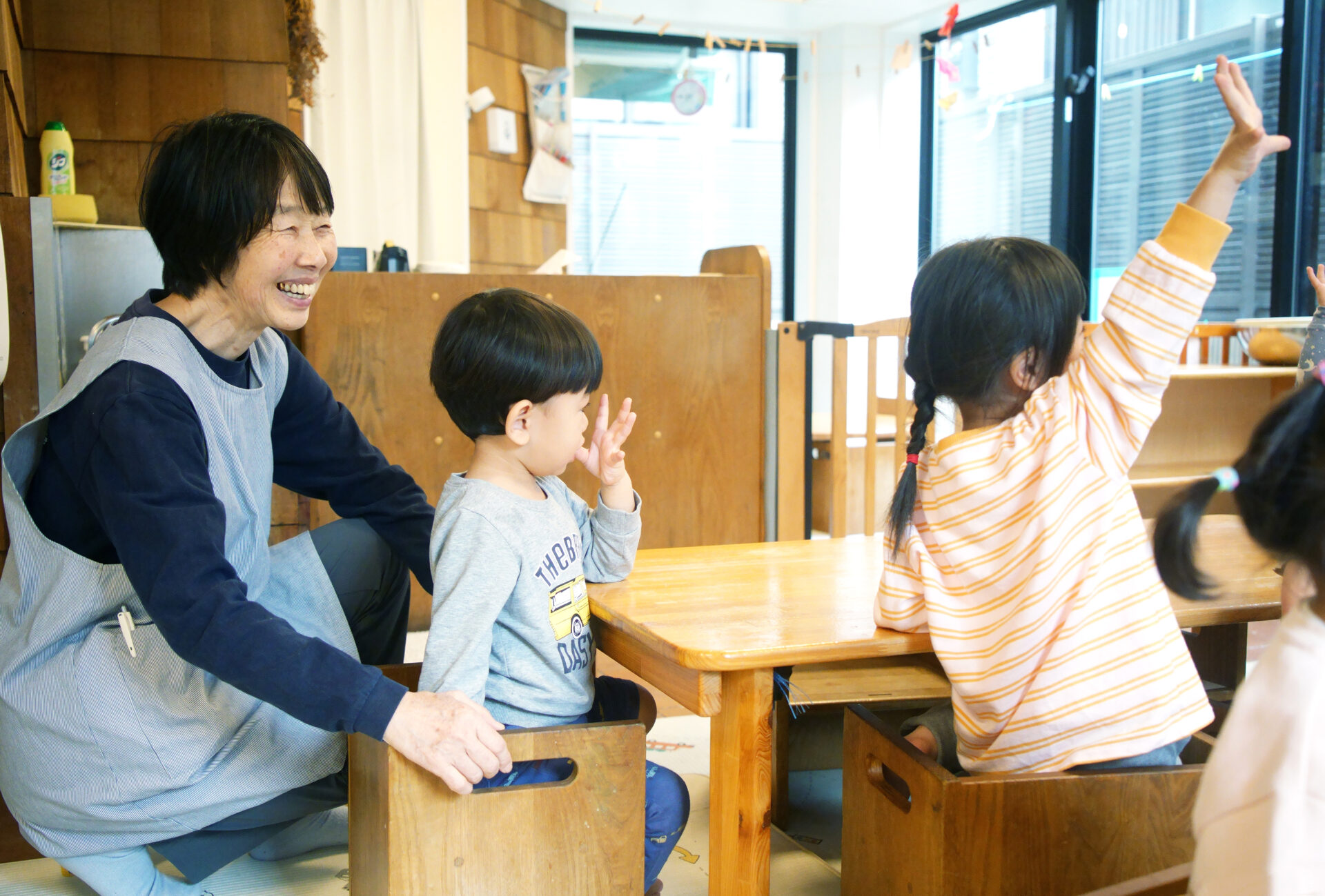

「それはすごくいいね」とフォレストは言った。おもちゃを誰かとシェアすること、ものごとが自分の思い通りにならないことを学ぶこと—フォレストはこれを「最初の民主主義」だと思った。「ただ、園長先生以外が全員女性なのは日本では普通なの?」
“That’s really good,” Forrest said. Learning to share toys, to accept frustration—he thought of it as a first lesson in democracy. “But is it normal in Japan for everyone except the director to be women?” he wondered.
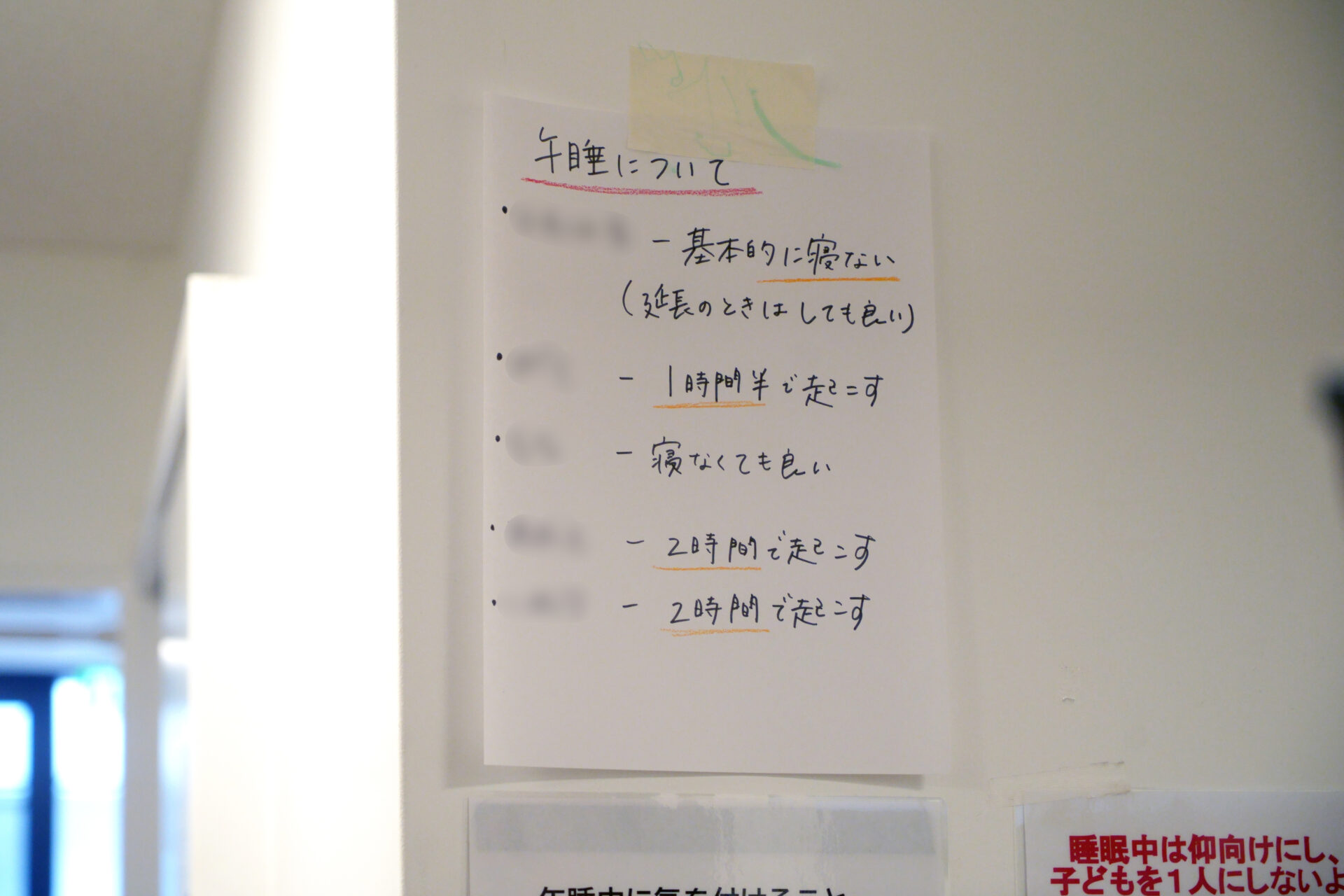
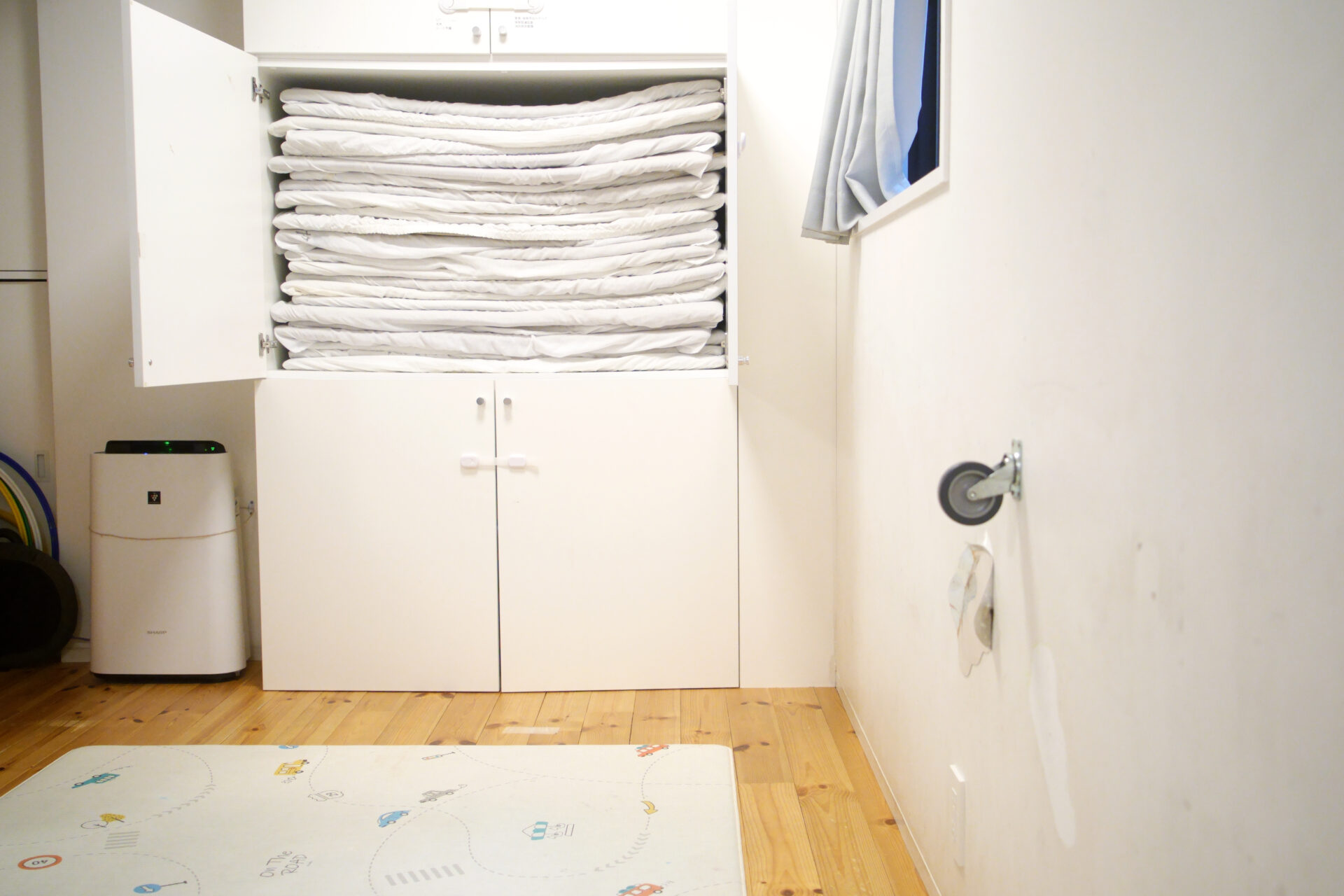
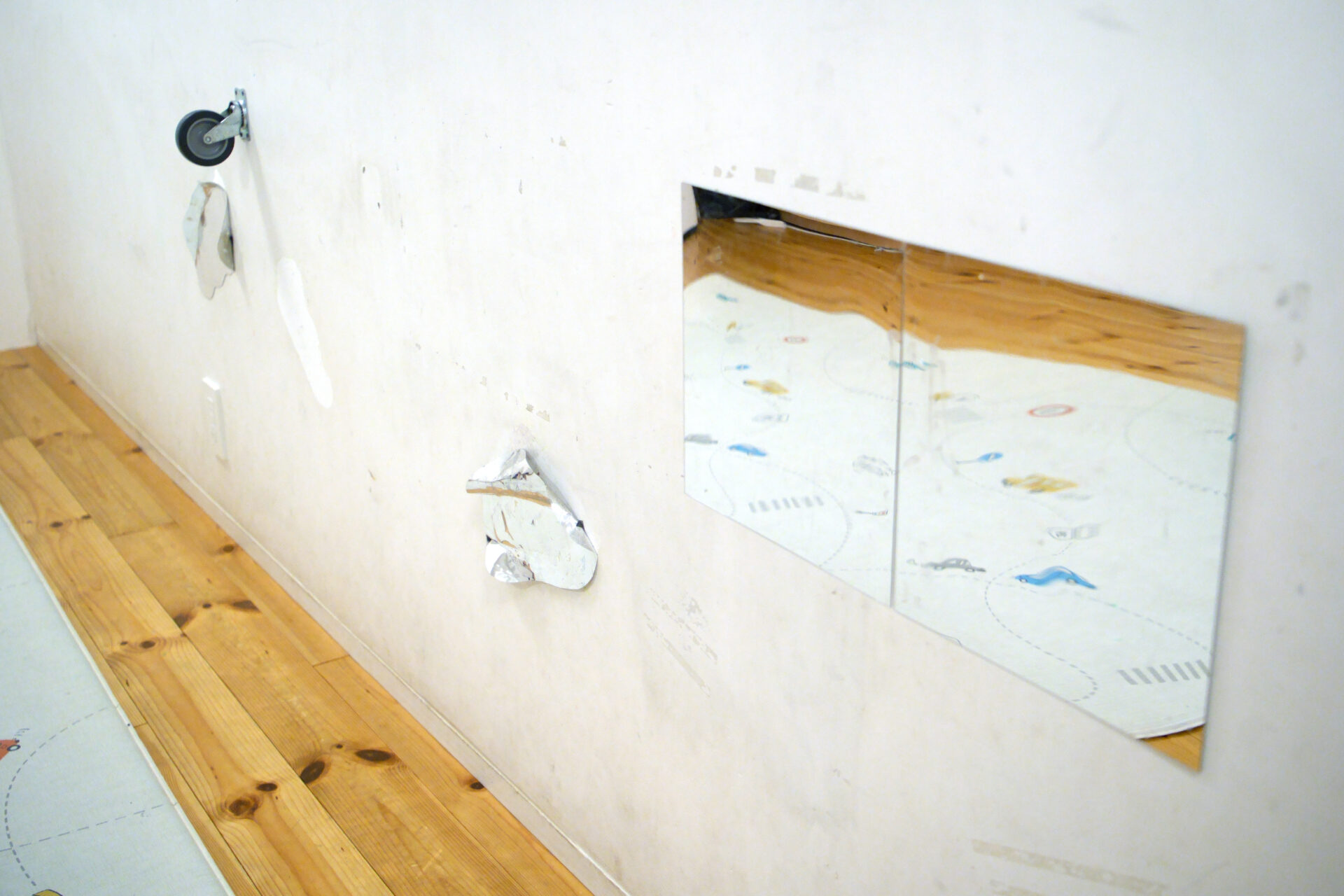
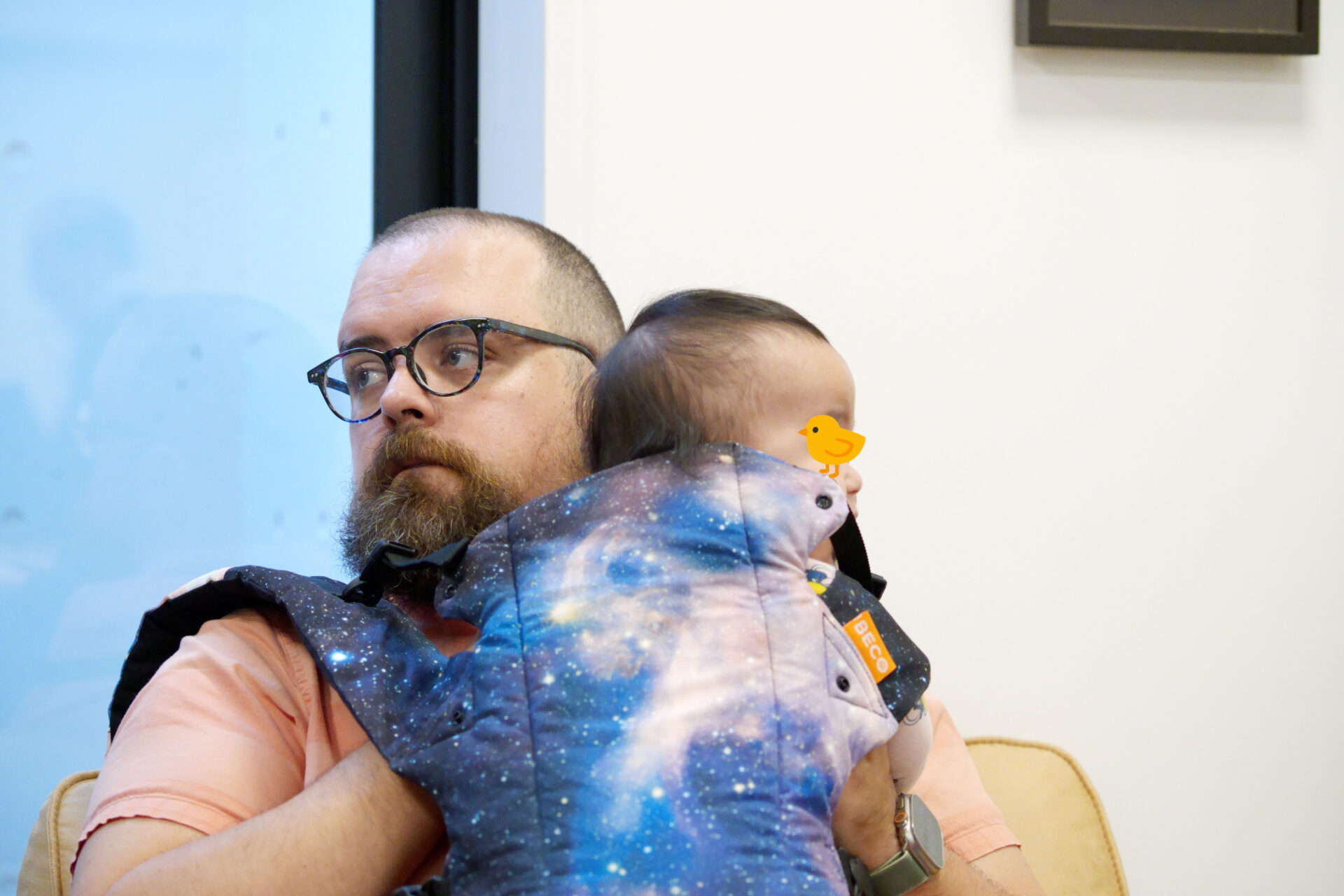
お昼寝専用の部屋には園児それぞれの睡眠パターンのチャート、室内の温度、安全設備が完璧に施されていて、乳児の呼吸がモニターされるシステムもあった。米国ではあらゆる事故を防ぐためベビーベッドには毛布すら入れてはいけないと決まっている。乳児の安全な睡眠ルールが厳しい米国からきた二人にとっては、このシステムは安心できた。
They were shown a dedicated nap room, where charts tracked each child’s sleep patterns. Temperature controls, safety measures, and a system monitoring infants’ breathing were all in place. Coming from the United States, where even blankets are prohibited in cribs to reduce the risk of suffocation and sudden infant death, the level of monitoring felt reassuring.
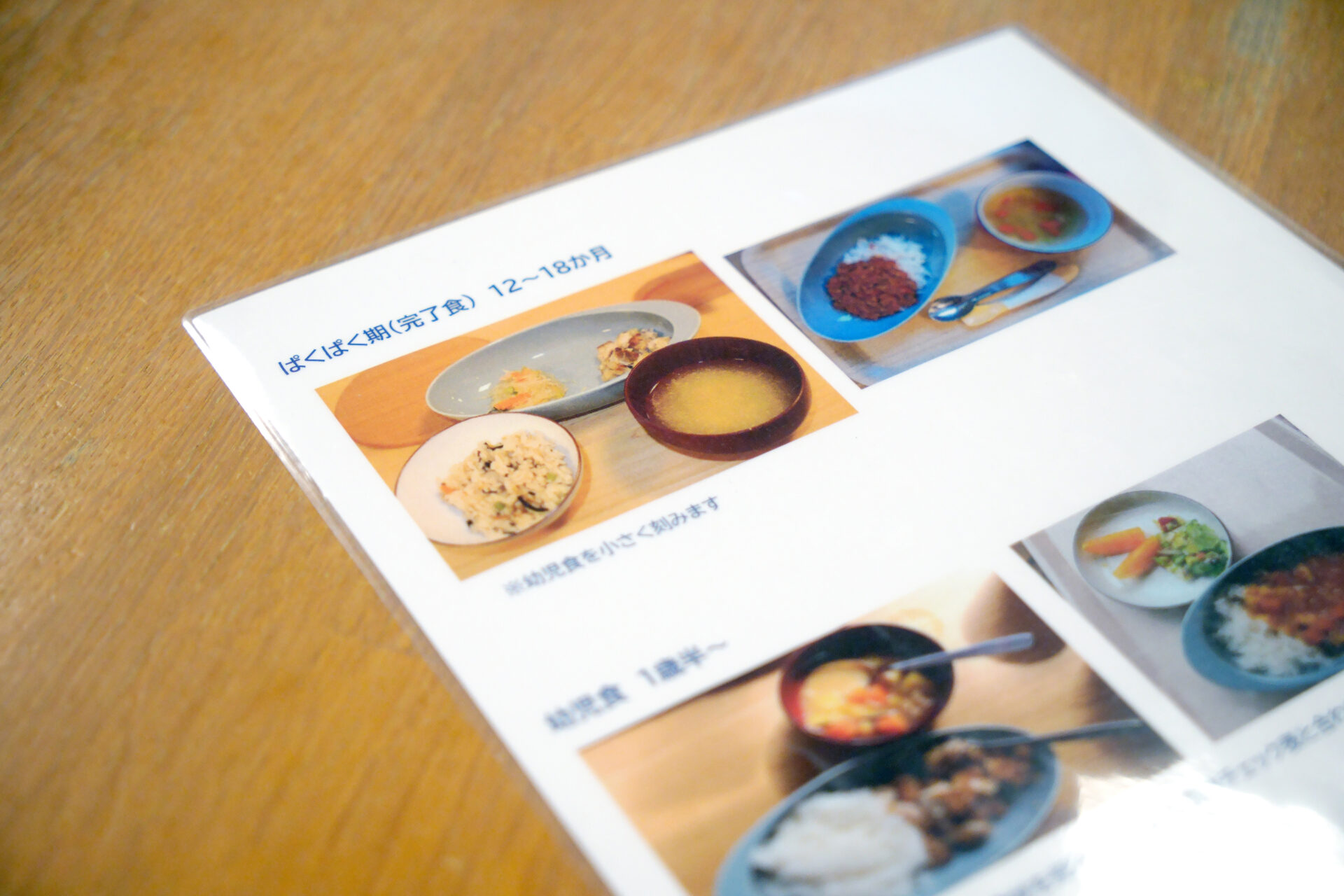

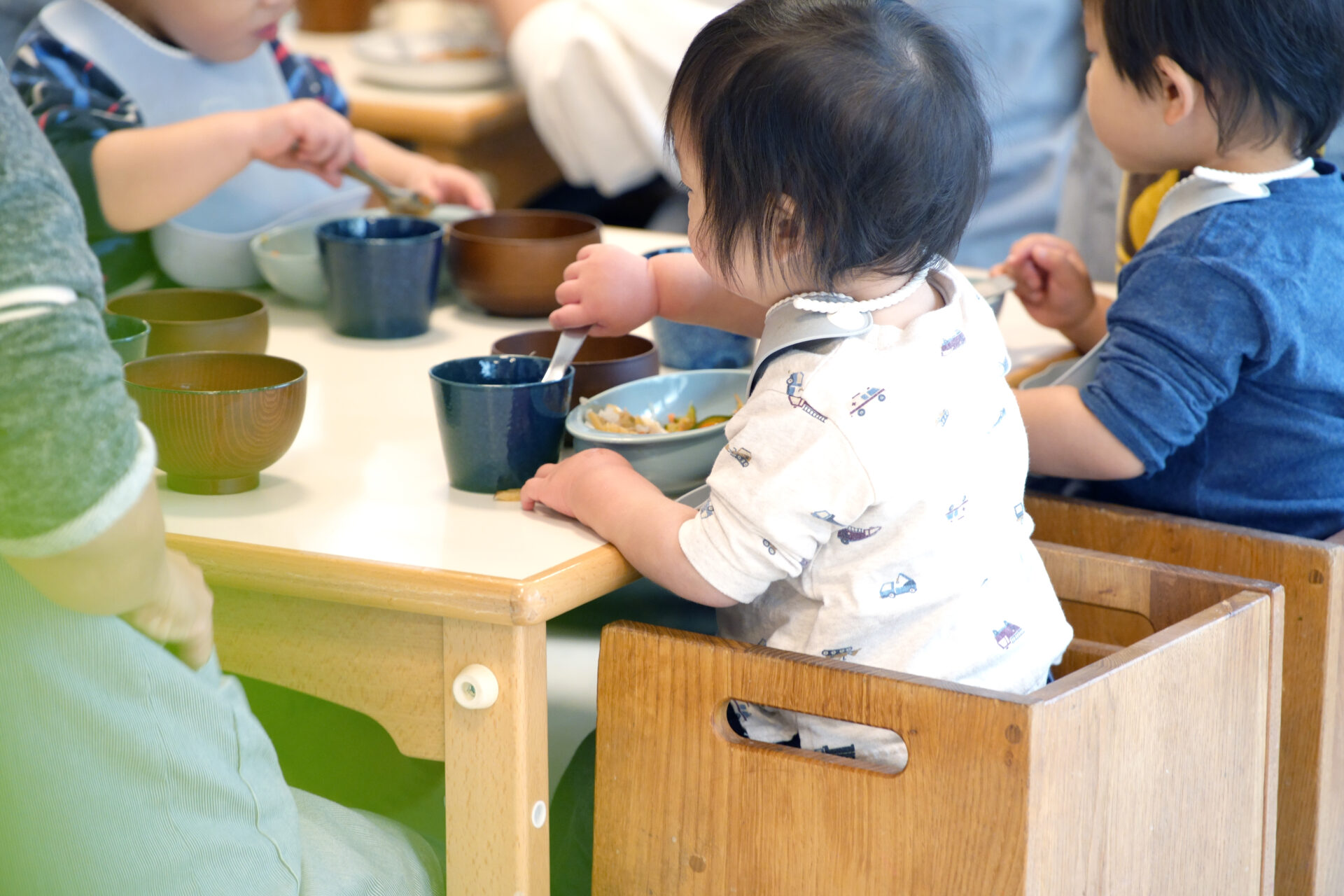
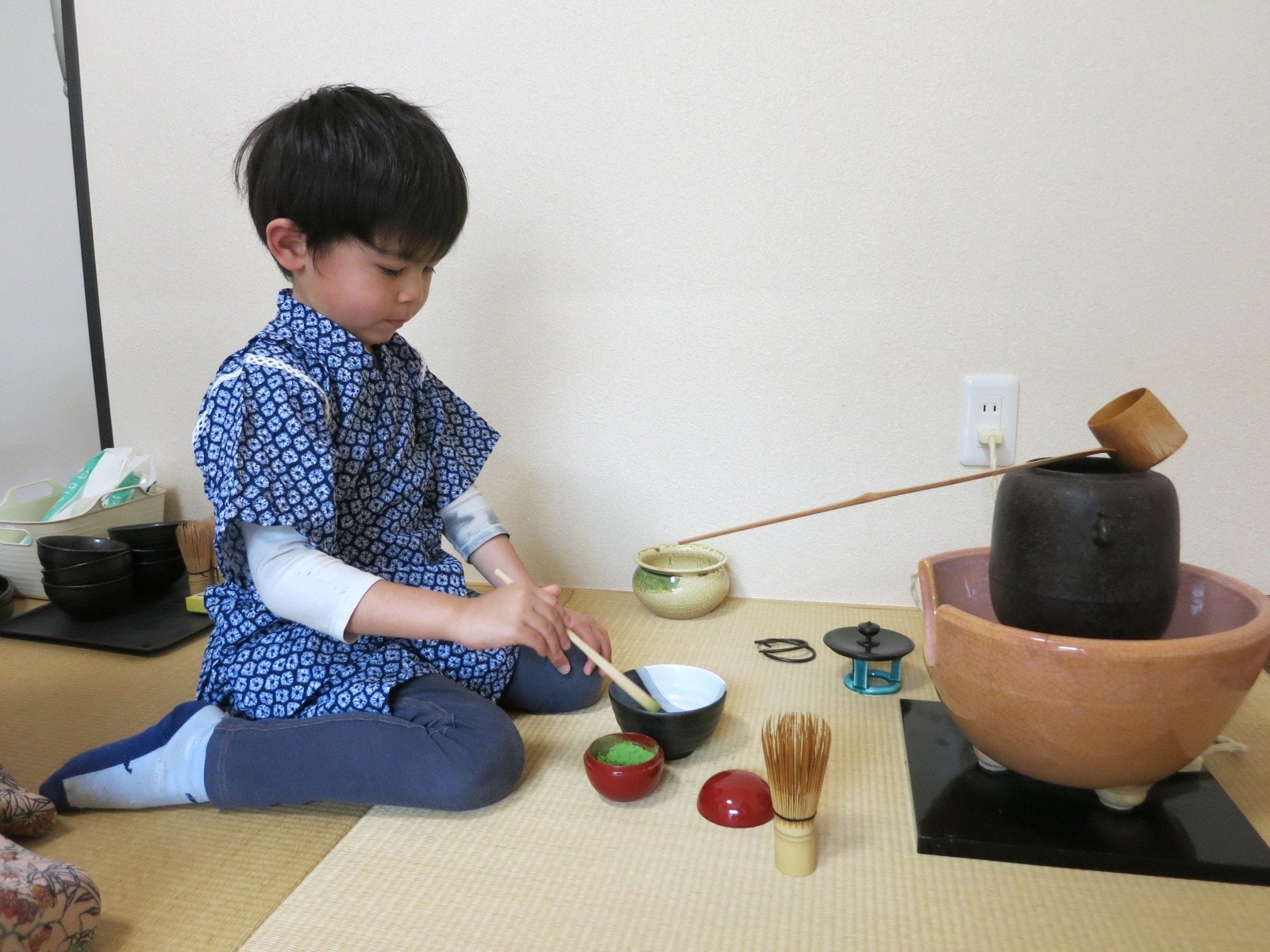
定期的に開催される茶道師範の先生によるお茶会。お茶会でいただく茶菓子も園児たちが手作りする。©︎ つながりシェア保育園・代々木上原
Tea ceremonies are regularly held by a tea ceremony instructor. Children handmake the traditional sweets they serve.
©︎ Tsunagari Share Nursery School Yoyogi-Uehara
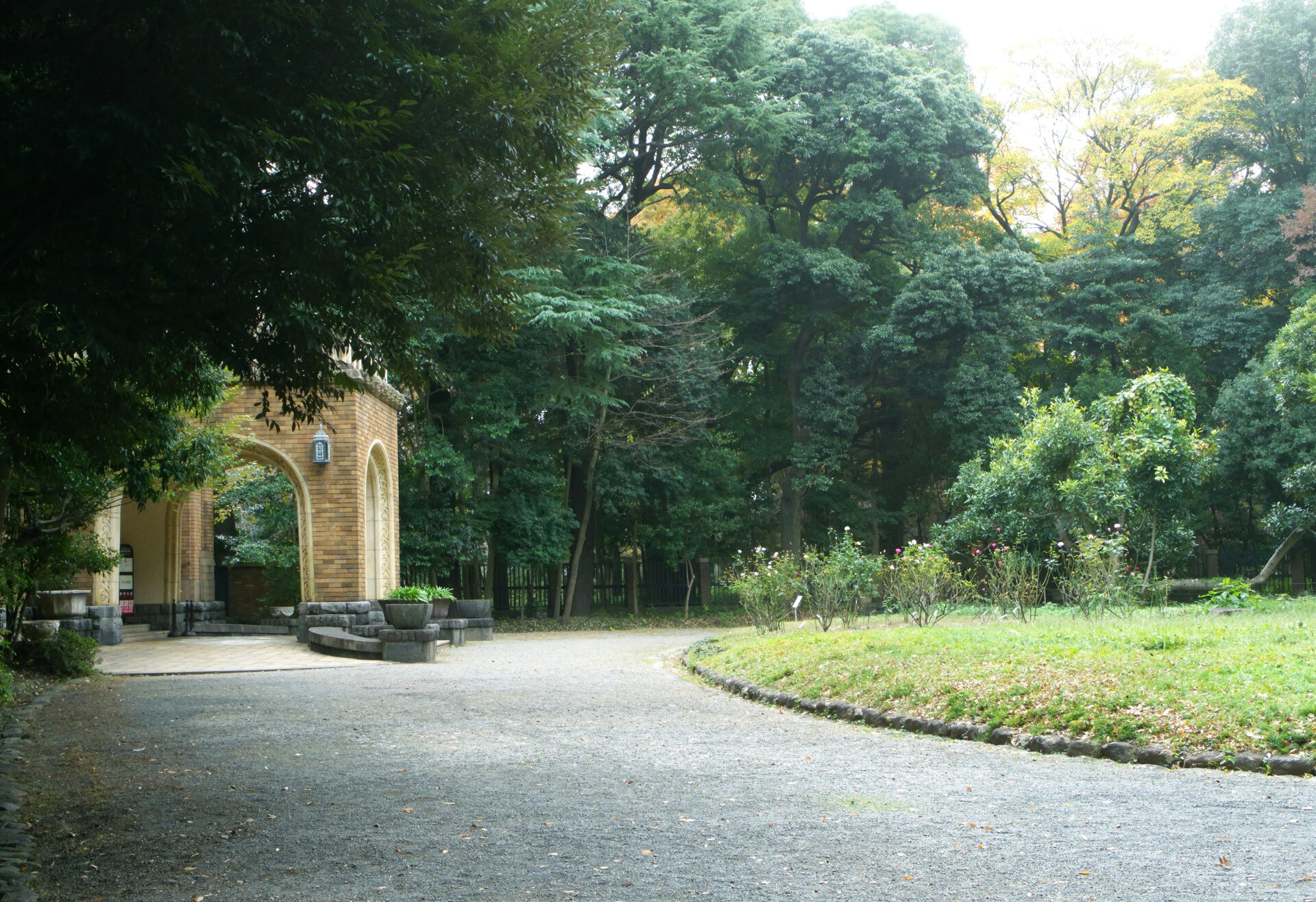
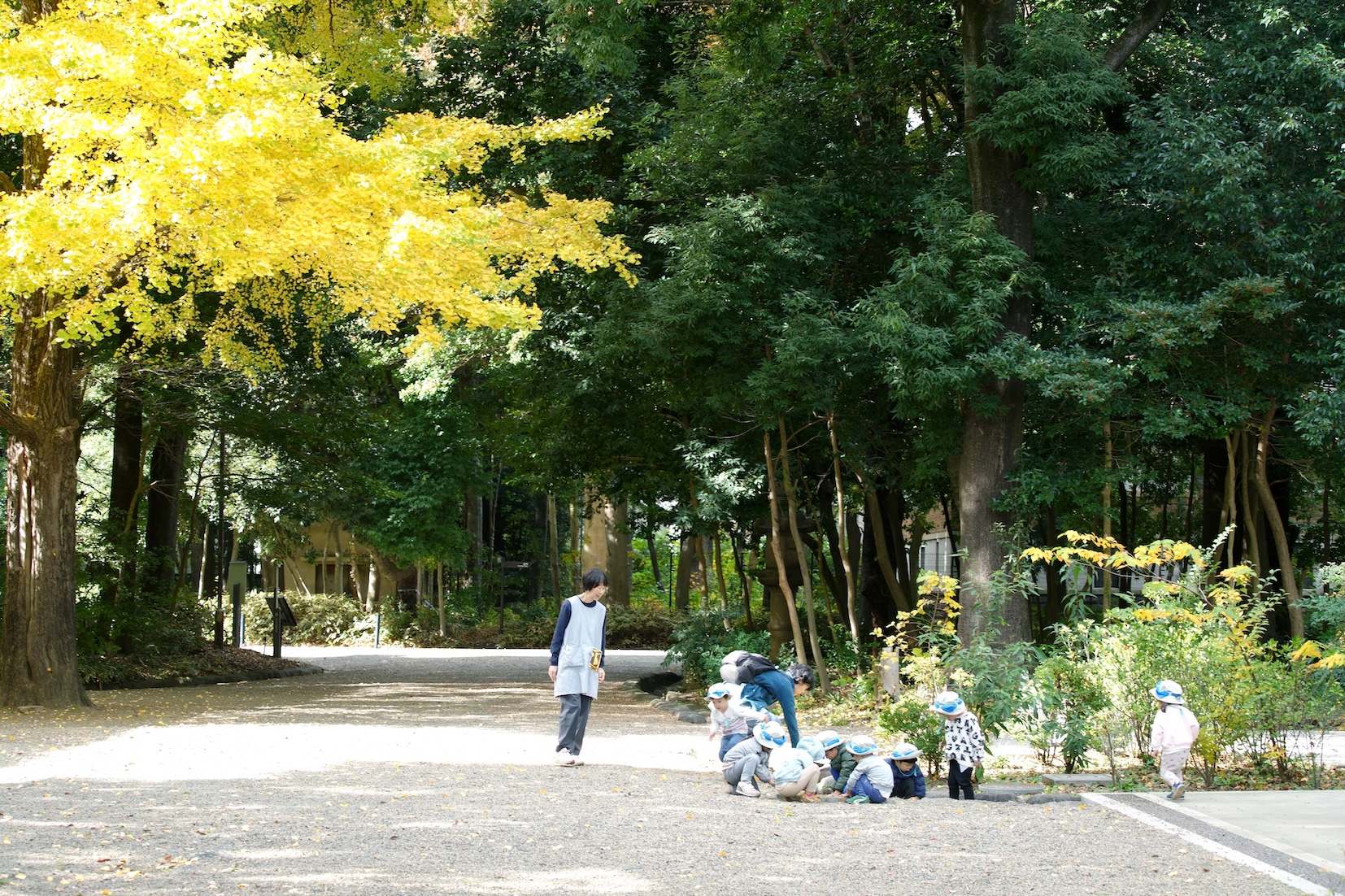
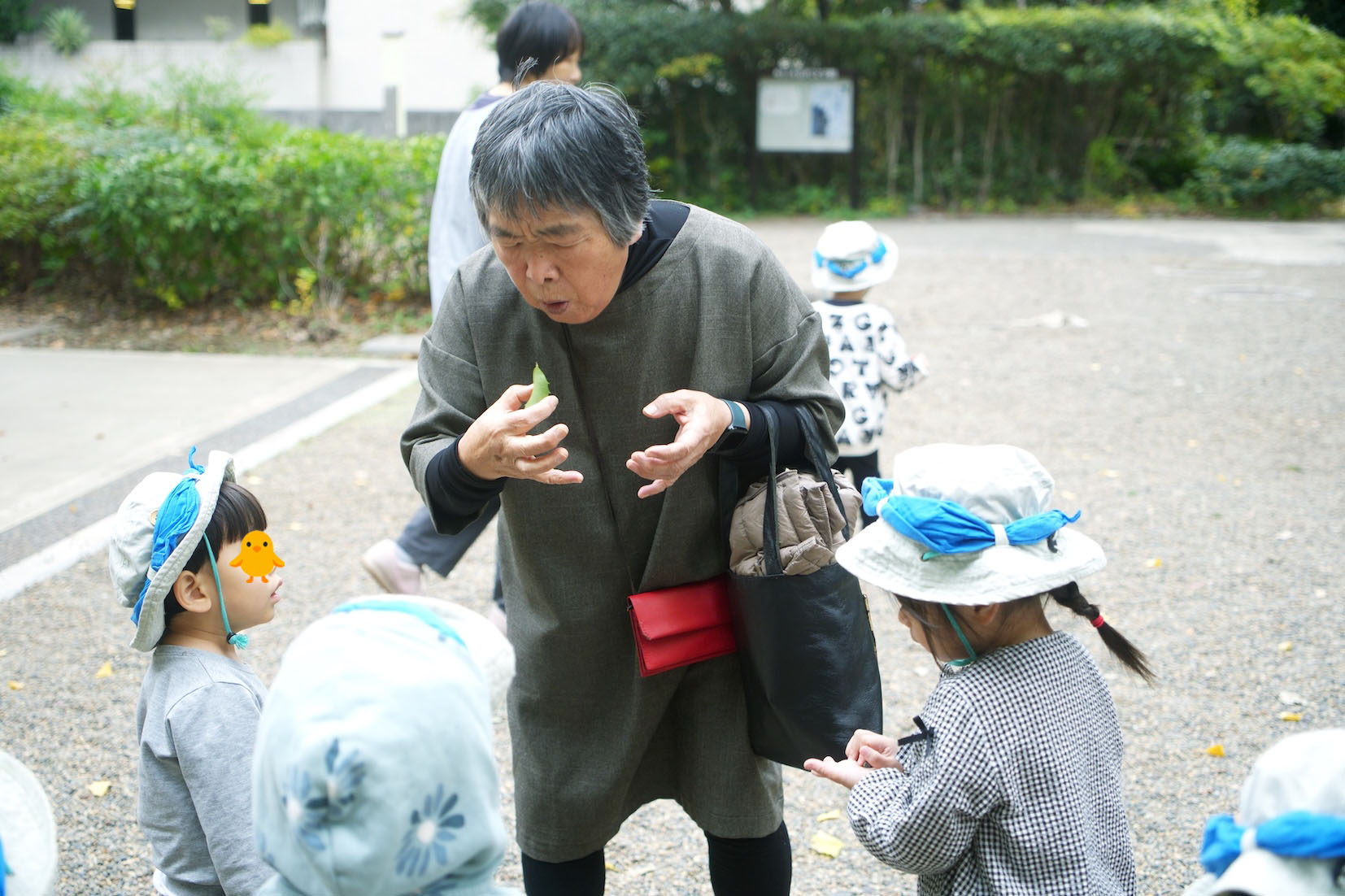
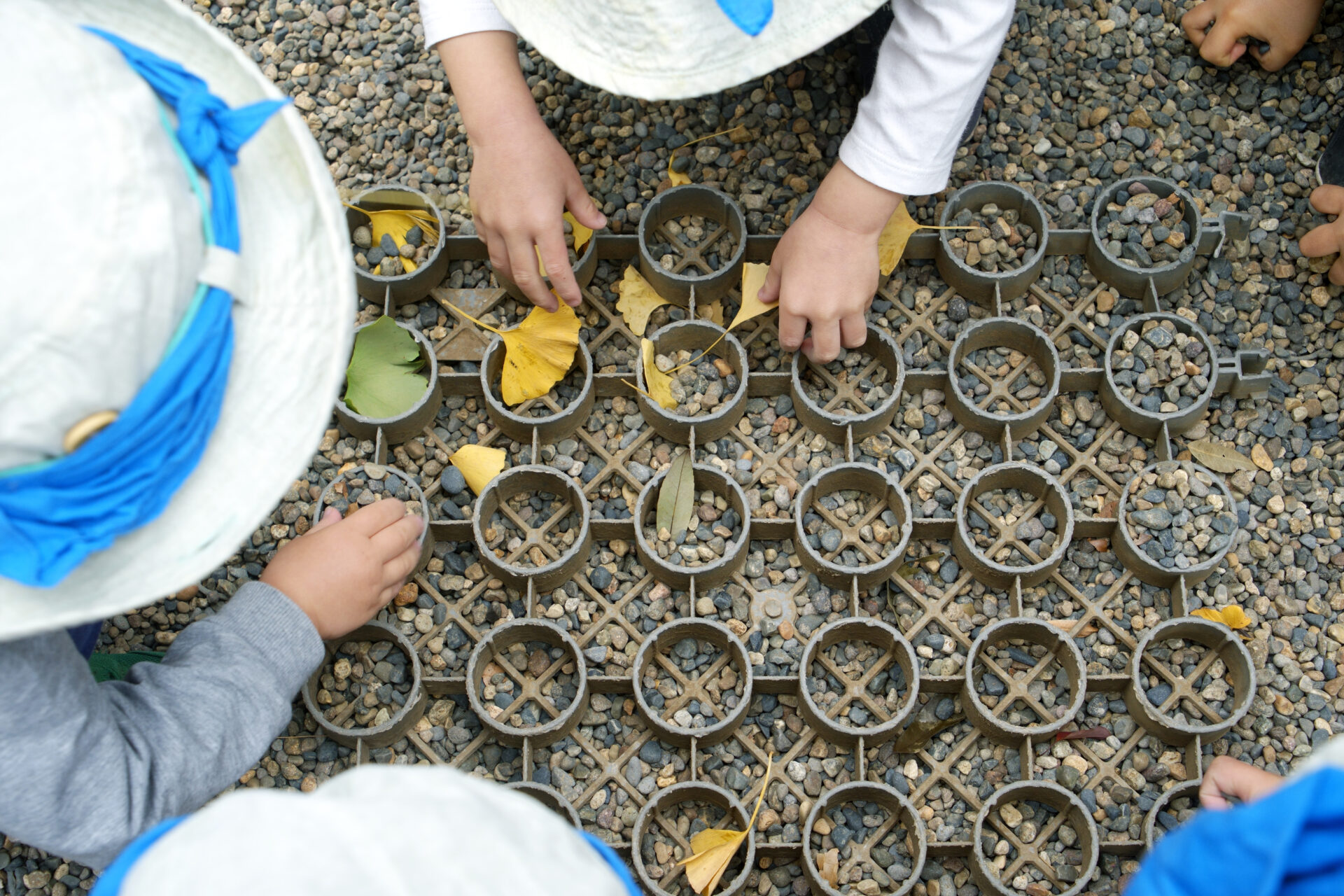
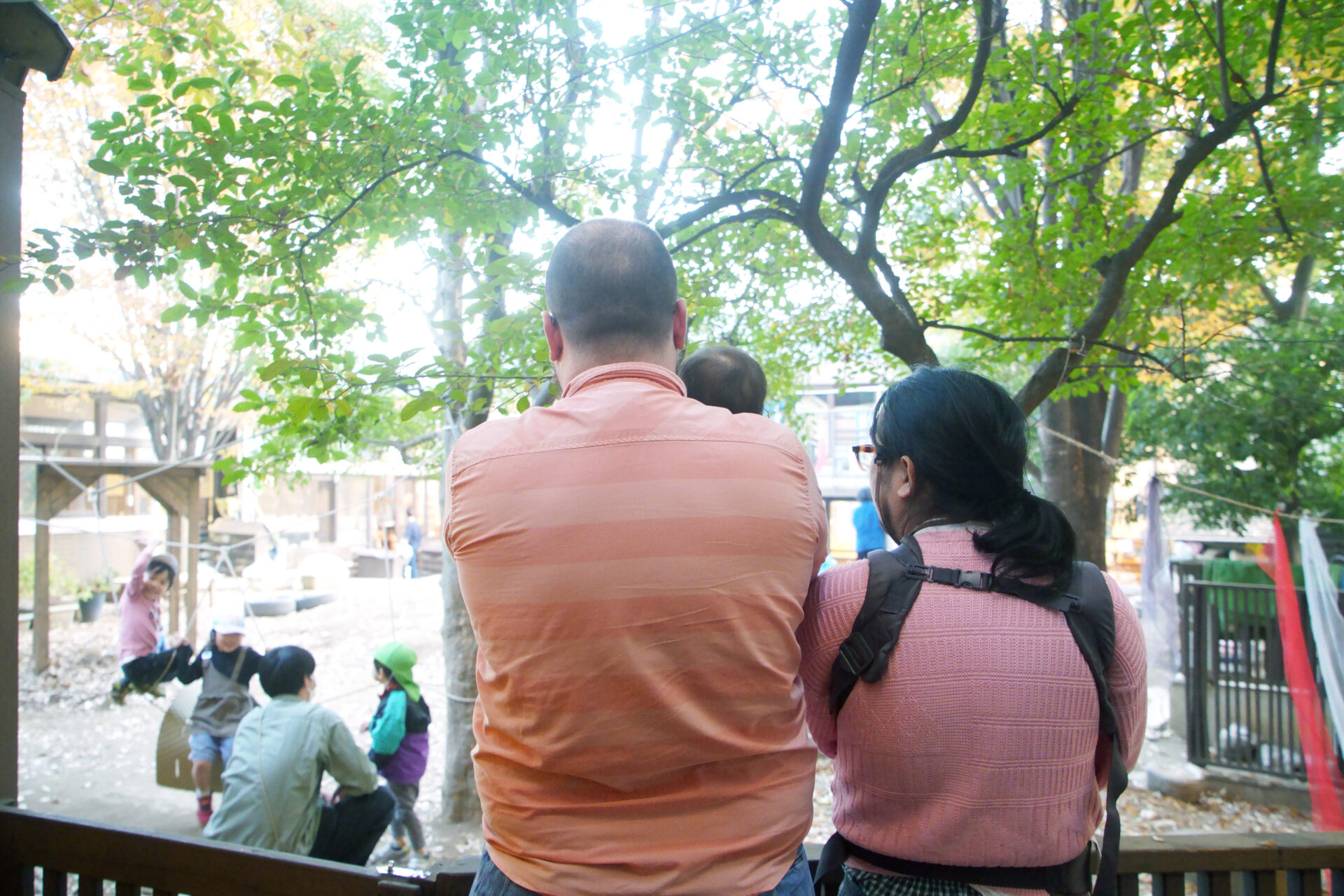
施設の見学が終わり、年中組の近隣の公園遊びに同行した。旧侯爵邸を残した駒場公園と東京大学駒場キャンパスという文化的資源と豊かな緑が近隣にあり、園児は毎日その環境の中で遊び過ごすという。紅葉づいた樹々が落とす色とりどりの葉っぱを、めいめいが拾い遊んでいた。
After a brief tour of the facility, they joined the toddlers on a daily activity to a nearby park. Though the facility had no yard, it was surrounded by cultural and natural resources: Komaba Park, which preserves the former count’s residence, and the lush, tree-lined campus of the University of Tokyo’s campus. Children played daily in these environments, picking up fallen autumn leaves in shades of red and gold.
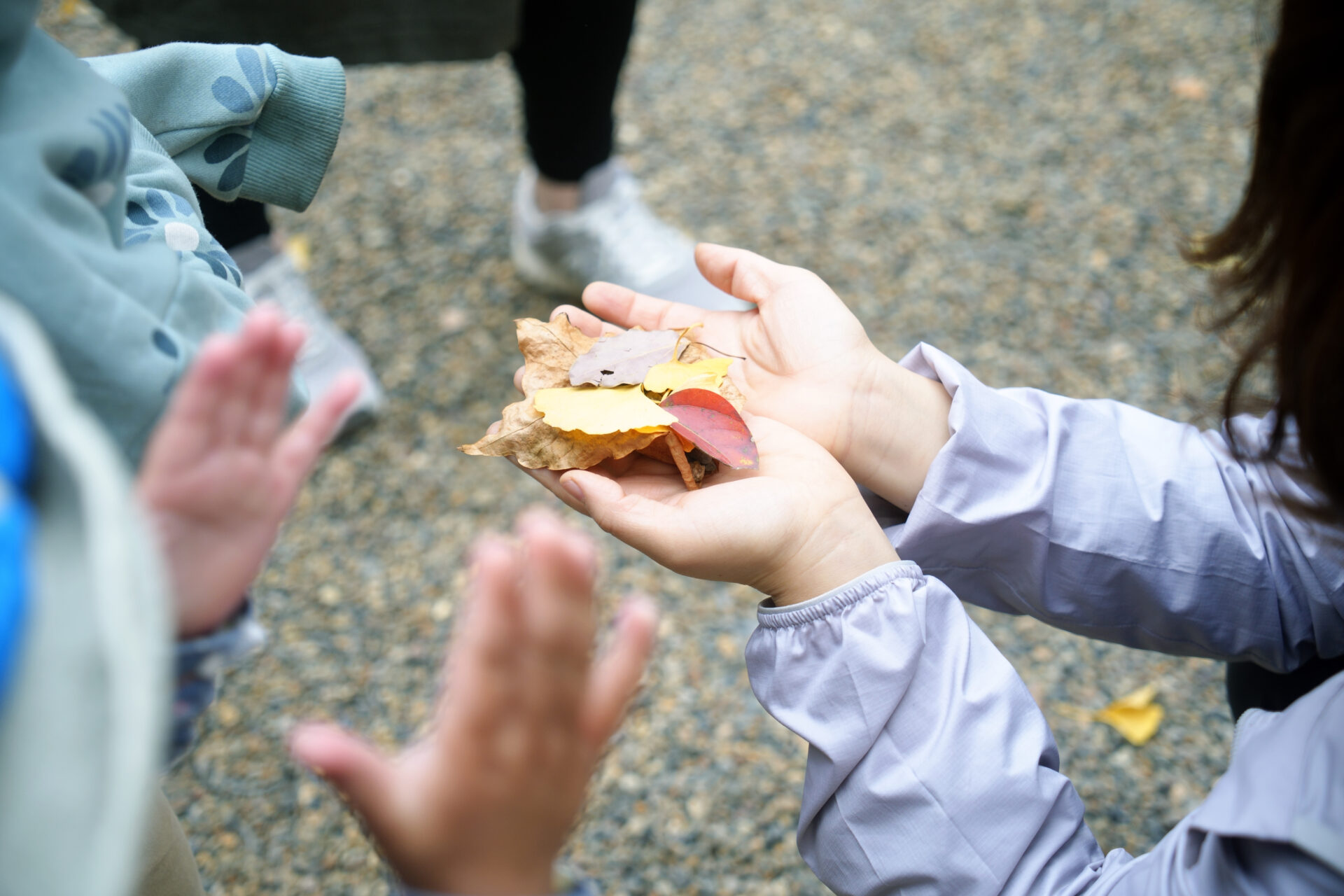
「双子が東京で過ごす光景はこんな感じなのかな」二人は精一杯のイメトレにはげんだ。
“This might be what the twins’ Tokyo life looks like.” The two tried their hardest to visualize it.
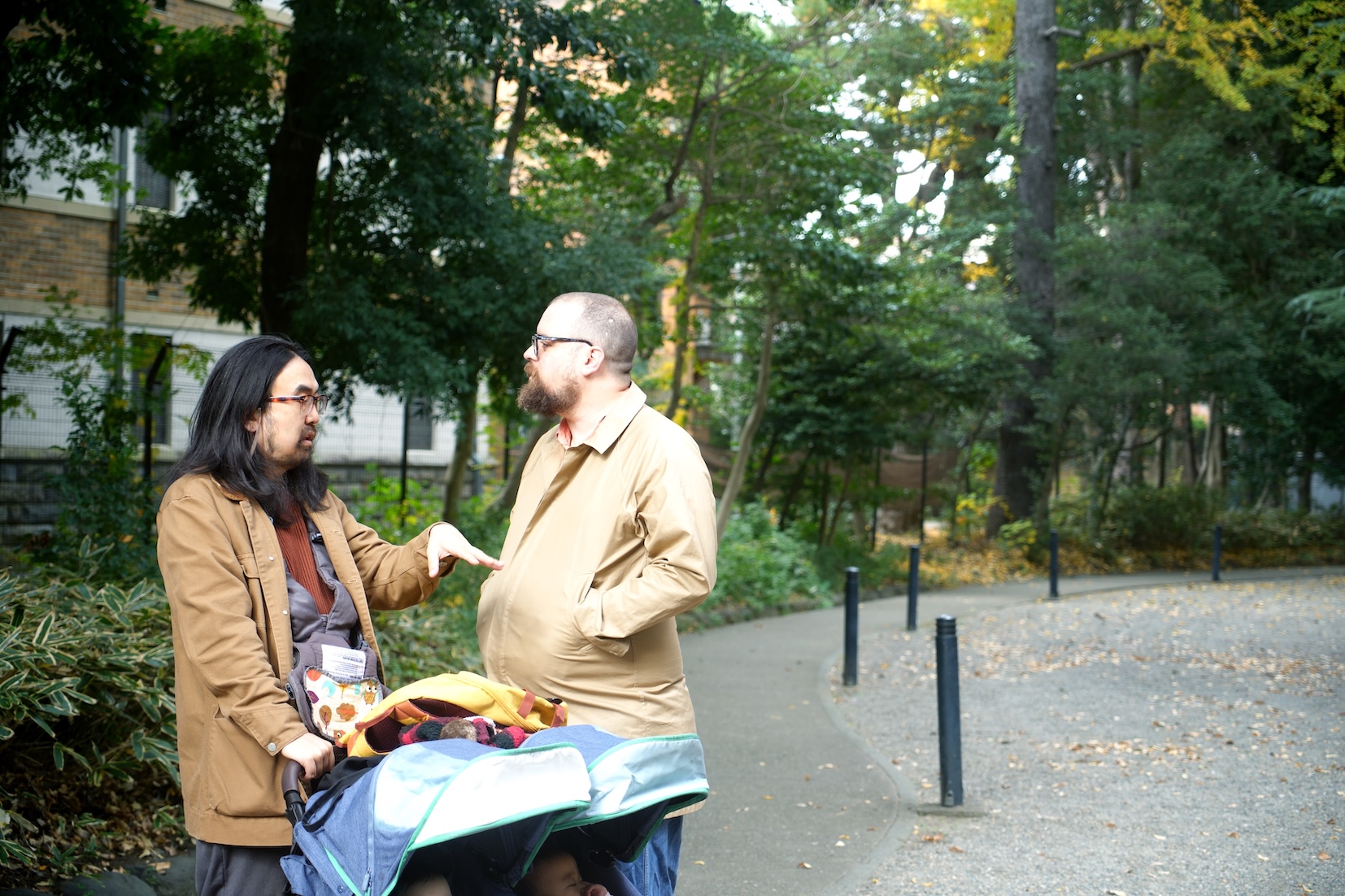
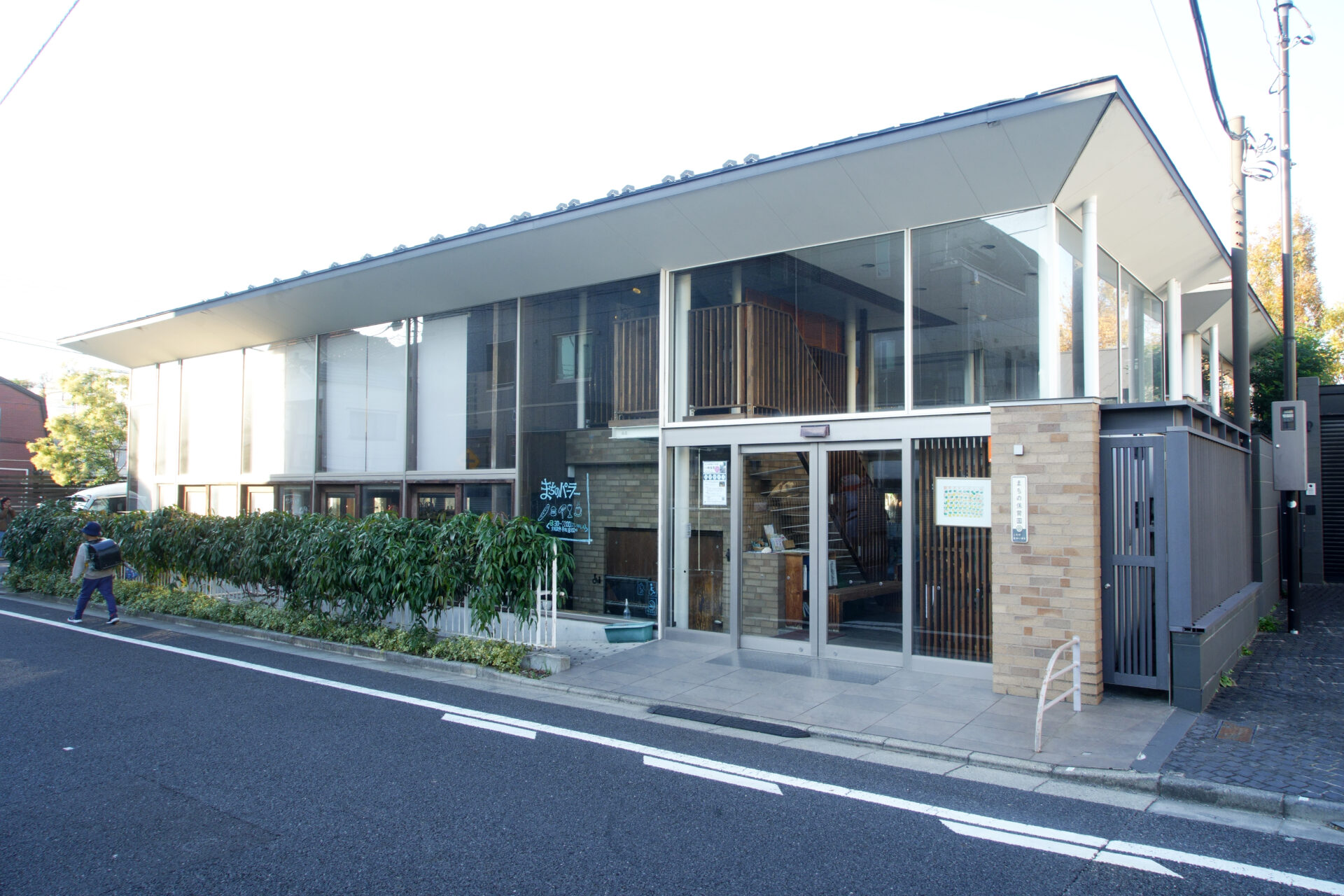
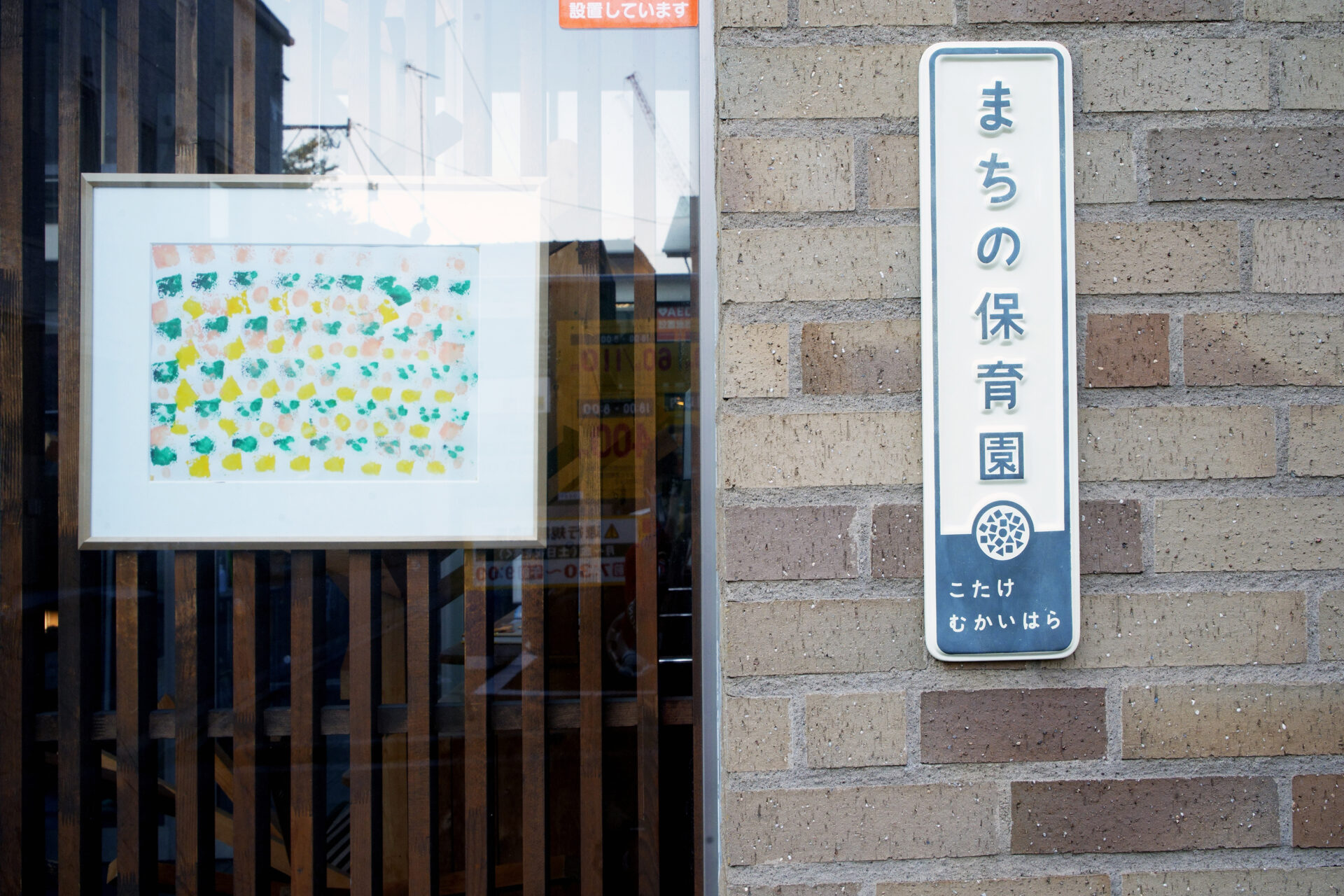
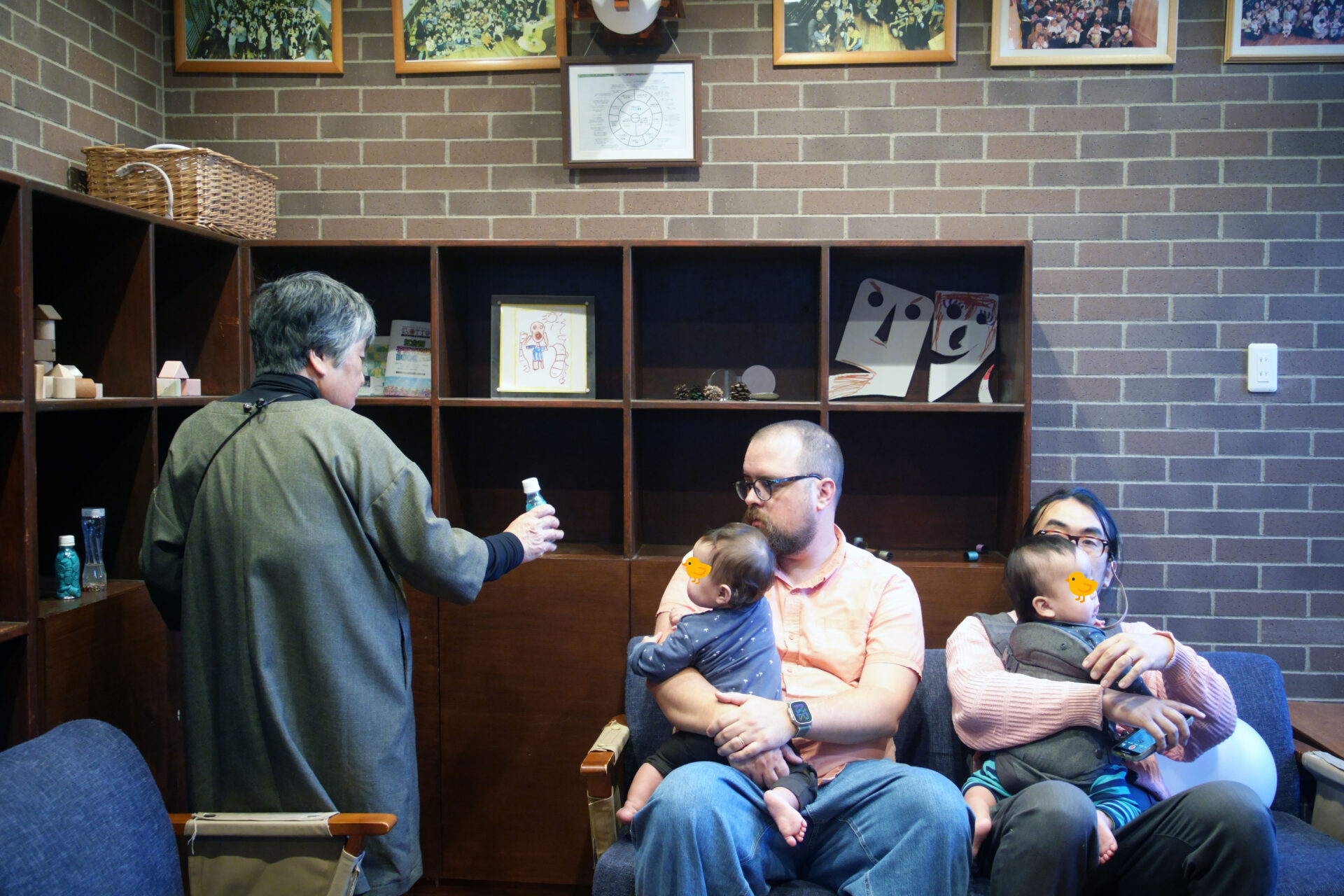
二日目。この日双子用ベビーカーを押しながら向かったのは、まちの保育園 小竹向原。レッジョ・エミリア・アプローチにインスパイアされた保育園だ。園のある練馬区は、東京都23区の北西に位置し、住宅地としての性格が強いエリアだ。その分、23区の中でも緑が多く土地にゆとりがあり、この園には延べ床面積800平米に定員80名の子どもたちが通っている。
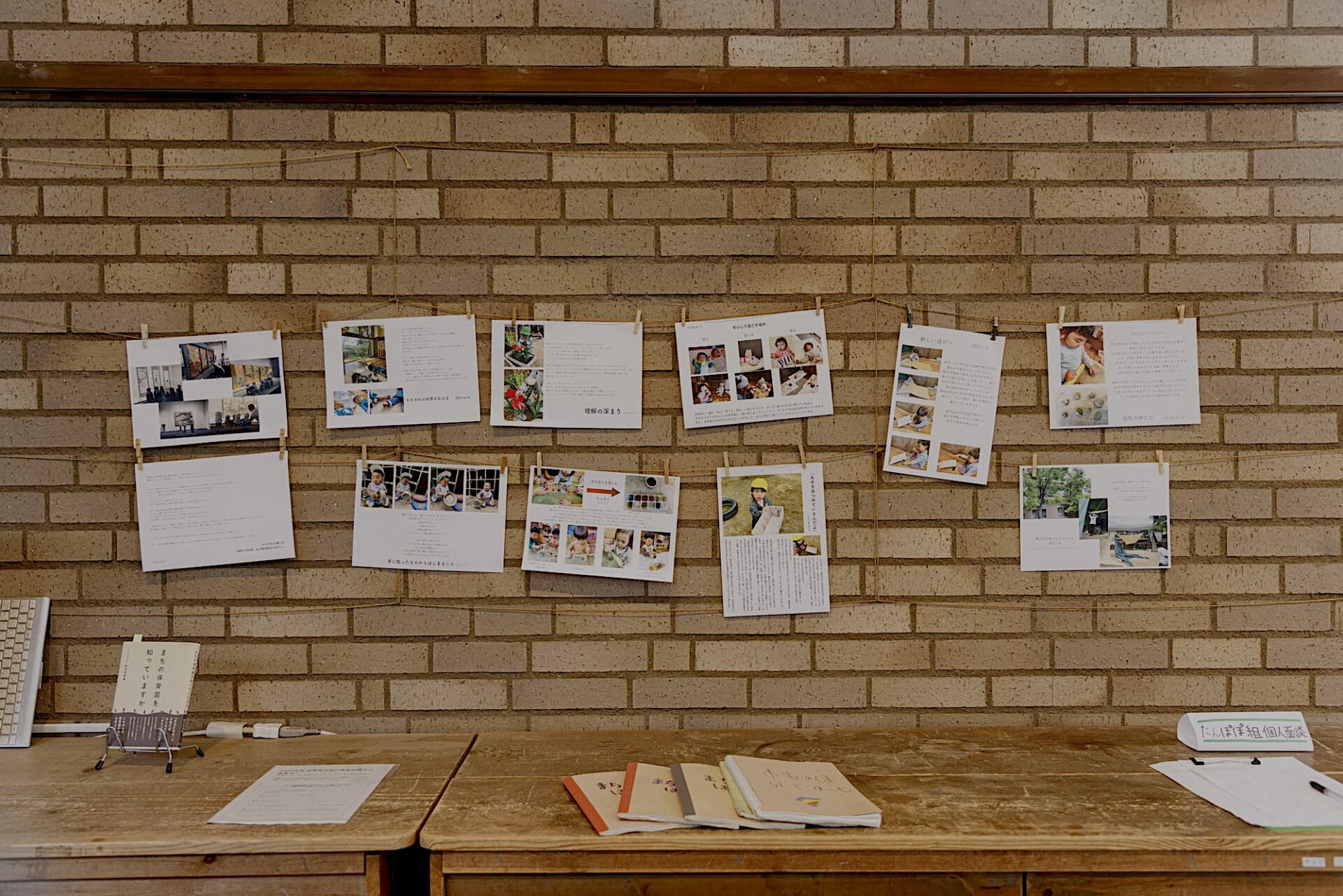
園では、アトリエリスタやコミュニティコーディネーターといった専門職が保育に関わるほか、「複雑で美しい世界を言葉だけで理解するのはもったいない」という松本理寿輝代表の理念のもと、子どもの行為や思考のプロセスを写真や言葉で記録する「ドキュメンテーション」が園内のいたるところに掲示されていた。
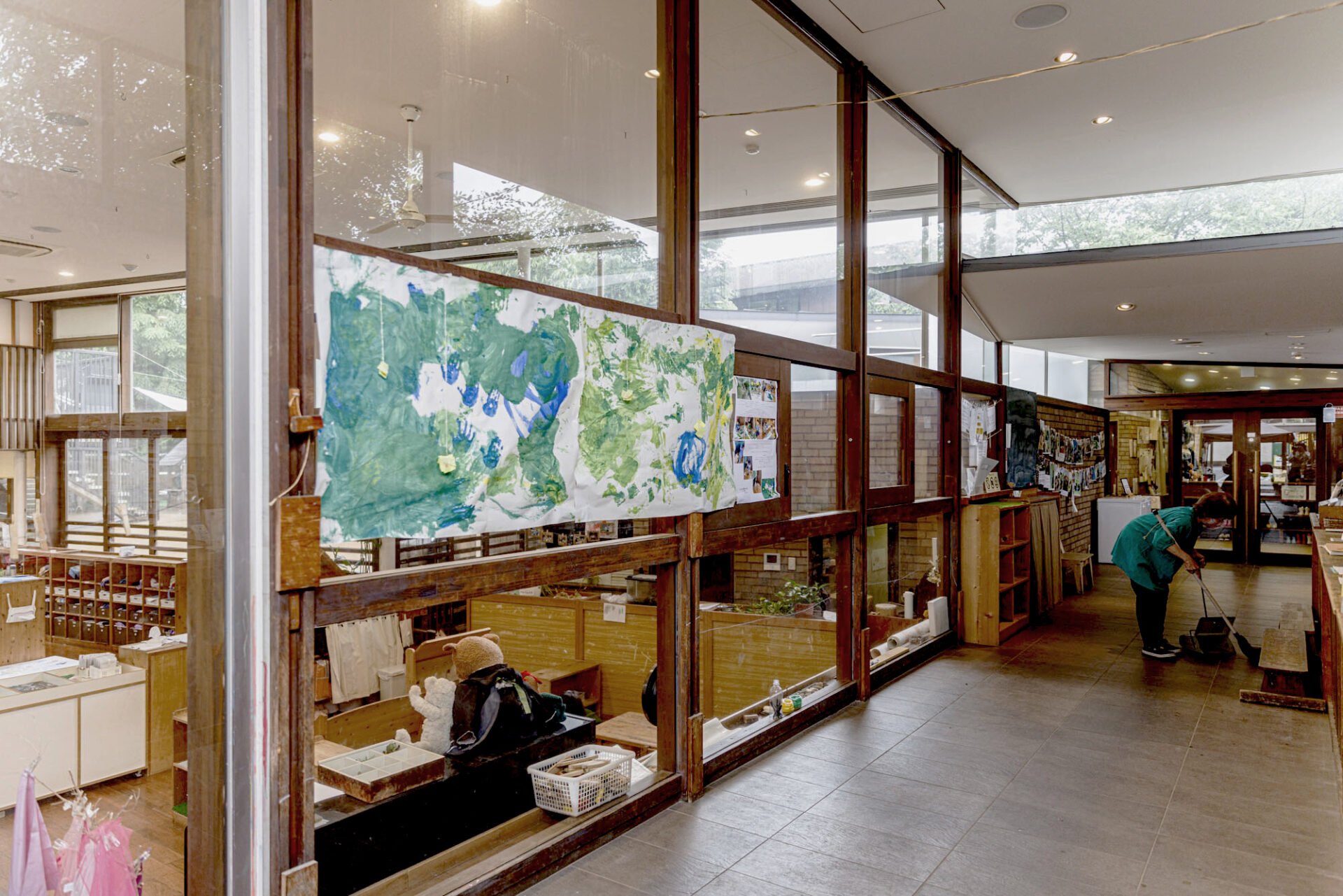
Day Two. Pushing the double stroller, they headed to Machi-no-hoikuen Kotake-Mukaihara, in Nerima Ward. Nerima, in the northwestern part of Tokyo’s 23 wards, is primarily residential and comparatively spacious by central Tokyo standards. The daycare, based on the Reggio Emilia approach, has a total floor area of 800 square meters and accommodates 80 toddlers and children.
Under the philosophy of director Rizuki Matsumoto, who believes that “understanding the complexity and beauty of the world beyond words,” is essential in nurturing children’s senses, the daycare emphasized documentation—recording children’s actions and thought processes through photographs and text. Full-time specialists called atelieristas and community coordinators were involved in daily care.
©︎ まちの保育園
©︎ Machi-no-hoikuen Community School
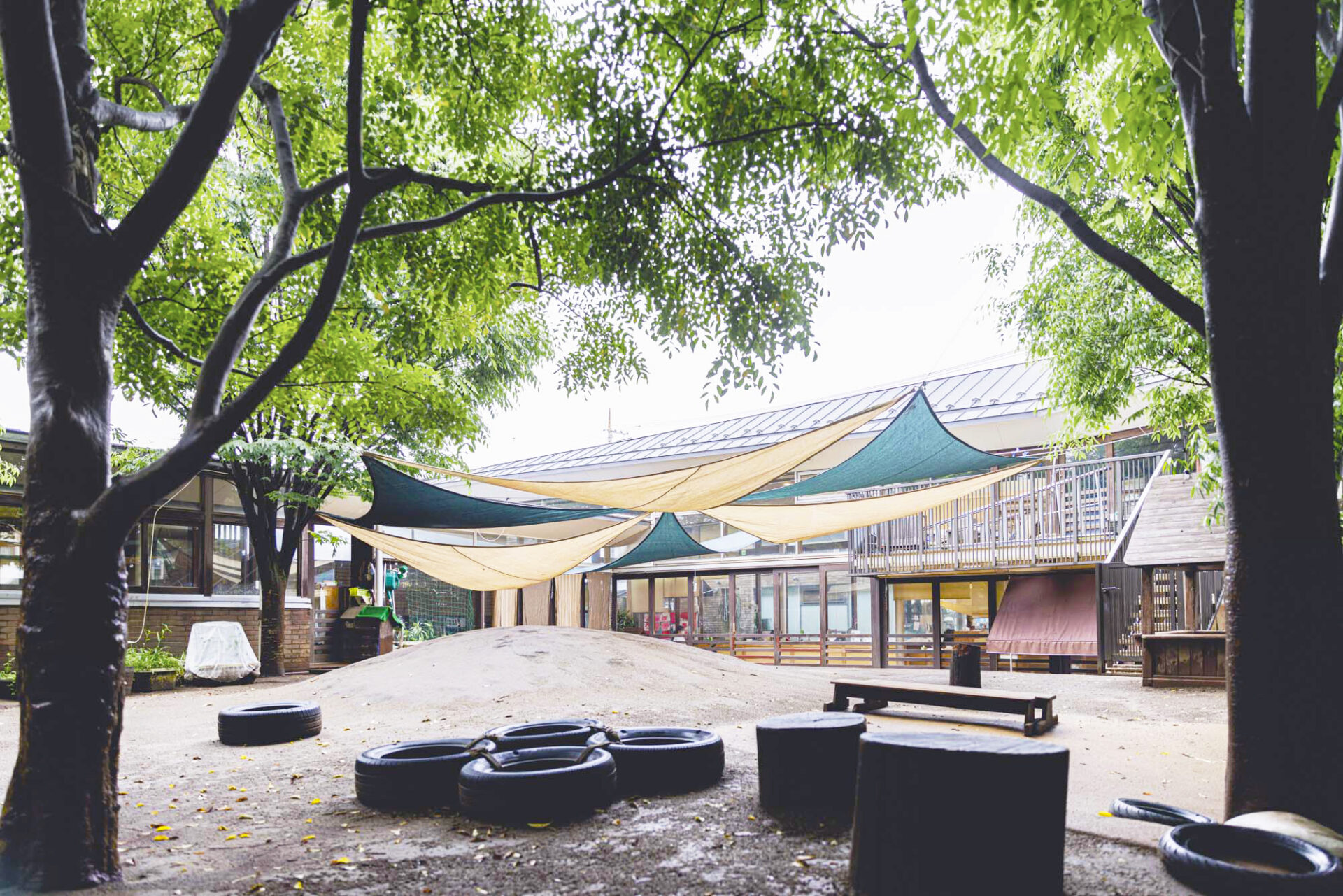
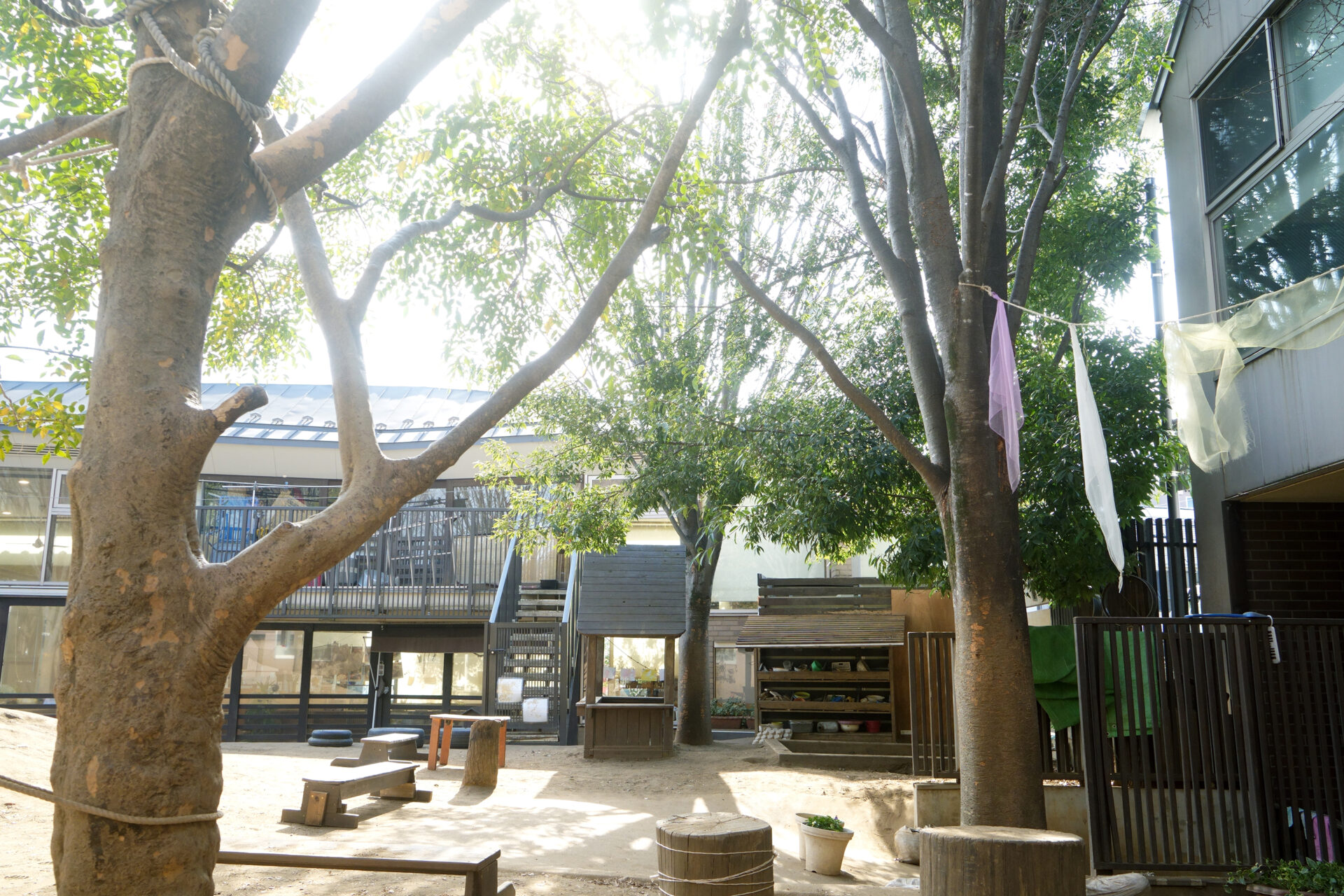
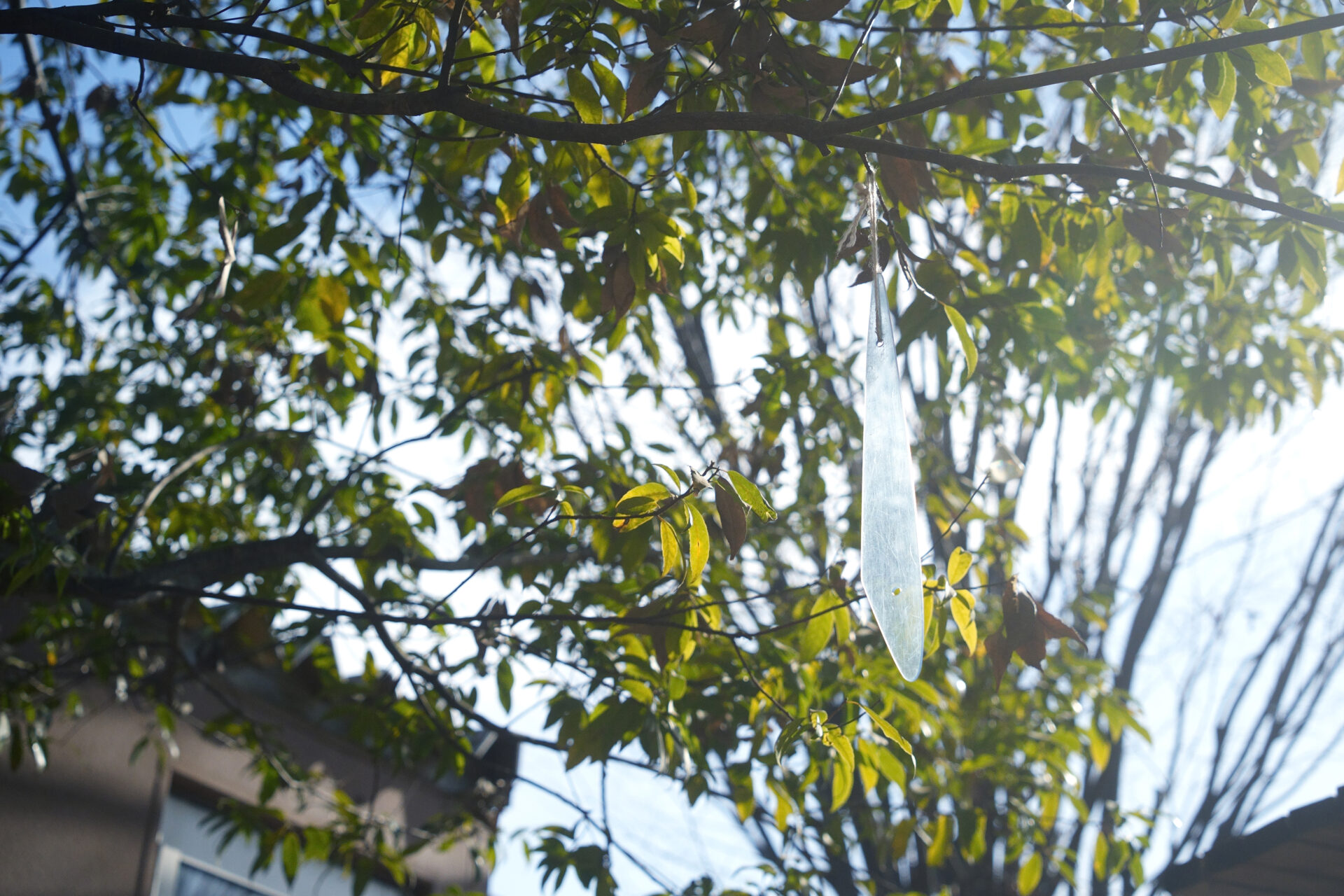
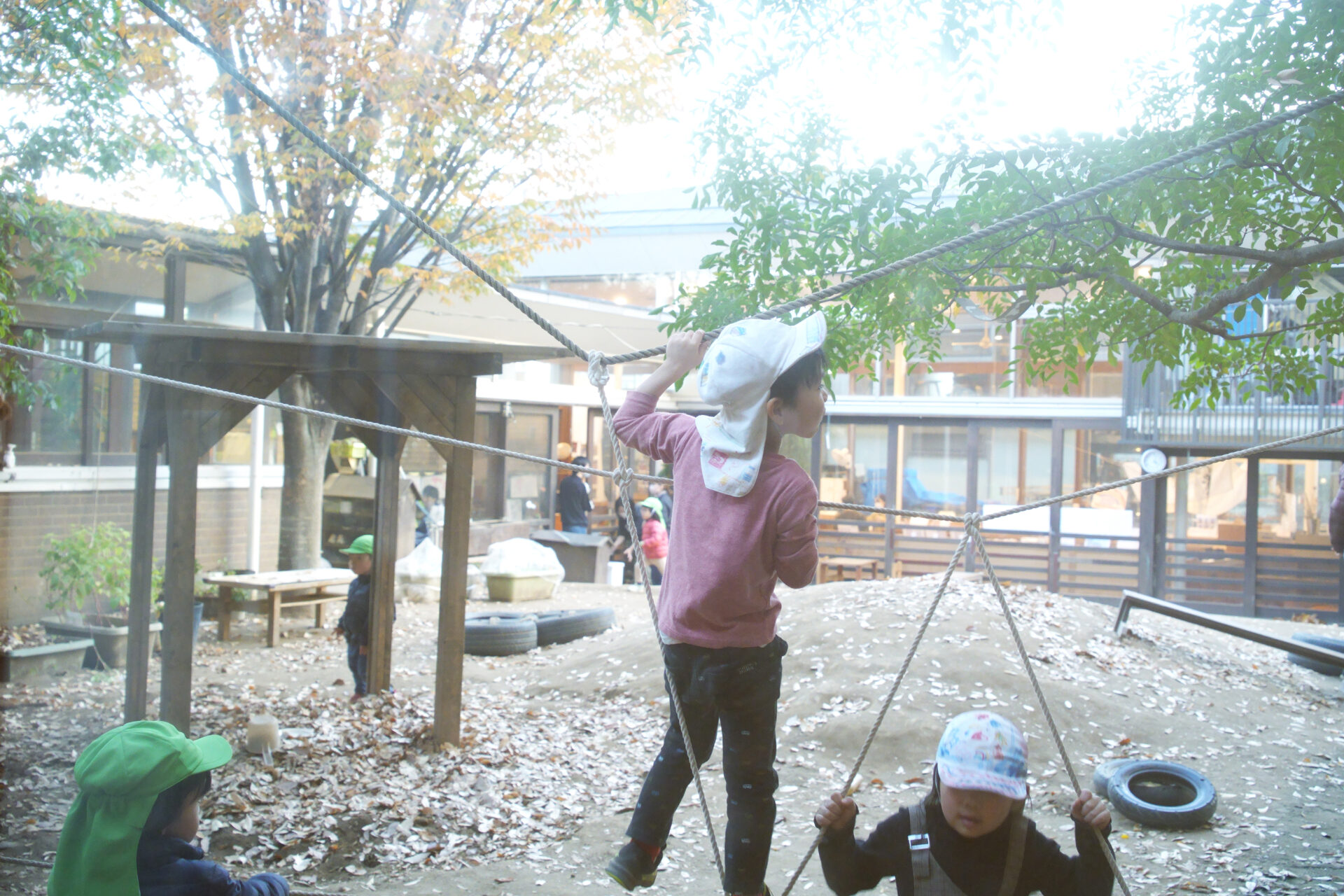
園舎の中心には様々な大きさの樹木が立ち並ぶ園庭がある。子どもたちは日没まで園庭で遊び、表現することが日常の中心にあるのだという。保育園というより、小さなアートスペースや公共施設に近い空気を持つ場所だった。
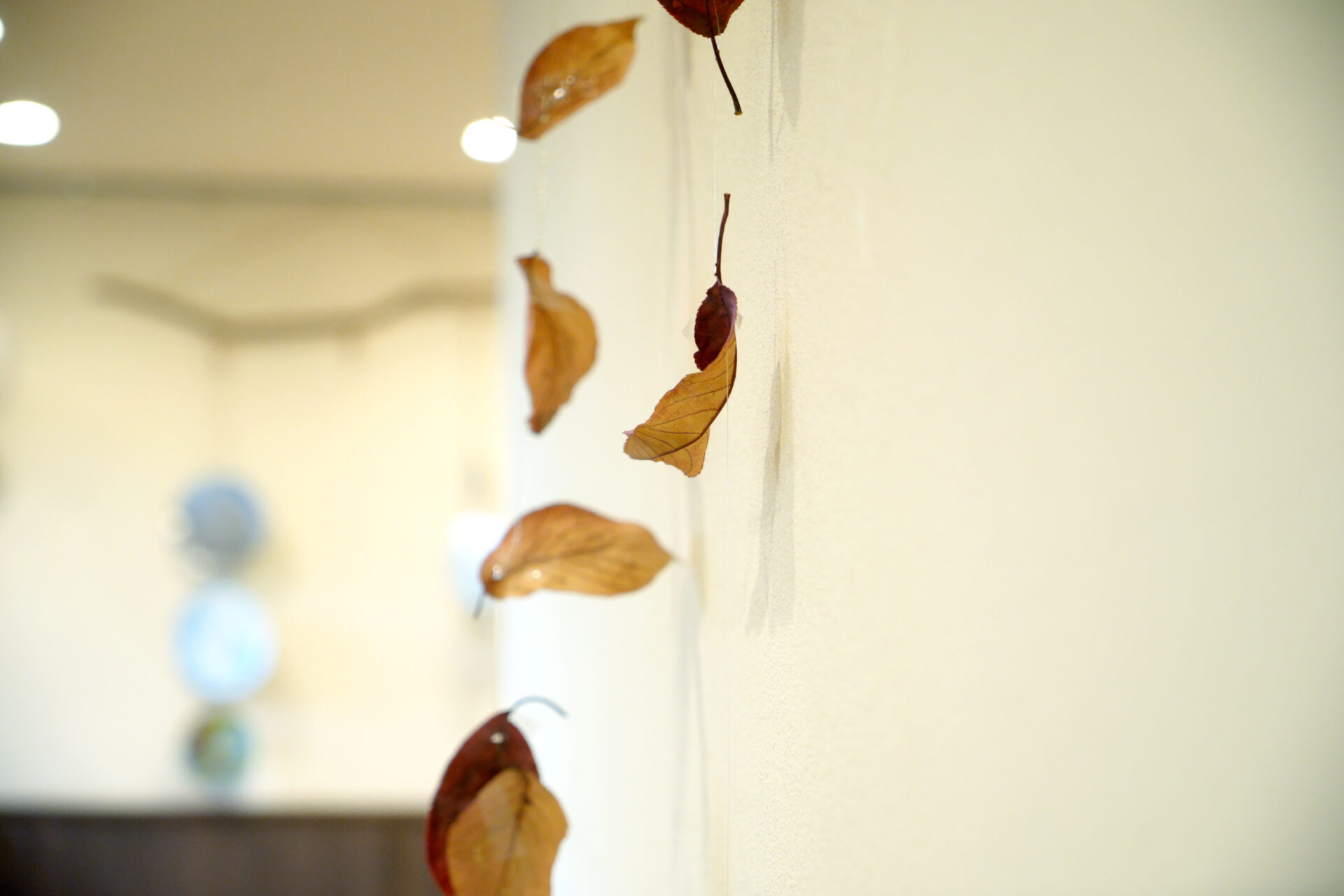
At the center of the building was an outdoor courtyard with a variety of tall trees that sheds different shapes and colors of leaves. Children play and express themselves there until sunset, making it the centerpiece of their daily routine. Expression was not an activity but the core of everyday life. Rather than a typical daycare, the place felt closer to a small art space.
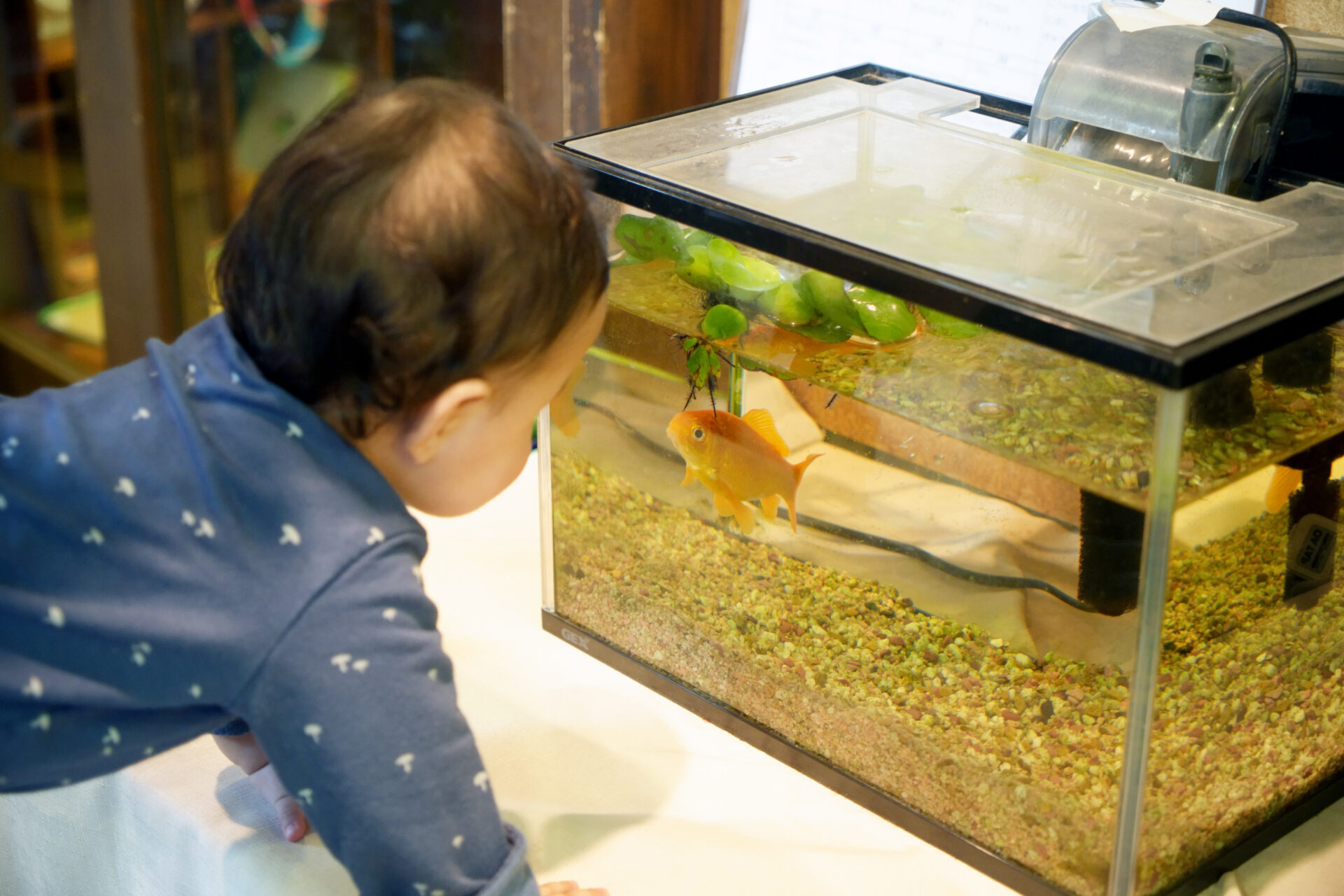
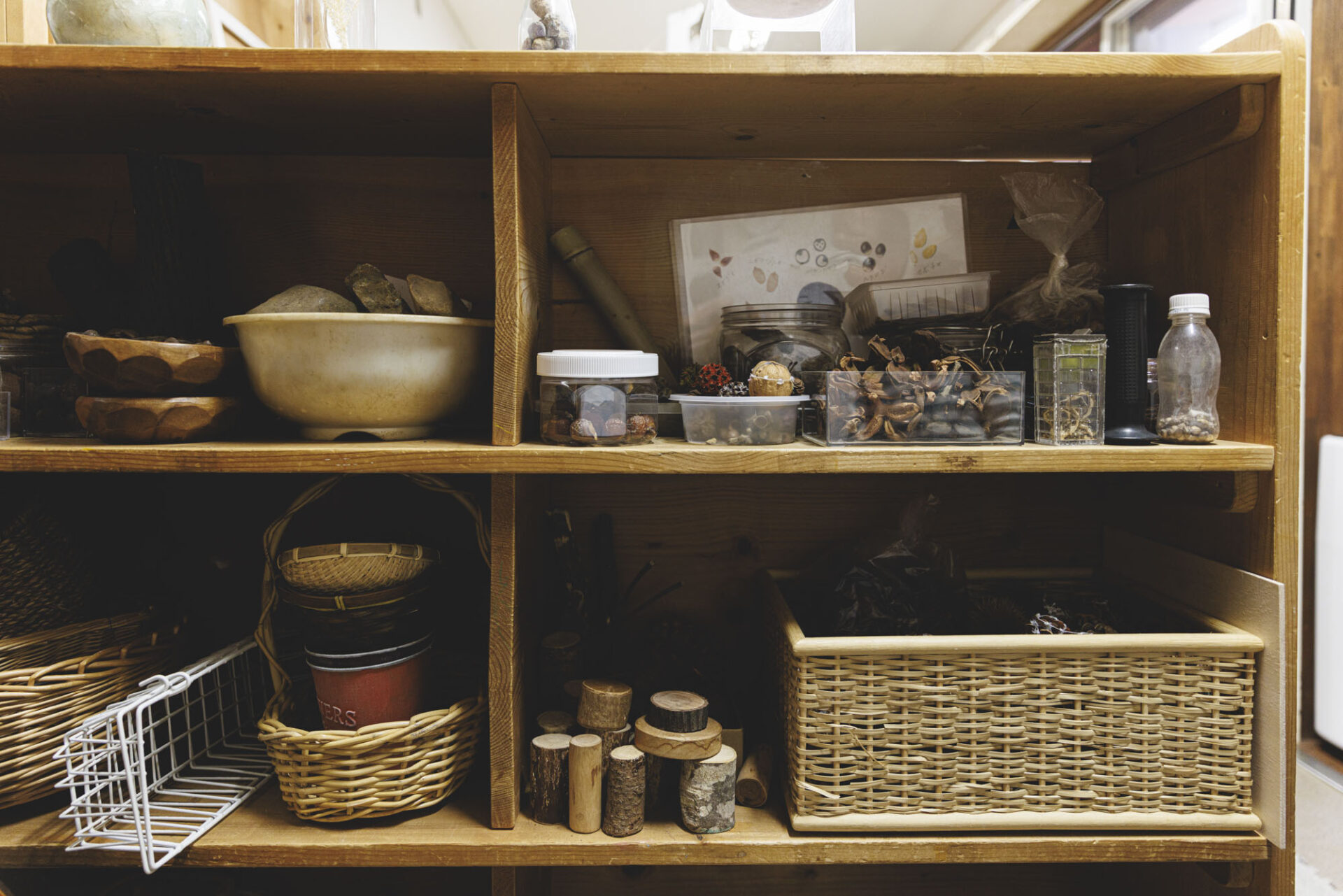
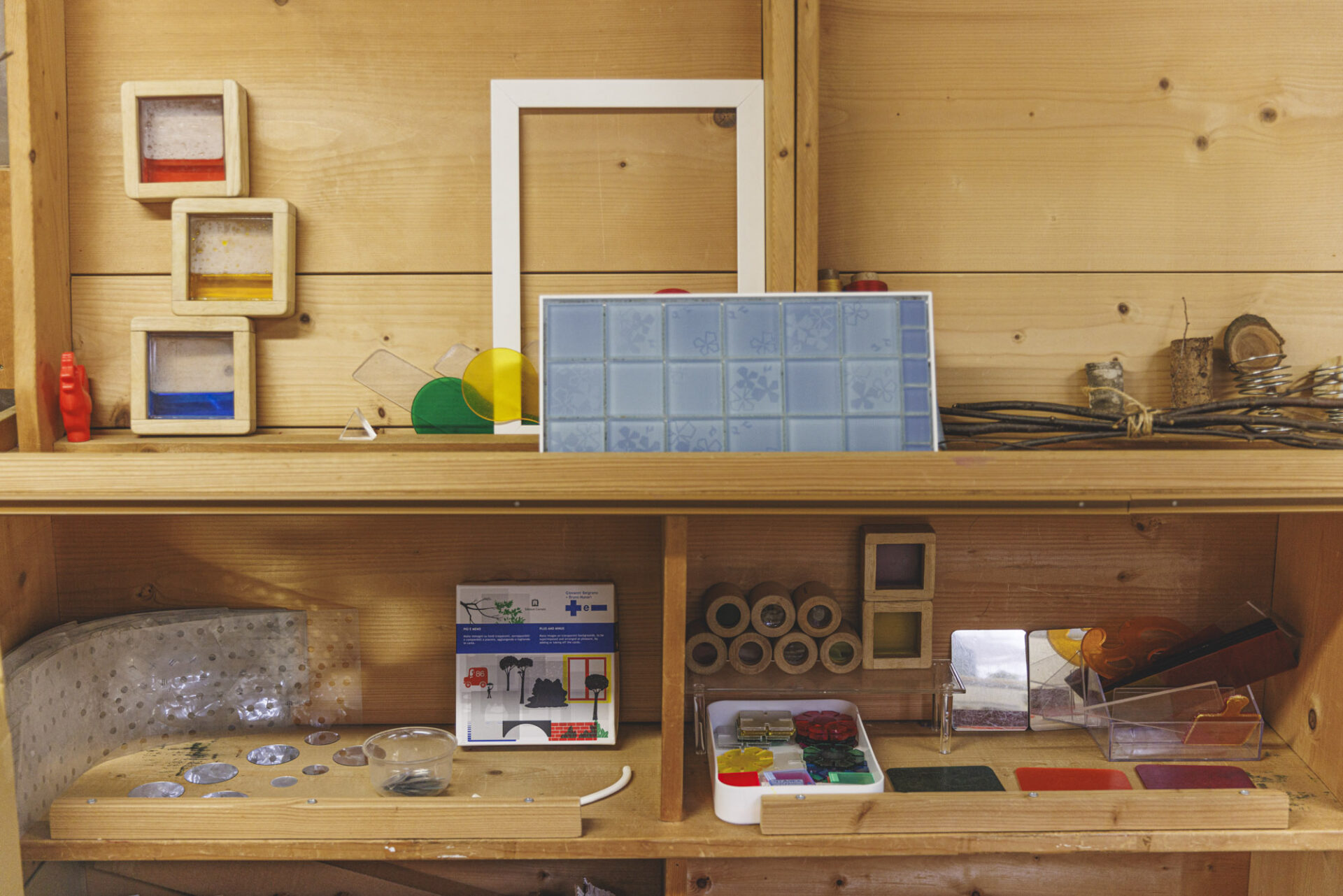
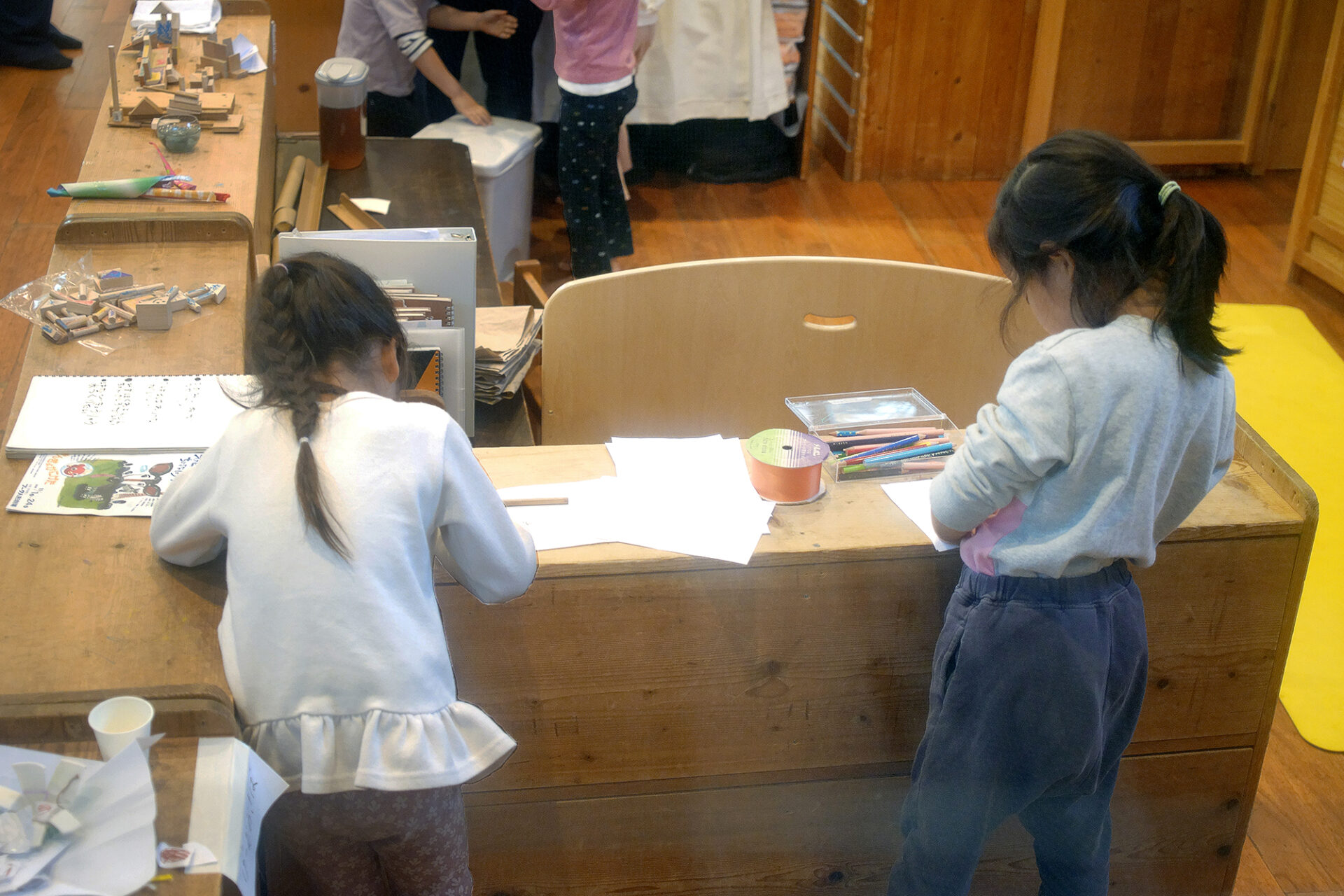
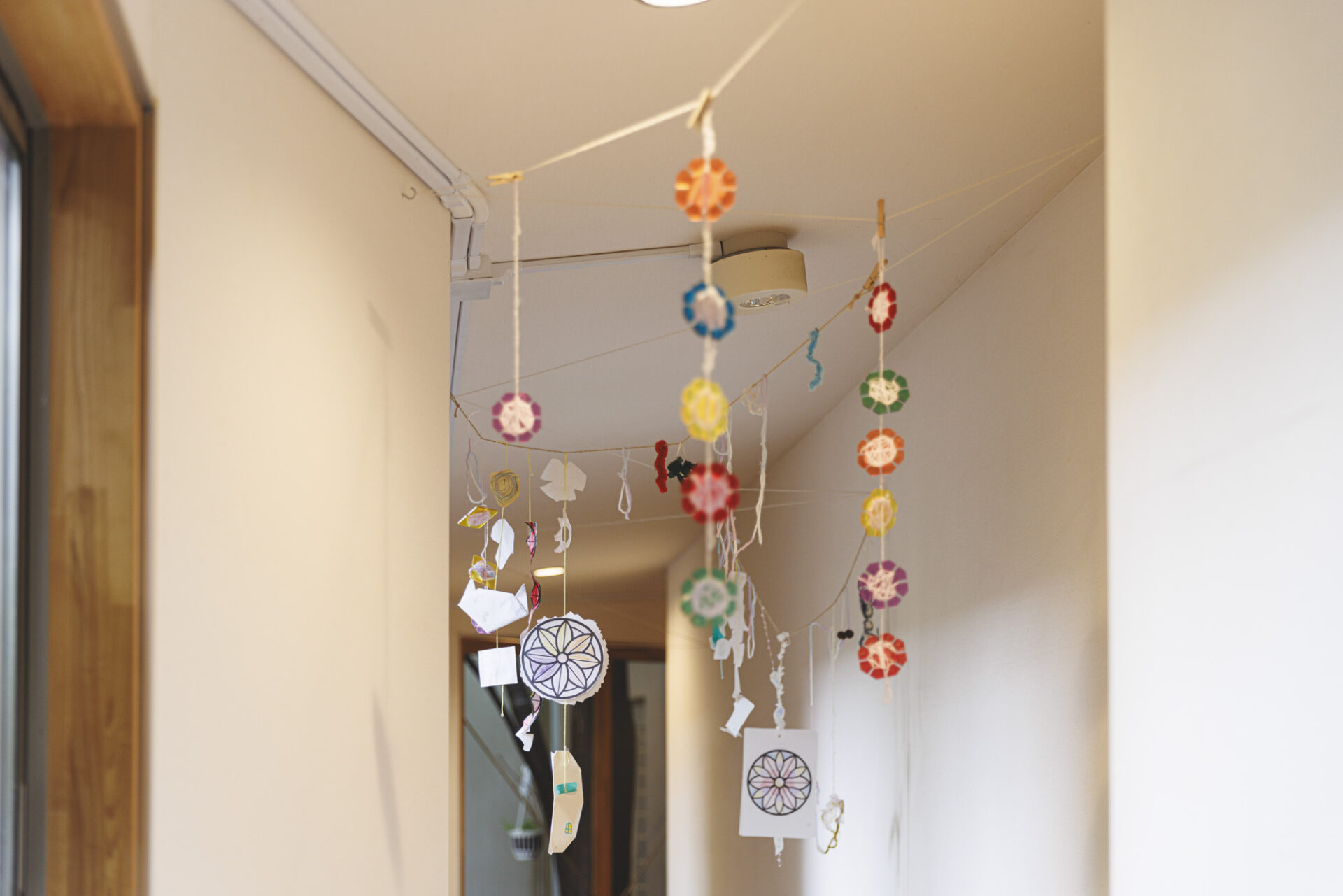
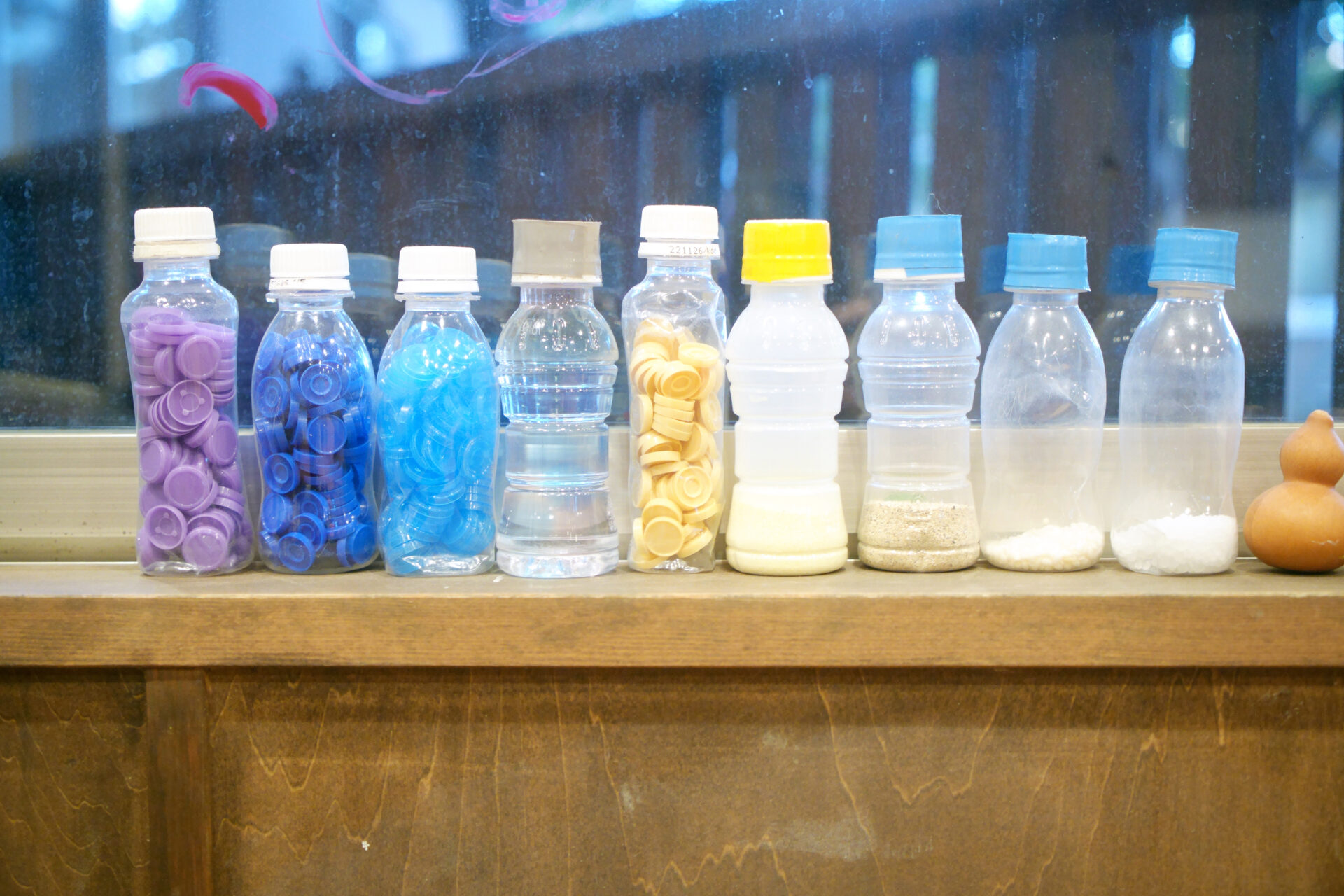
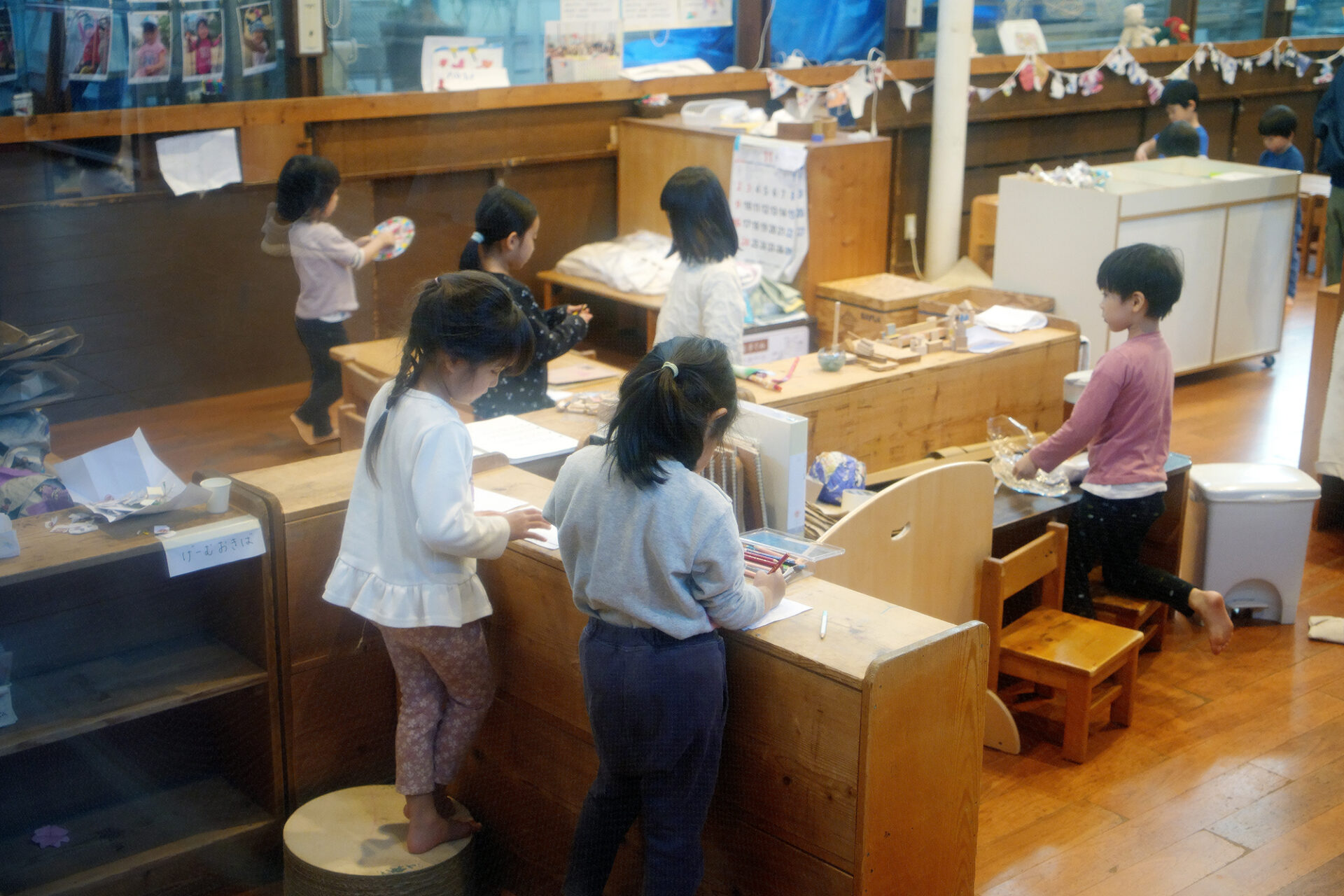
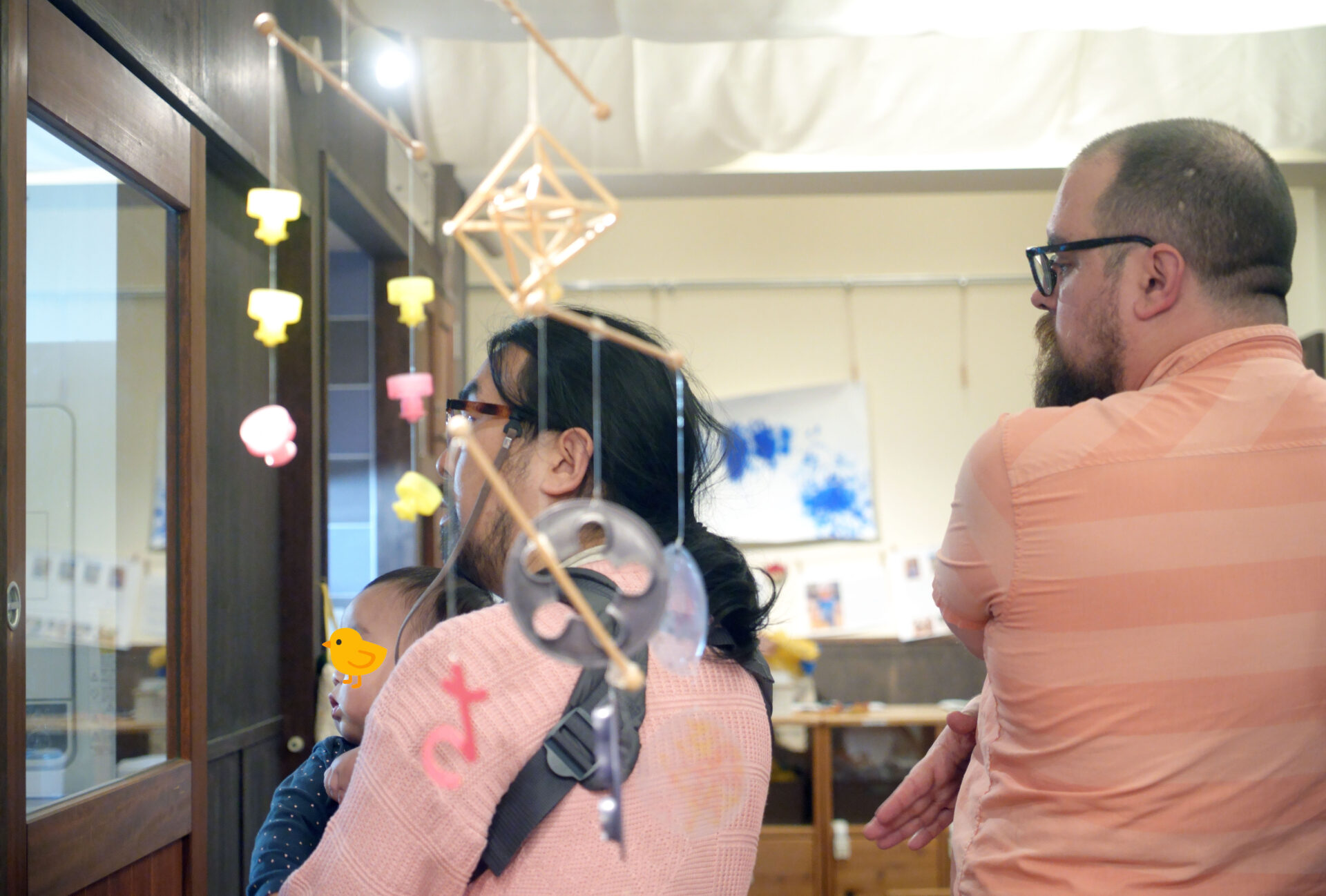
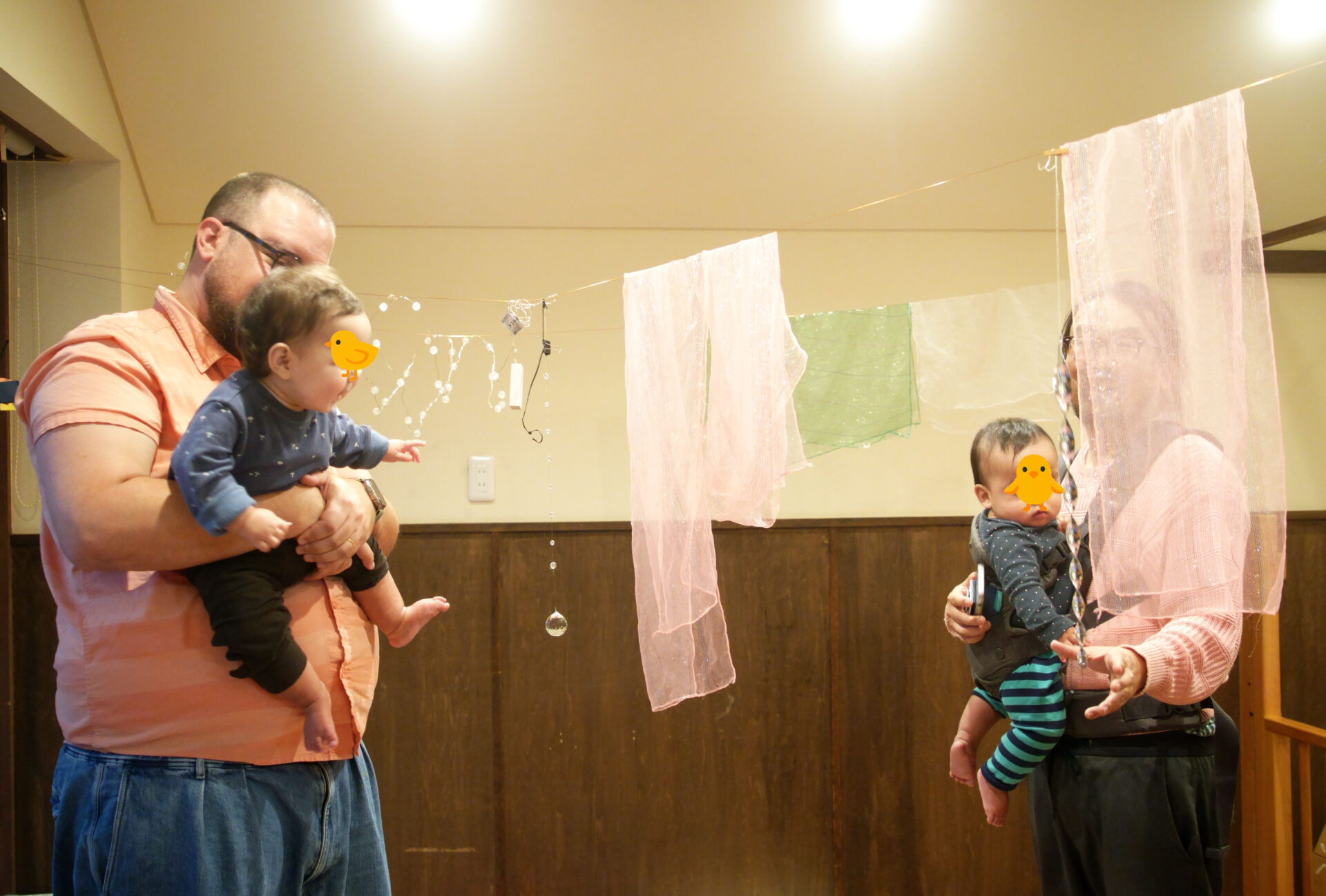
園庭を見学した後、一時保育の子どもたちが通う部屋に案内された。「他の子たちと違う部屋なんだね。短い時間を過ごす双子たちも溶け込める仕掛けがあるのかしら」と医はやや不安そうな顔で呟いた。双子たちは天井からぶら下がる様々なモビールに夢中で手を伸ばしている。
They were shown the room designated for children in temporary care. “Oh, so it’s a separate room,” Ei said quietly, wondering how easily the twins would blend in. The twins, meanwhile, were transfixed by hanging mobiles, reaching up toward them.
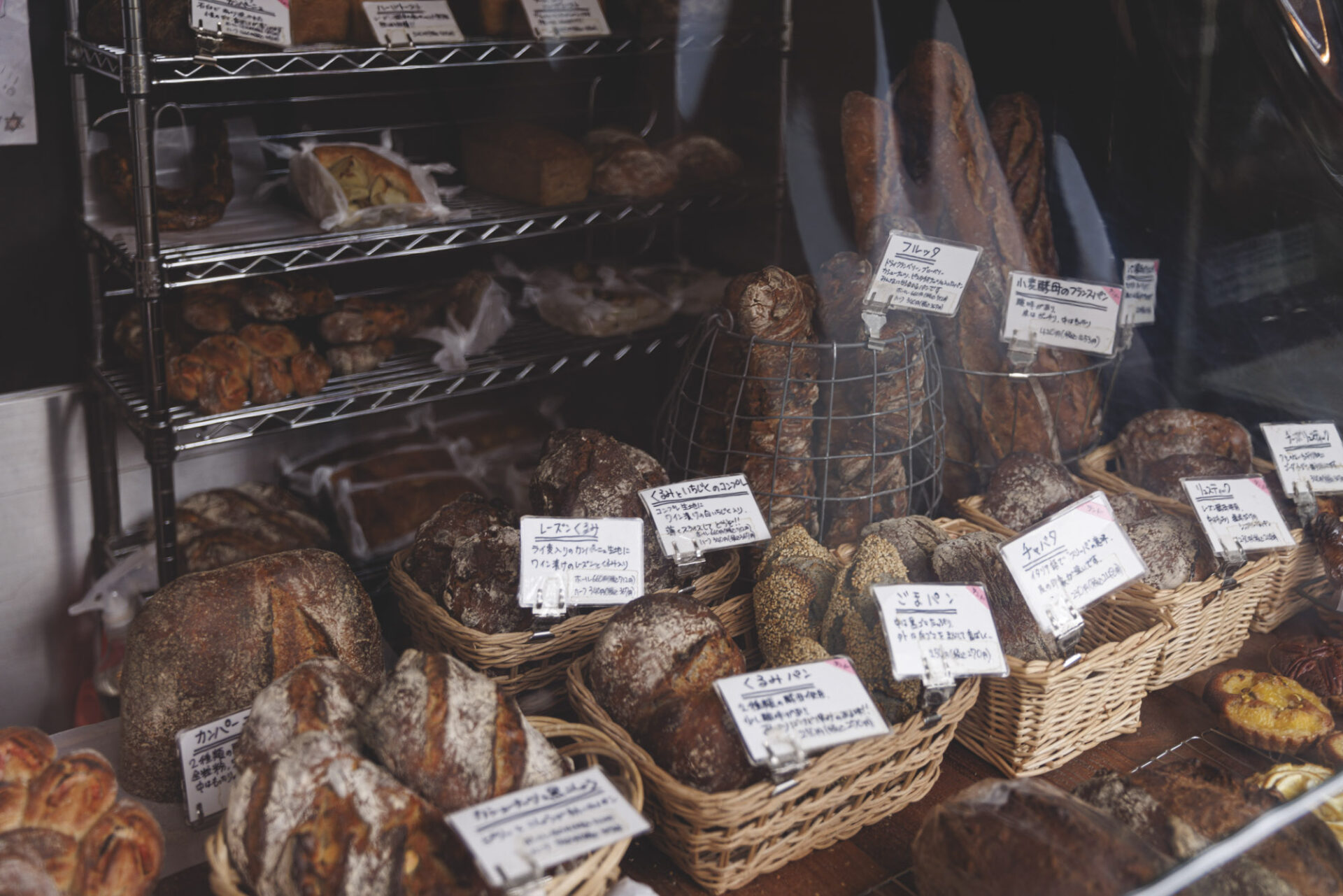
一階には松本氏が惚れ込んだ地元の人気パーラーによるカフェが併設されており、給食にもここの天然酵母パンが出される。「うちの子はパンの違いがわかるようになったと言われます」と松本氏は言う。
On the ground floor was a café run by a popular local parlor that Matsumoto adores. Its naturally leavened sourdough bread was served for lunch. “Parents say their kids can taste the difference,” said Matsumoto. By incorporating a café and gallery, the facility aims to foster interaction with “townspeople” and collaboration with the local community. The daycare building, designed by architect Ryosuke Uga and selected for the 2011 Good Design Award, makes extensive use of glass so that the presence of others can be felt from anywhere inside.
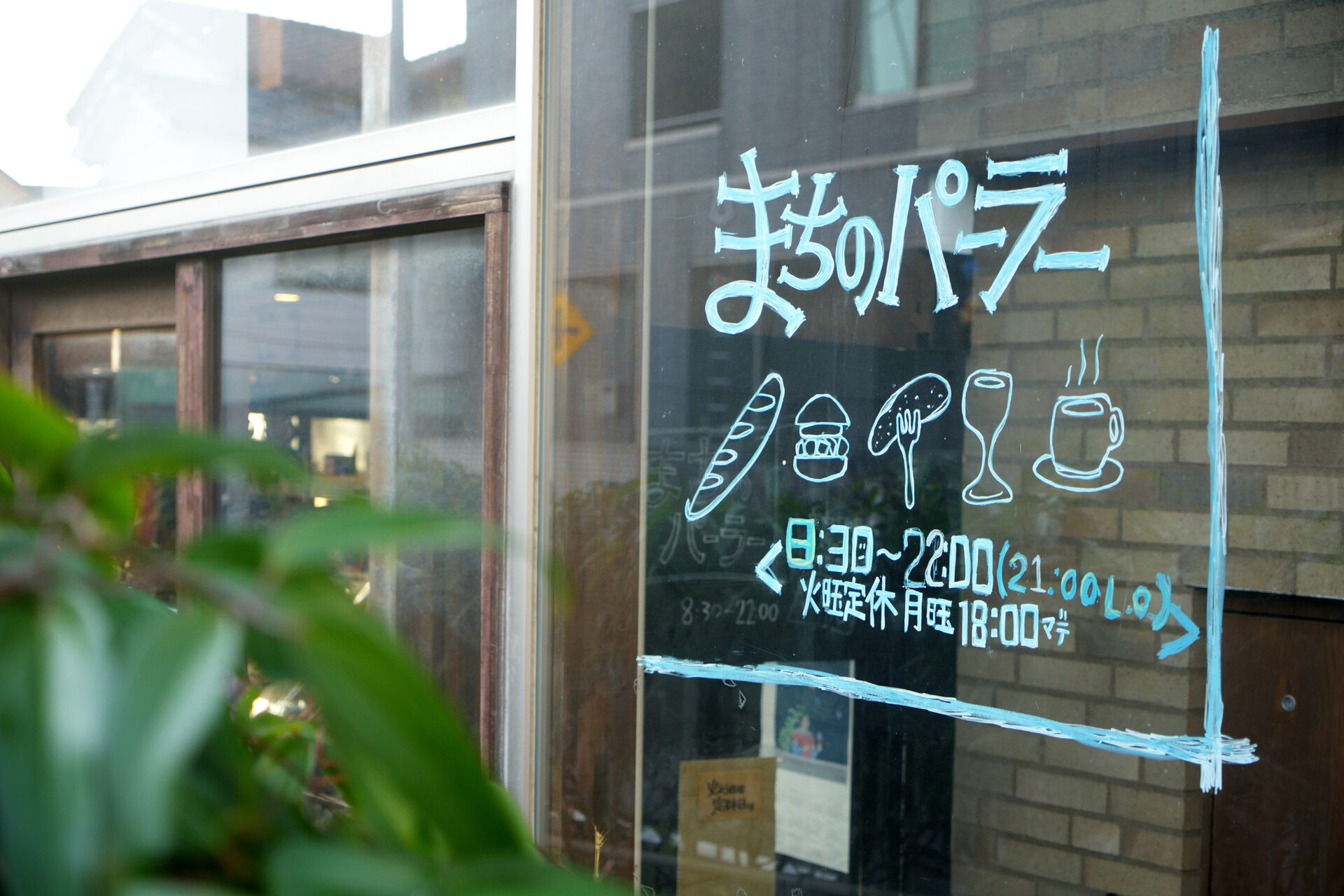
近隣の小学校の下校時間だった。ランドセルを背負った小学生が園に隣接されたカフェに入っていき、カウンターでひとり宿題をやりはじめた。弟妹を迎えに来る親と待ち合わせしているのだろうか。建築家の宇賀亮介氏の設計による園舎は、カフェやギャラリーを併設することで「まちの人」との交流や協力地域との連携を目指し、どこにいても他者の存在を感じられるようガラスが多用されている。2011年にはグッドデザイン賞に選ばれた。
松本代表の話を聴きながら、医が「フォレストの母は、まだ子どもたちが幼い頃に近所でレッジョの託児所を開いていたんです」と言うと、松本氏は嬉しそうに笑った。医の母の美和子は、園庭で子どもたちが暗くなるまで遊んでいる風景を見ながら「子どもの頃ってさ、遊びに夢中で気づくと空が暗くなってたよね。そういうのが体験できるのがいいよ」と言った。
It was dismissal time at the nearby elementary school. A child alone with a school backpack entered the café. He sat down at the counter and began doing his homework. Perhaps he was meeting a parent who had come to pick up his younger siblings.
During the interview, Ei mentioned that Forrest’s mother had once run a Reggio-inspired daycare. Matsumoto smiled. Watching children play in the courtyard until dusk, Miwako, Ei’s mother, said “in the old days, we played until the sky turned black. It’s good they still do that here.”

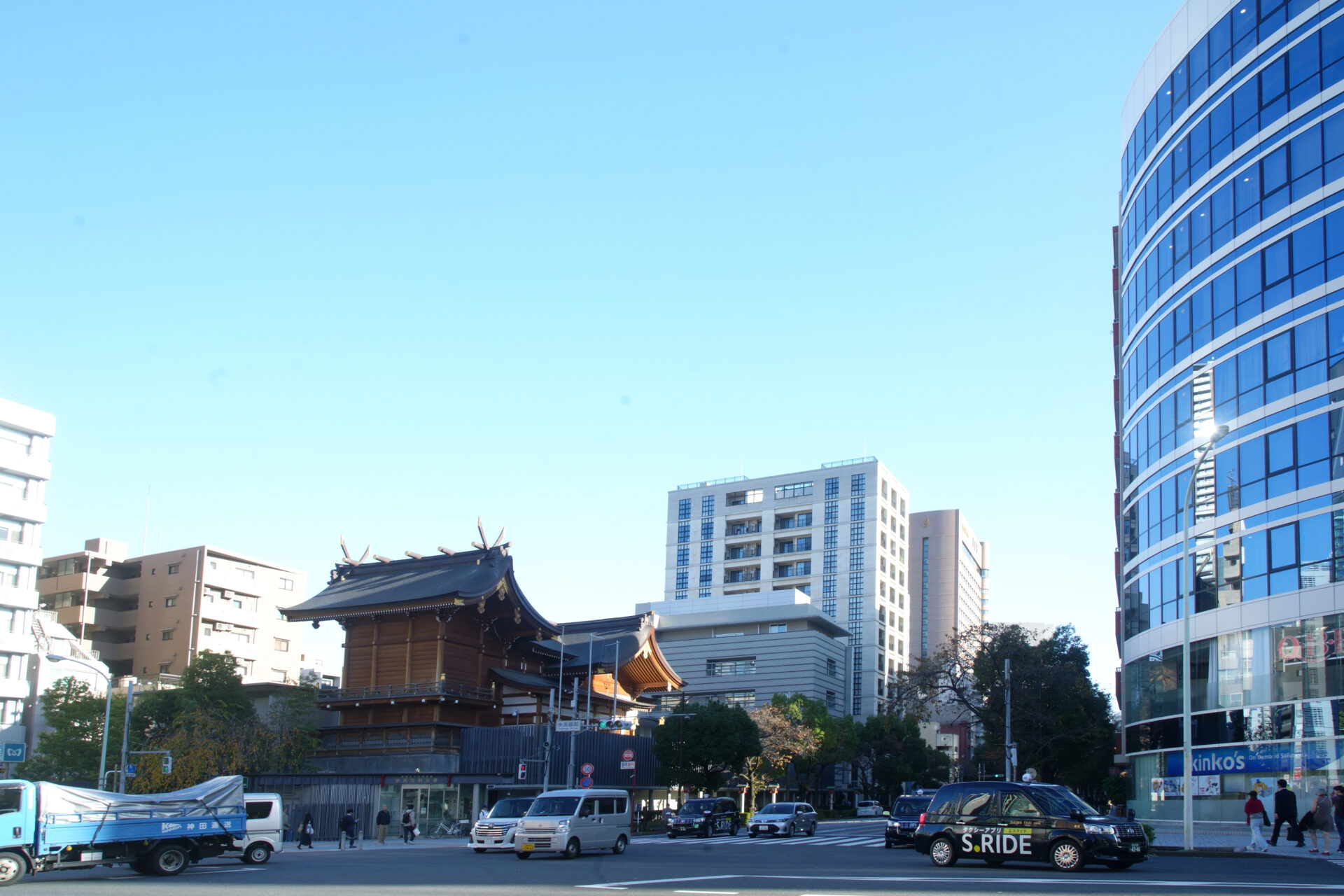
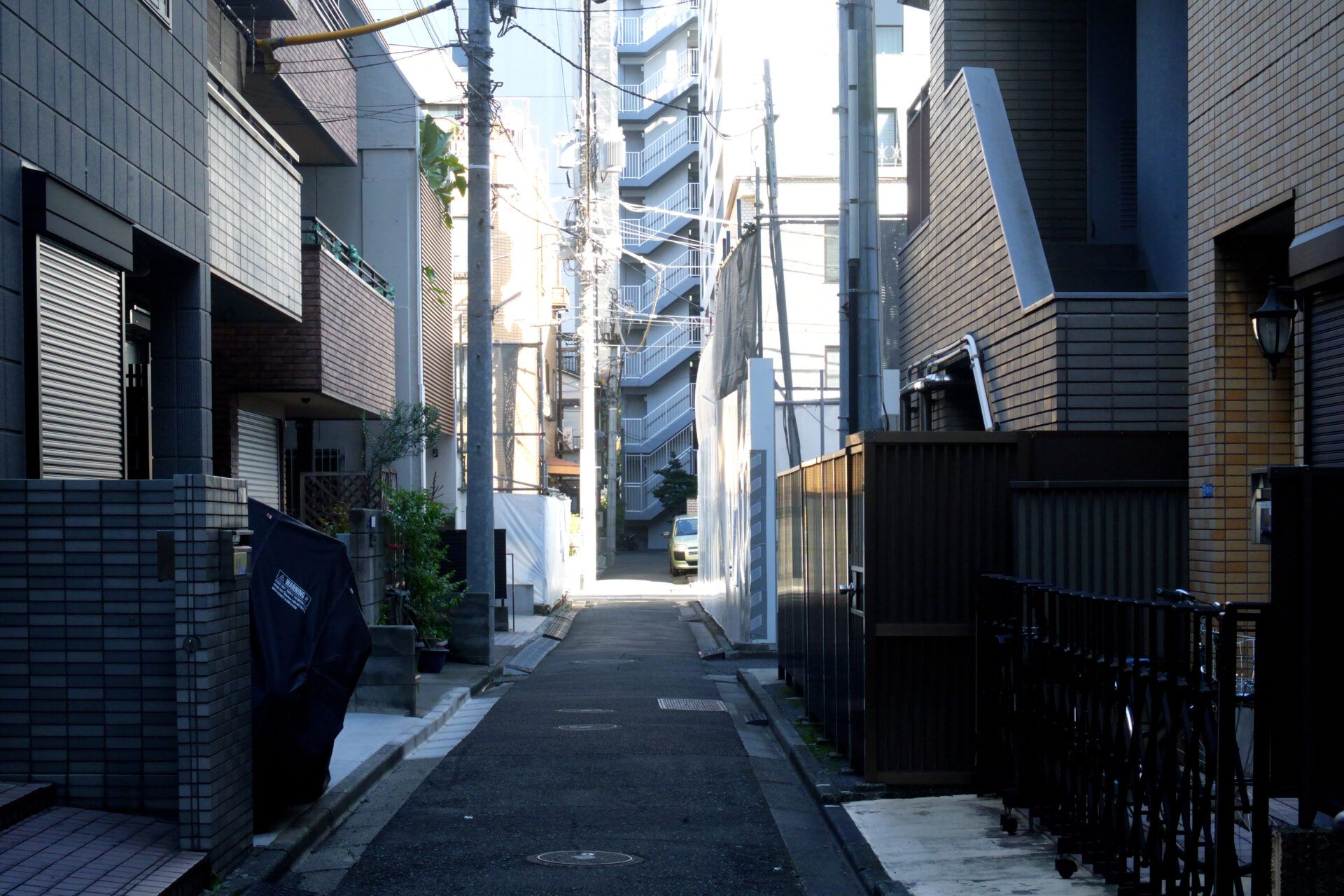
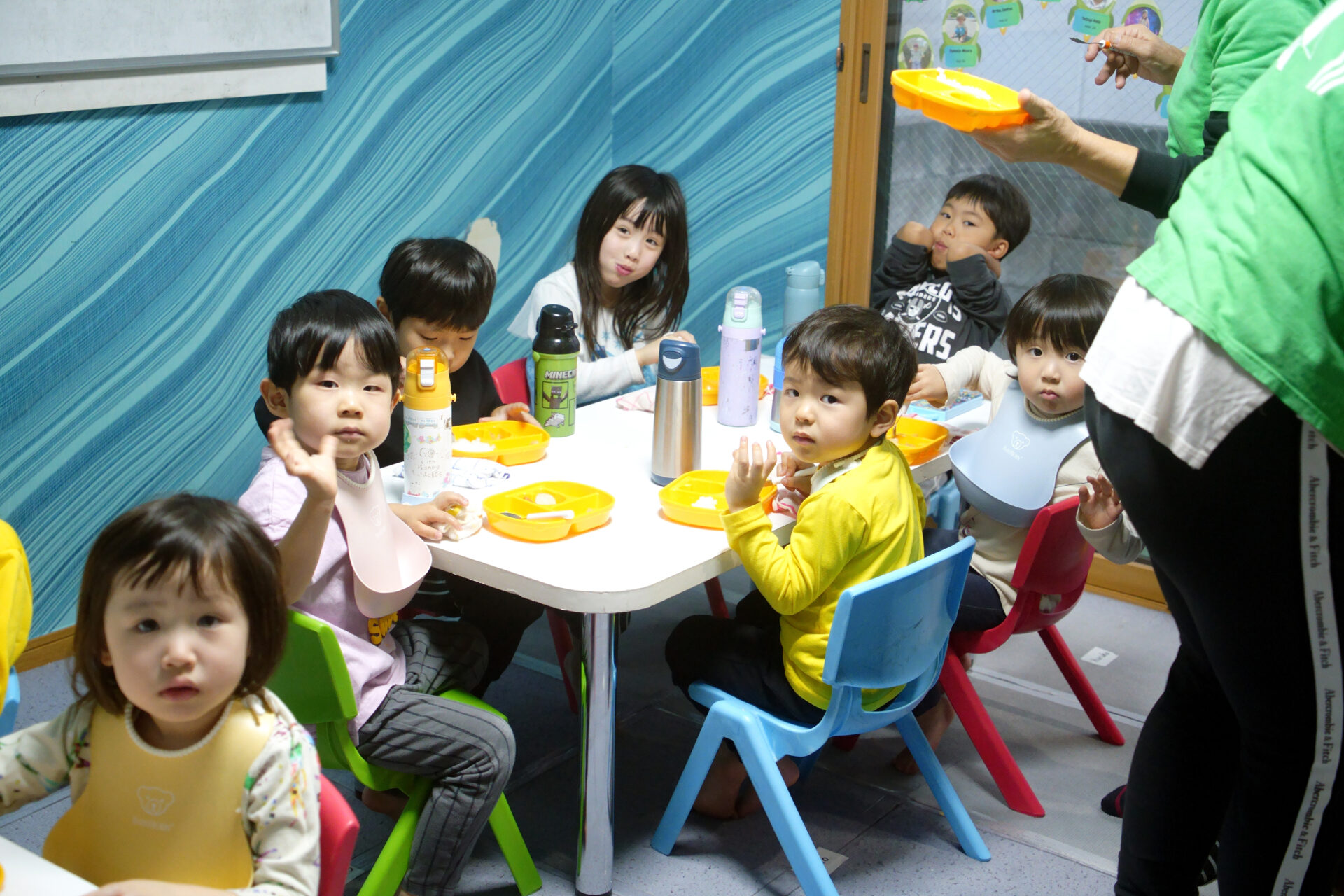
最終日に訪れたのは、東京の中心部に位置するオフィス街と下町が重なり合うエリアにあるバイリンガル保育園、キッズロケットアカデミー。大通りから人とすれ違うのがやっとの細い路地に入り、二階建ての戸建て住居が並ぶ一帯の奥に佇んでいた。
The final visit was to Kids Rocket Academy, a bilingual daycare located in Chuo Ward, an area where Tokyo’s central office district and old downtown neighborhoods overlap. From a major street, they turned into a narrow alley barely wide enough for two people to pass. At the end of the alley stood what looked like an ordinary two-story single-family house.
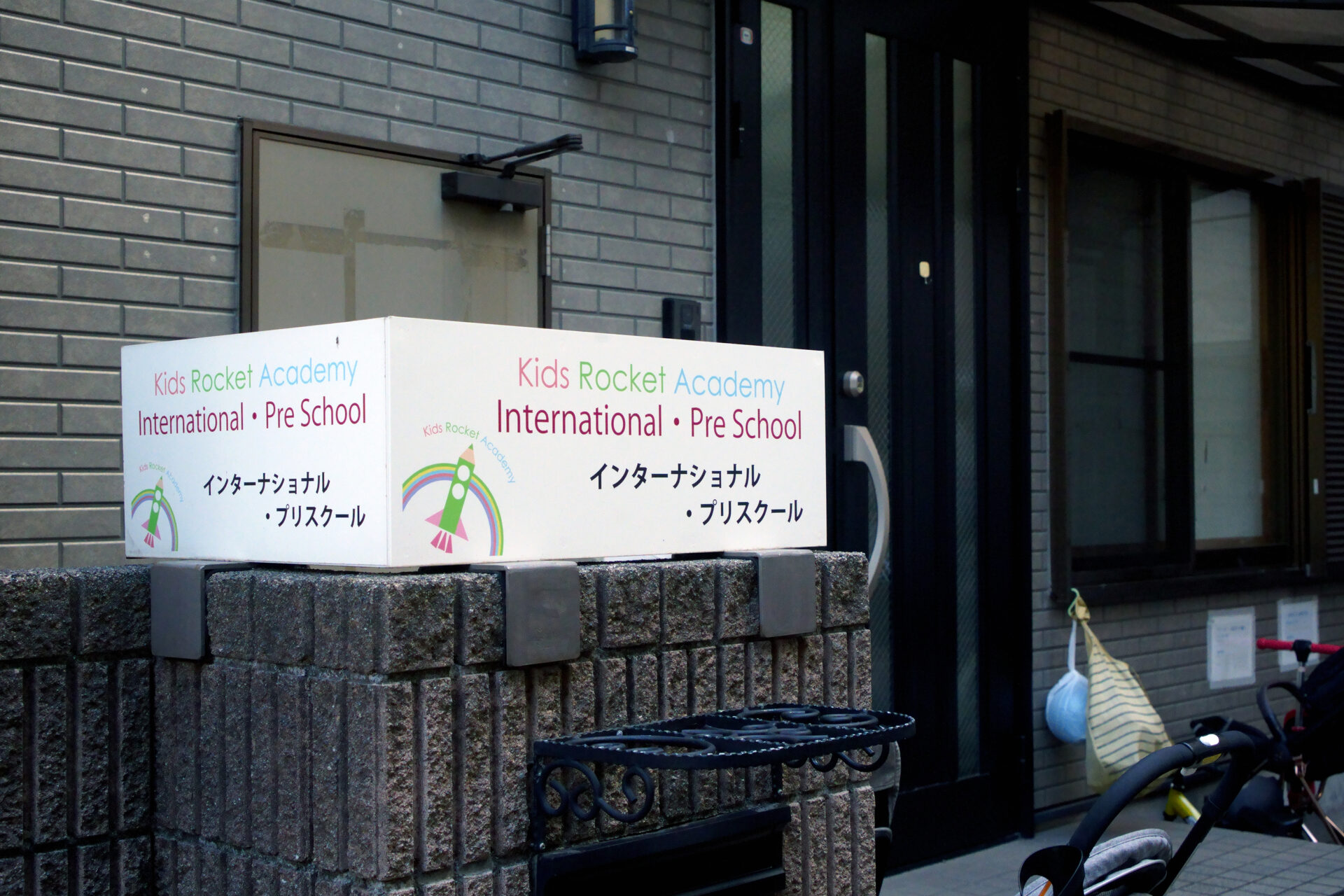
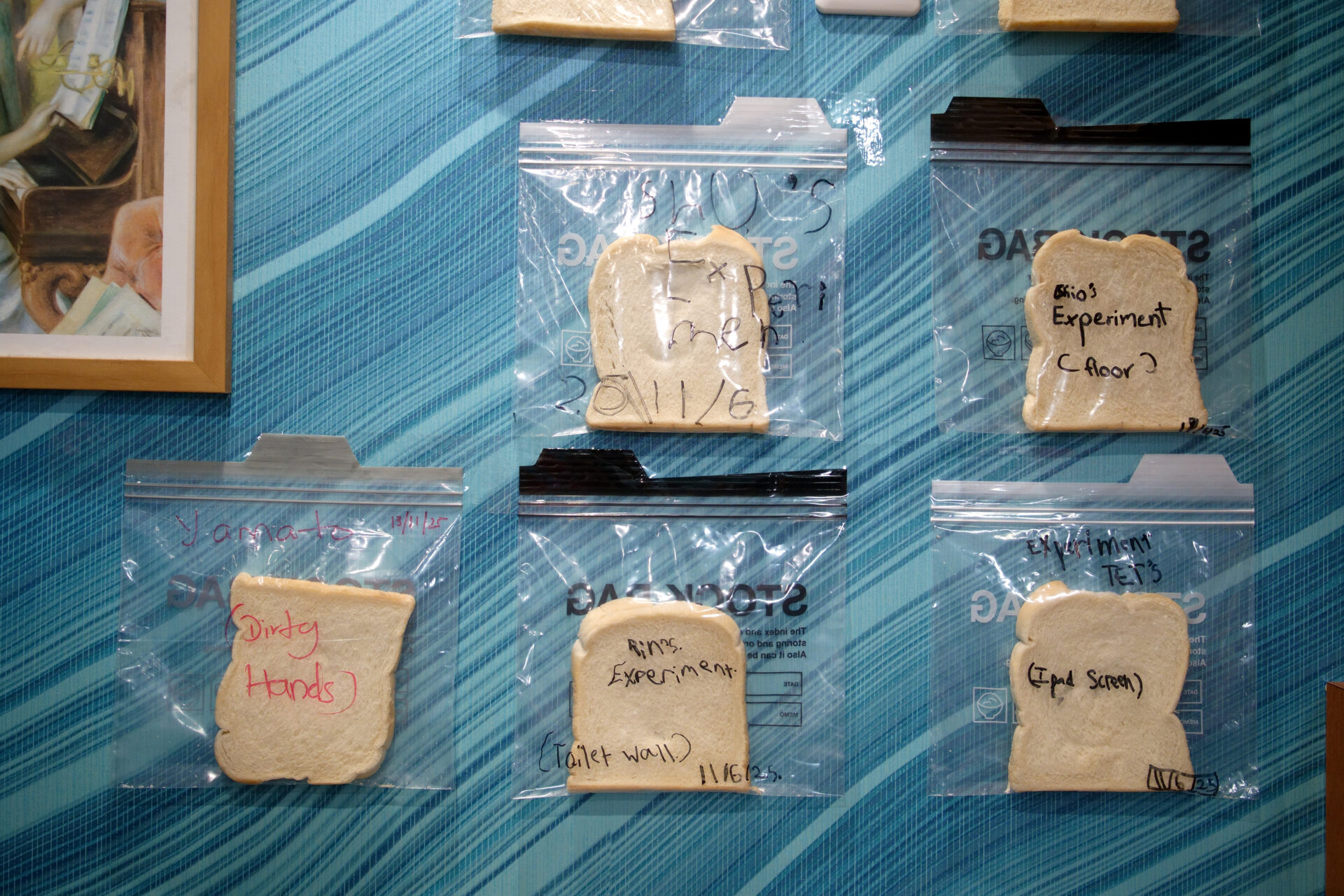
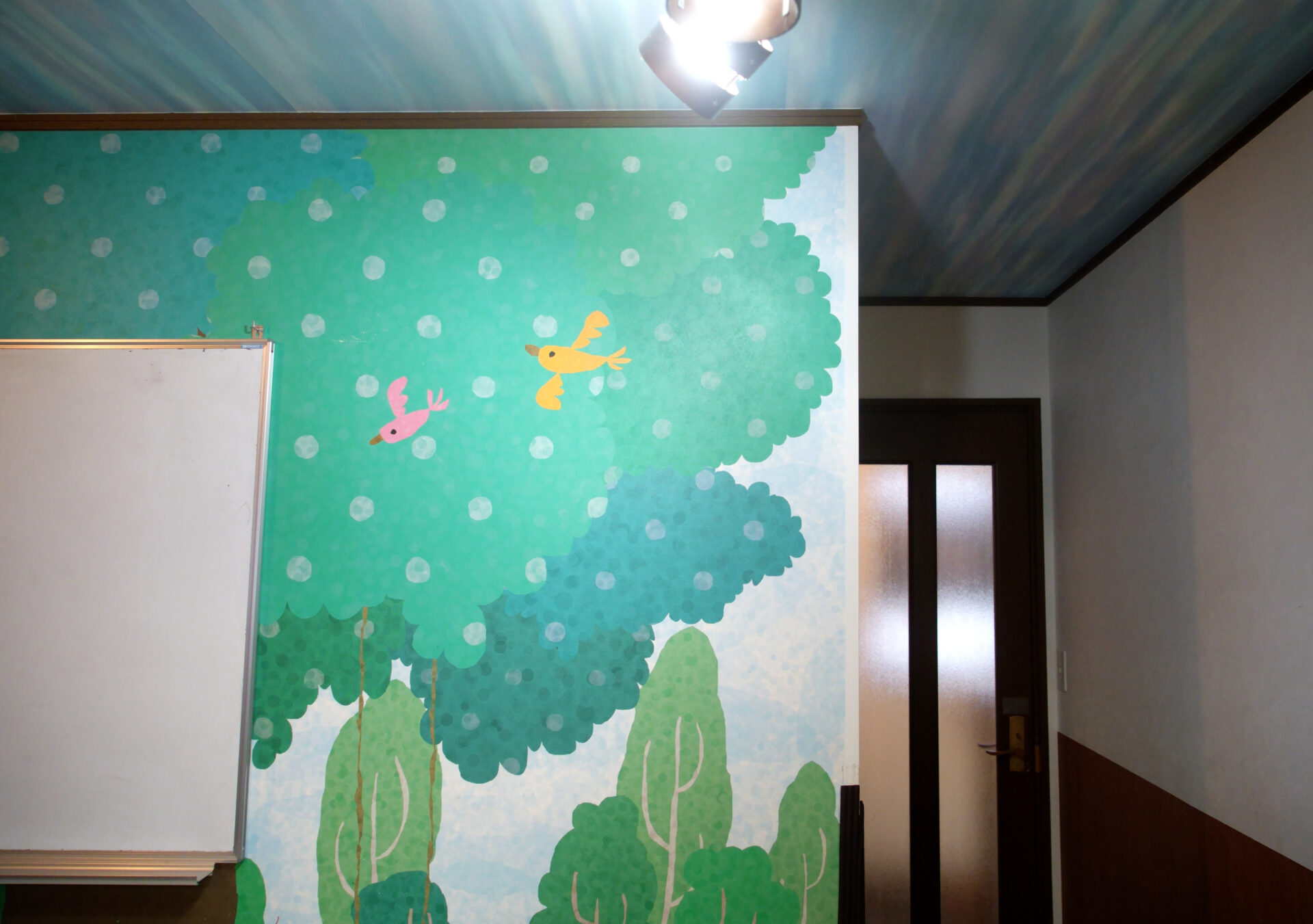
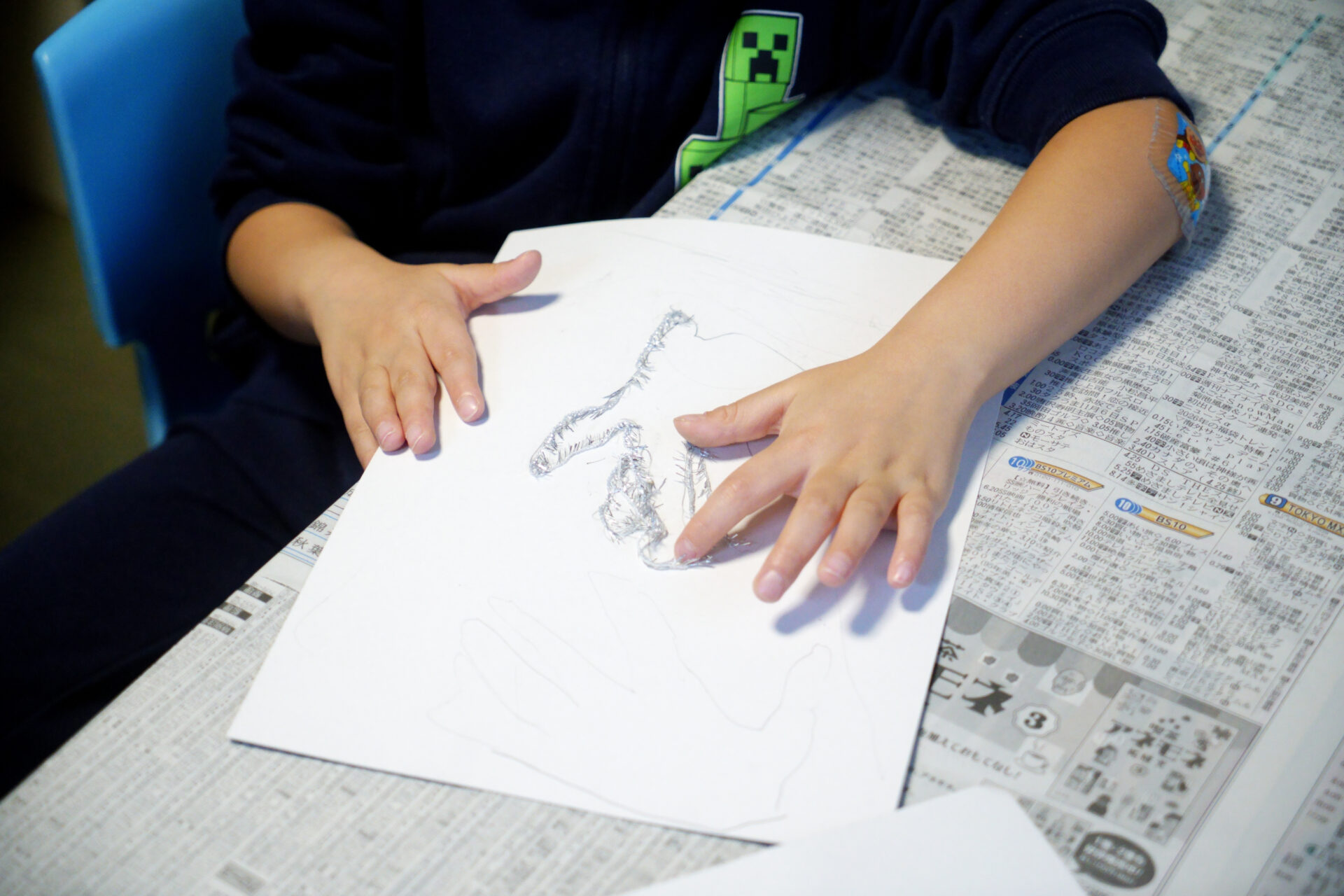
外観は普通の一軒家だが、家の中に足を踏み入れると実験経過観察中のプロジェクトが壁に所狭しと張り巡らされている。ジップロックに入った食パンが壁に展示されている。「手の常在菌が増える様子を観察しているところです」と代表の白井裕子氏がさらりと語る。
But stepping inside, the walls were densely covered with ongoing experimental projects. Slices of bread sealed in a ziplock bag were taped to the wall. “We’re observing how bacteria grows from hands,” said the director, Yuko Shirai, matter-of-factly.

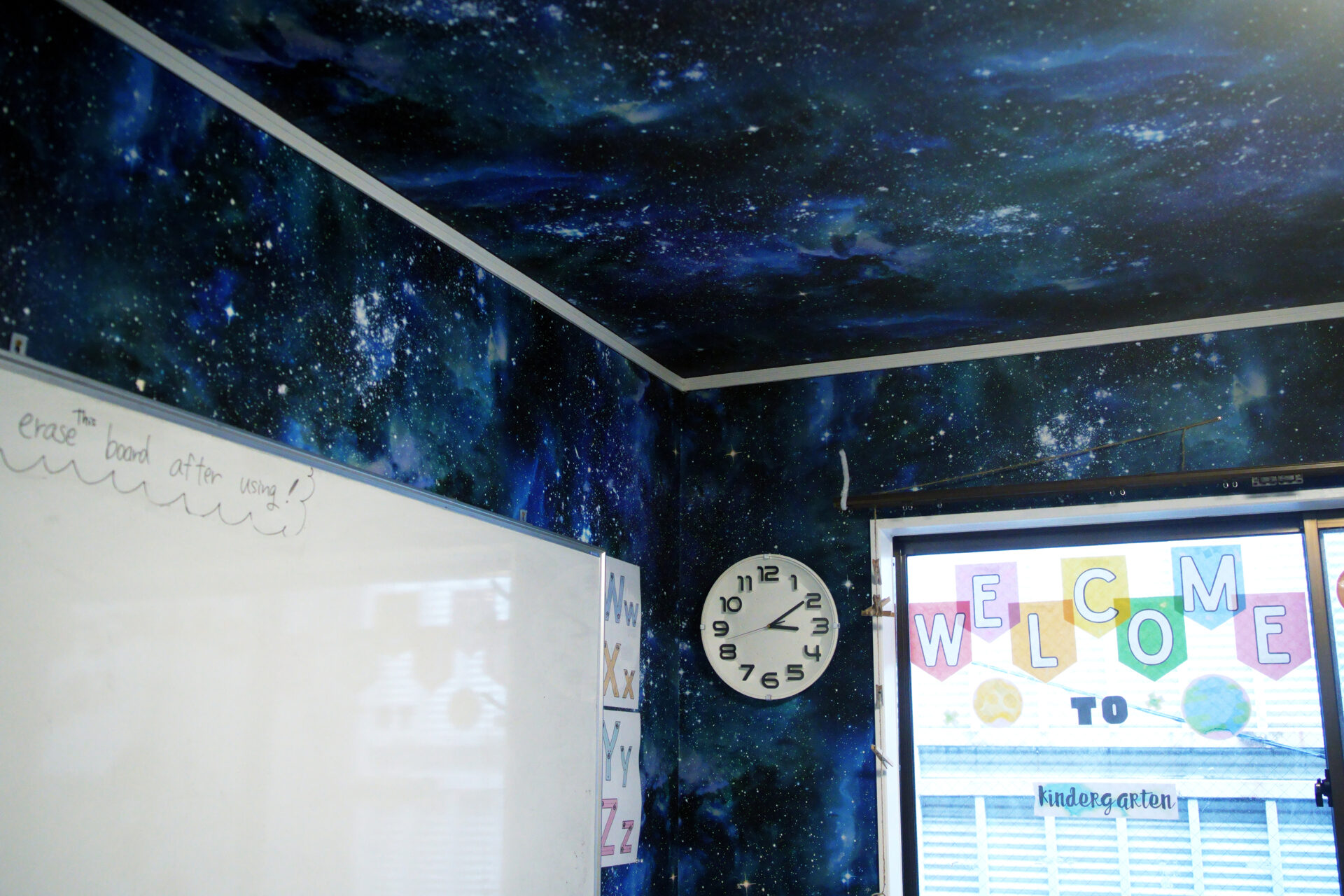
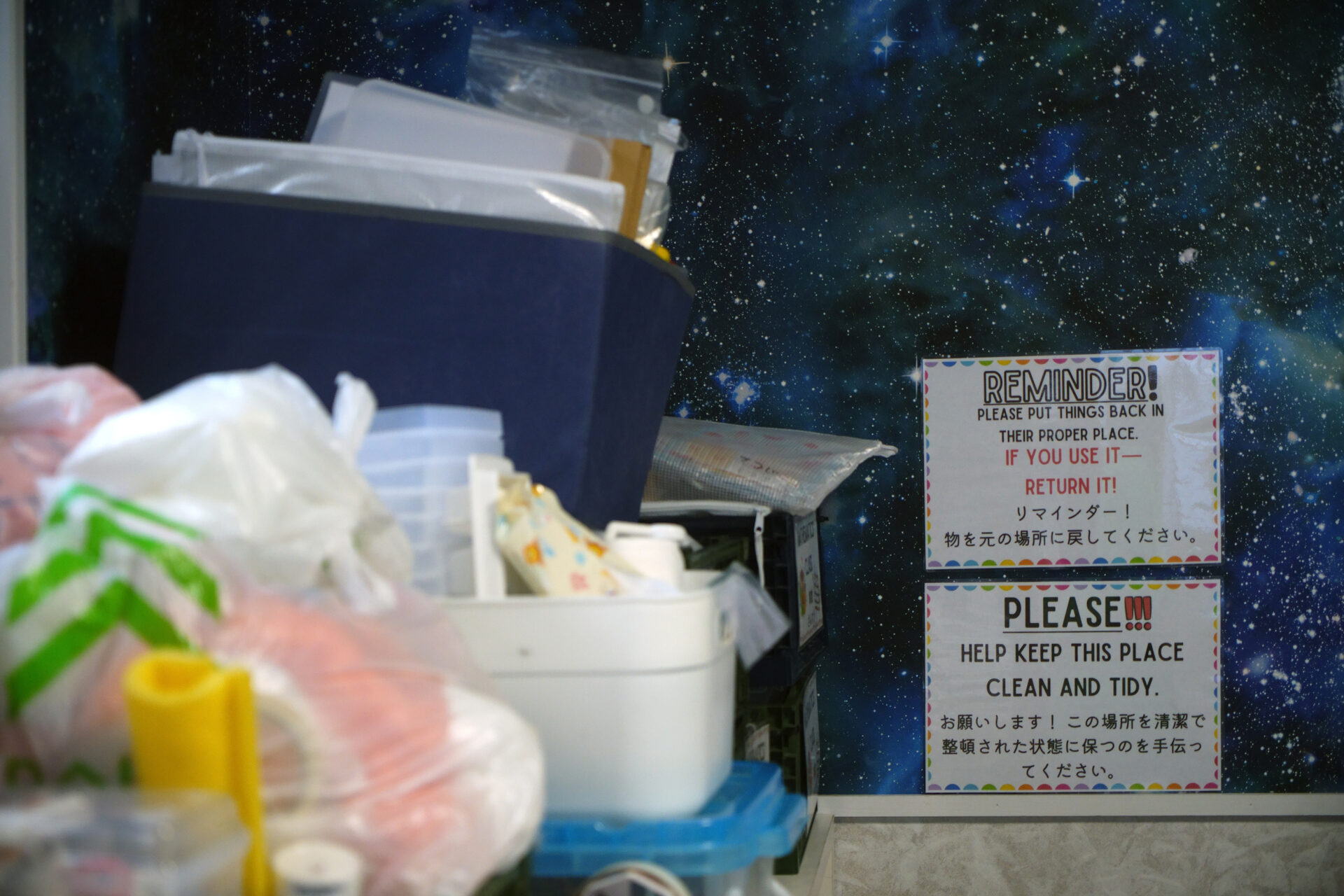
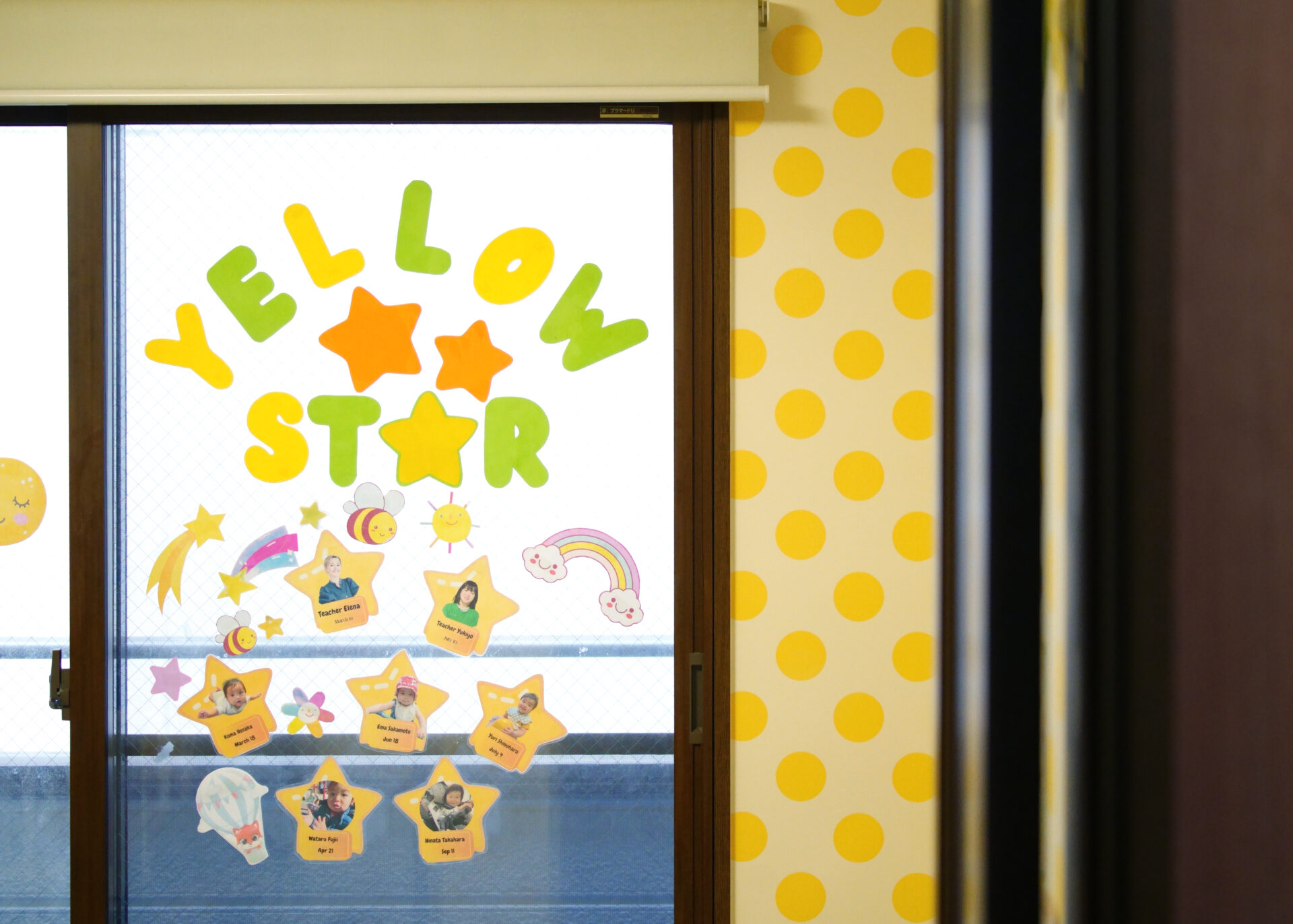
白井氏は企業で企画マネージャーとして働きながら私立保育園で2児の育児を経験し、自ら米国STEAM教育の園を開いた。米国のロケットの父と呼ばれるロバート・ゴダート博士の『昨日の夢は、今日の希望であり、明日の現実である』をモットーに掲げる。
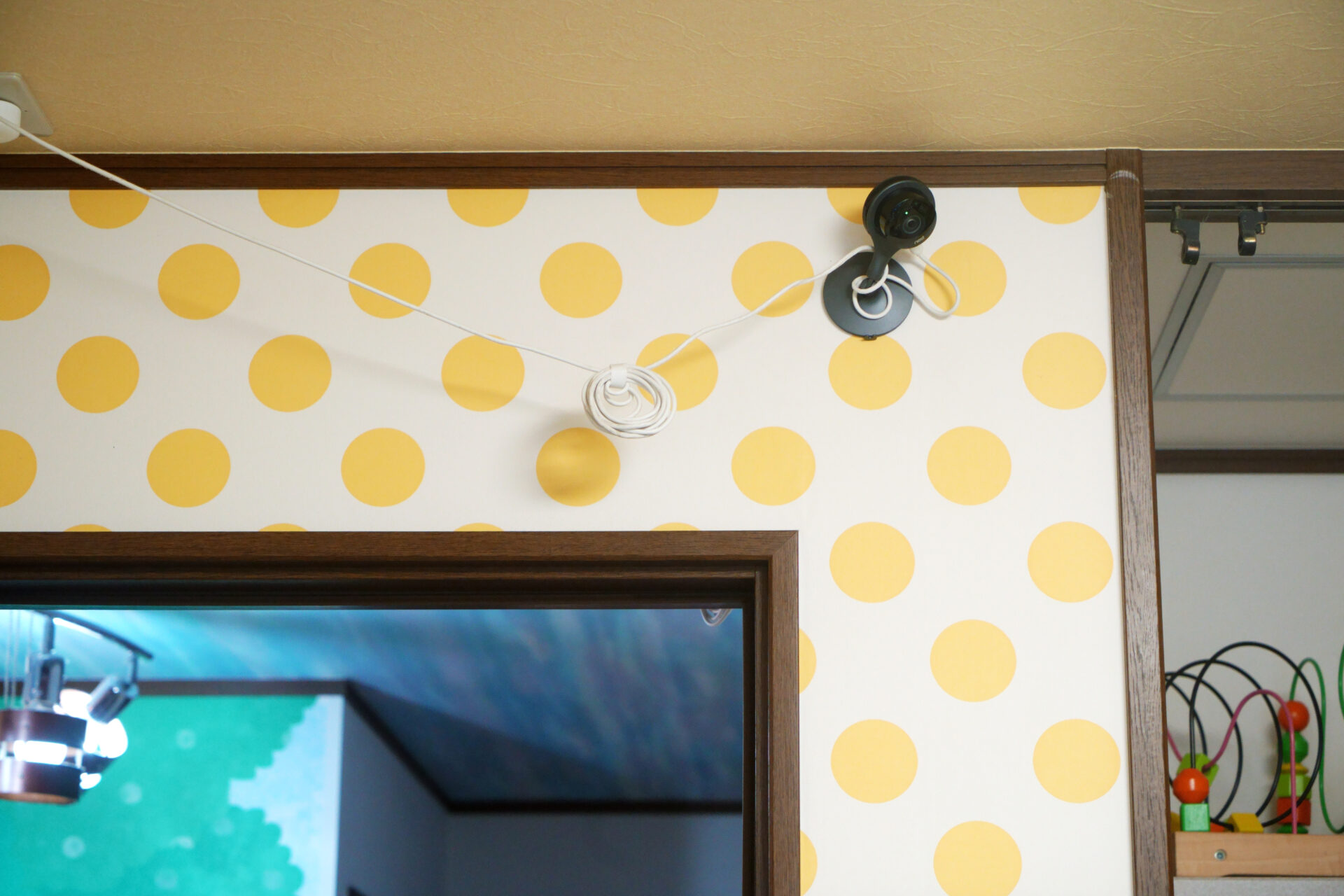
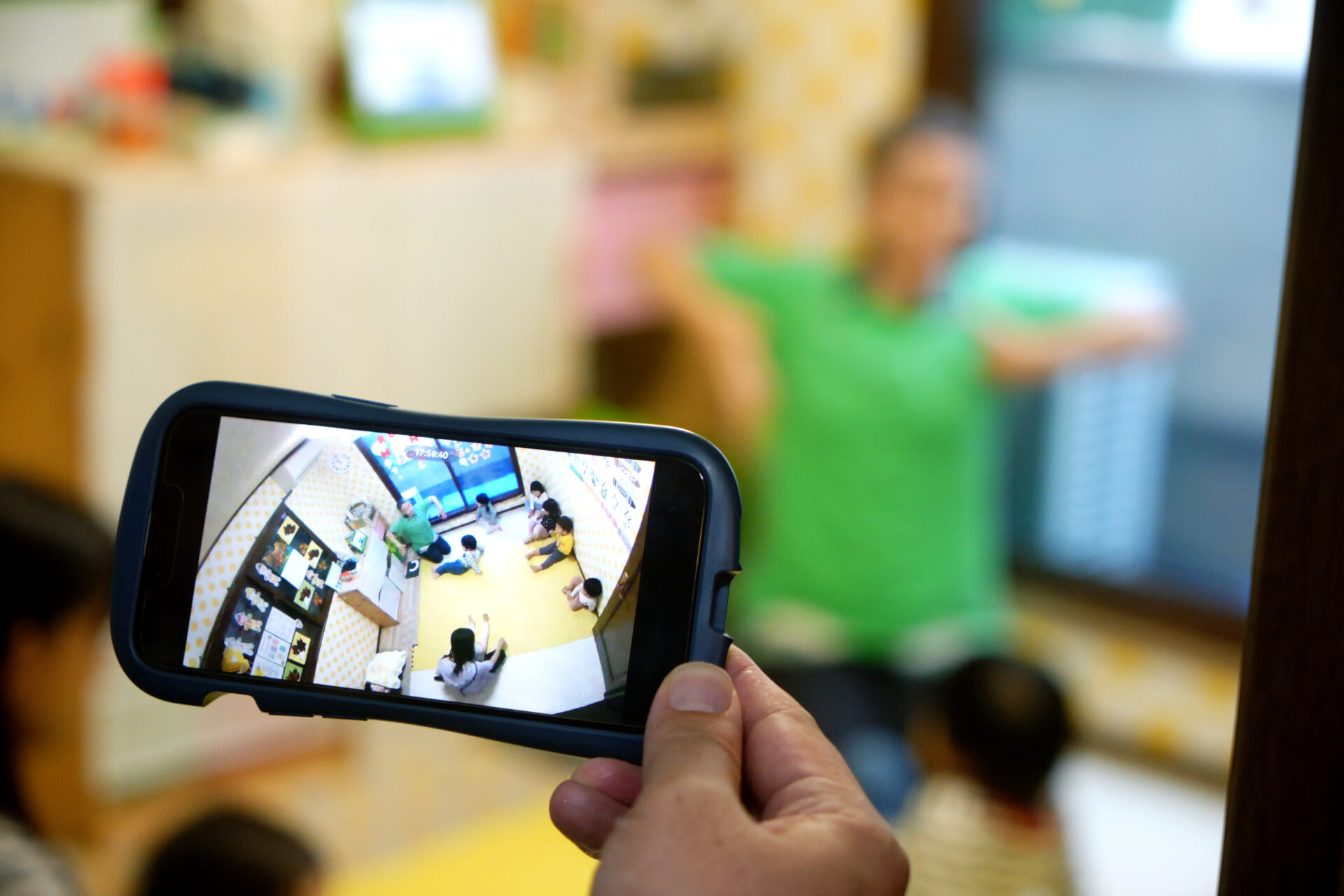
子どもたちが安心して自分の家のように過ごせる環境にこだわった一軒家は、テクノロジーが積極的に取り入れられ、保護者はアプリを通じて園内の様子を常時確認できる。午前は英語、午後は日本語。科学、数学、アートなど様々なプログラムが組まれている。企業との協働による実験型ワークショップや、将来の小学校受験を見据えたプログラムも導入されている。保育士のほかに英語で授業を行う国際色豊かなスタッフが数名在籍している。グローバル化された未来を先取りするような保育園である。
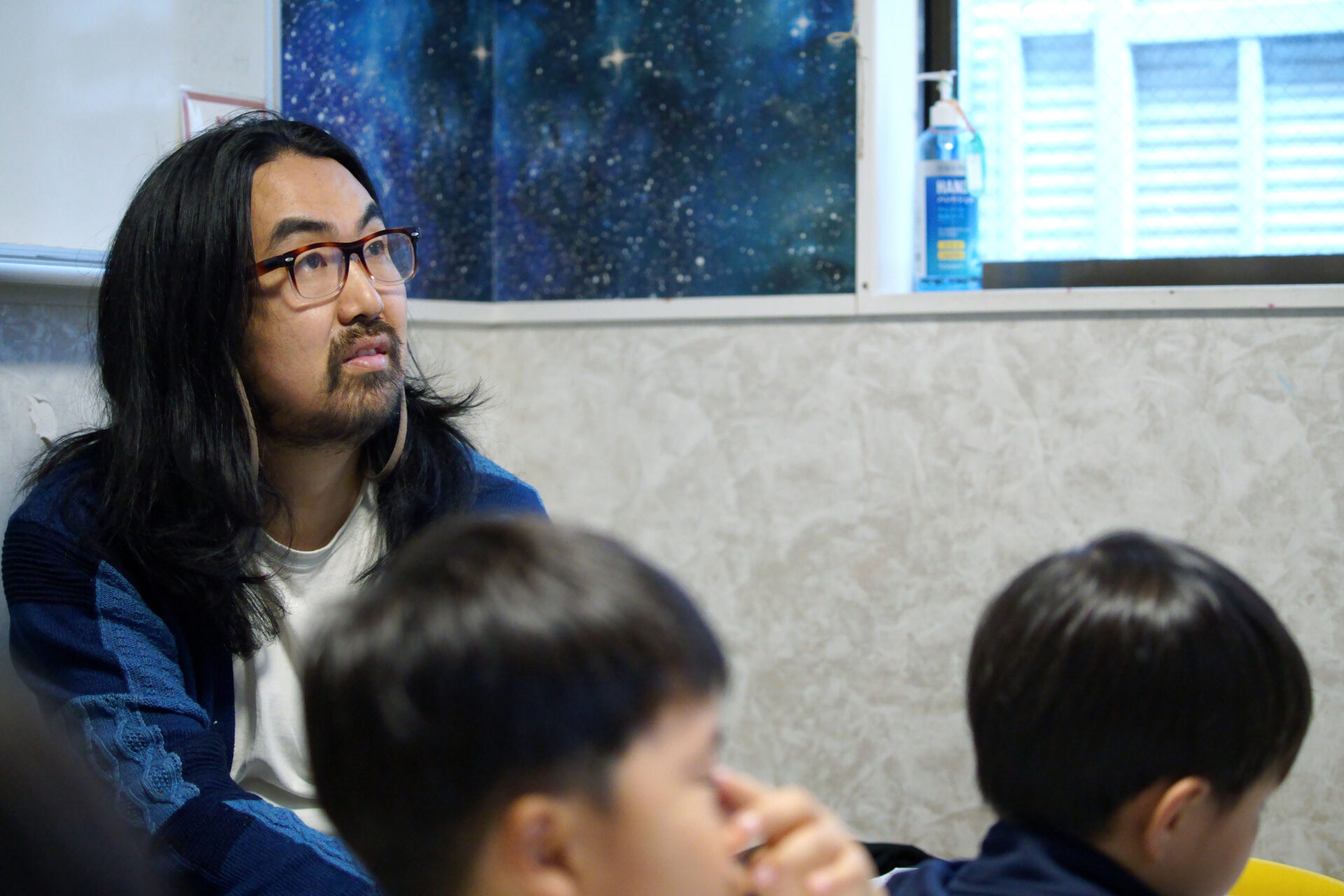
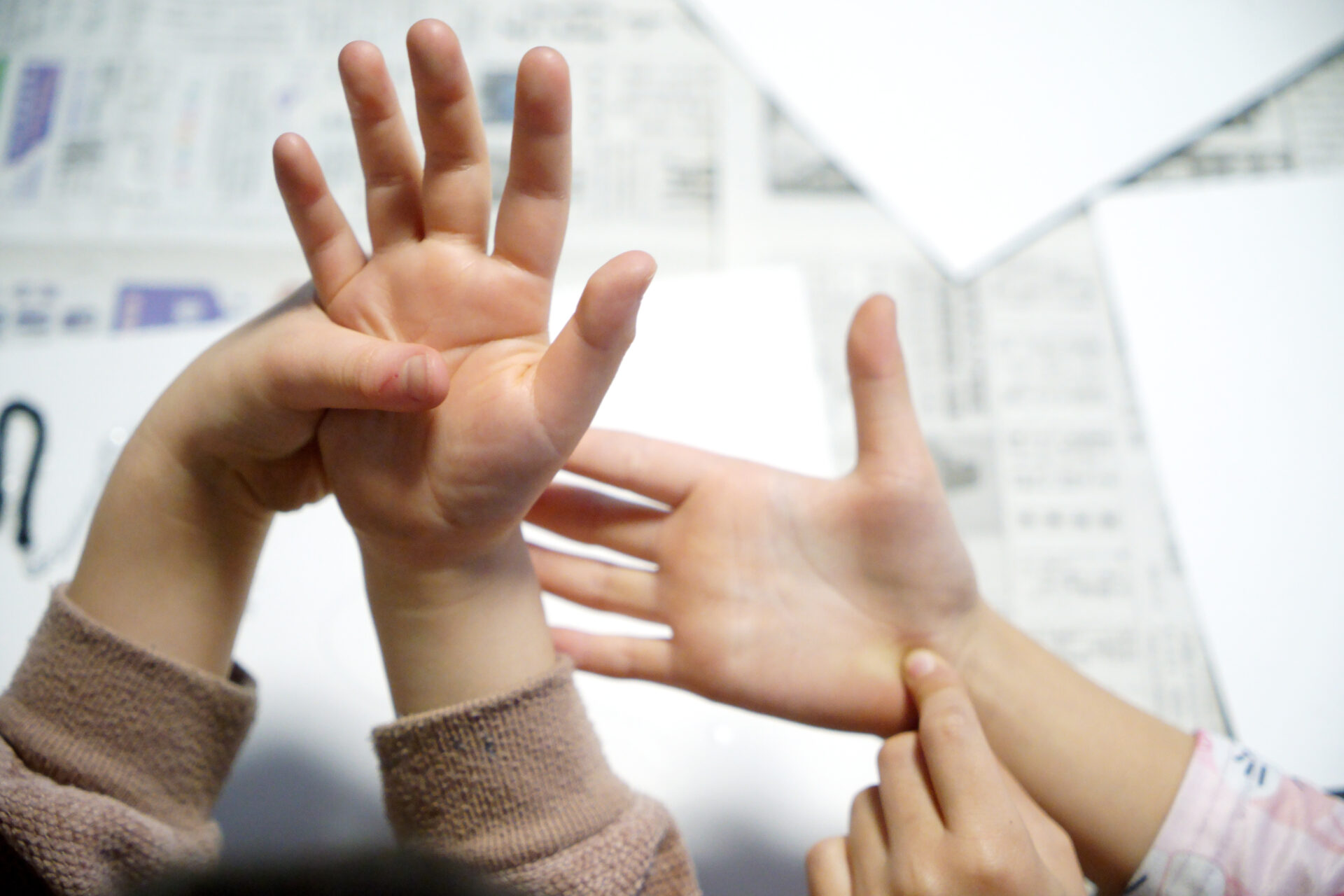
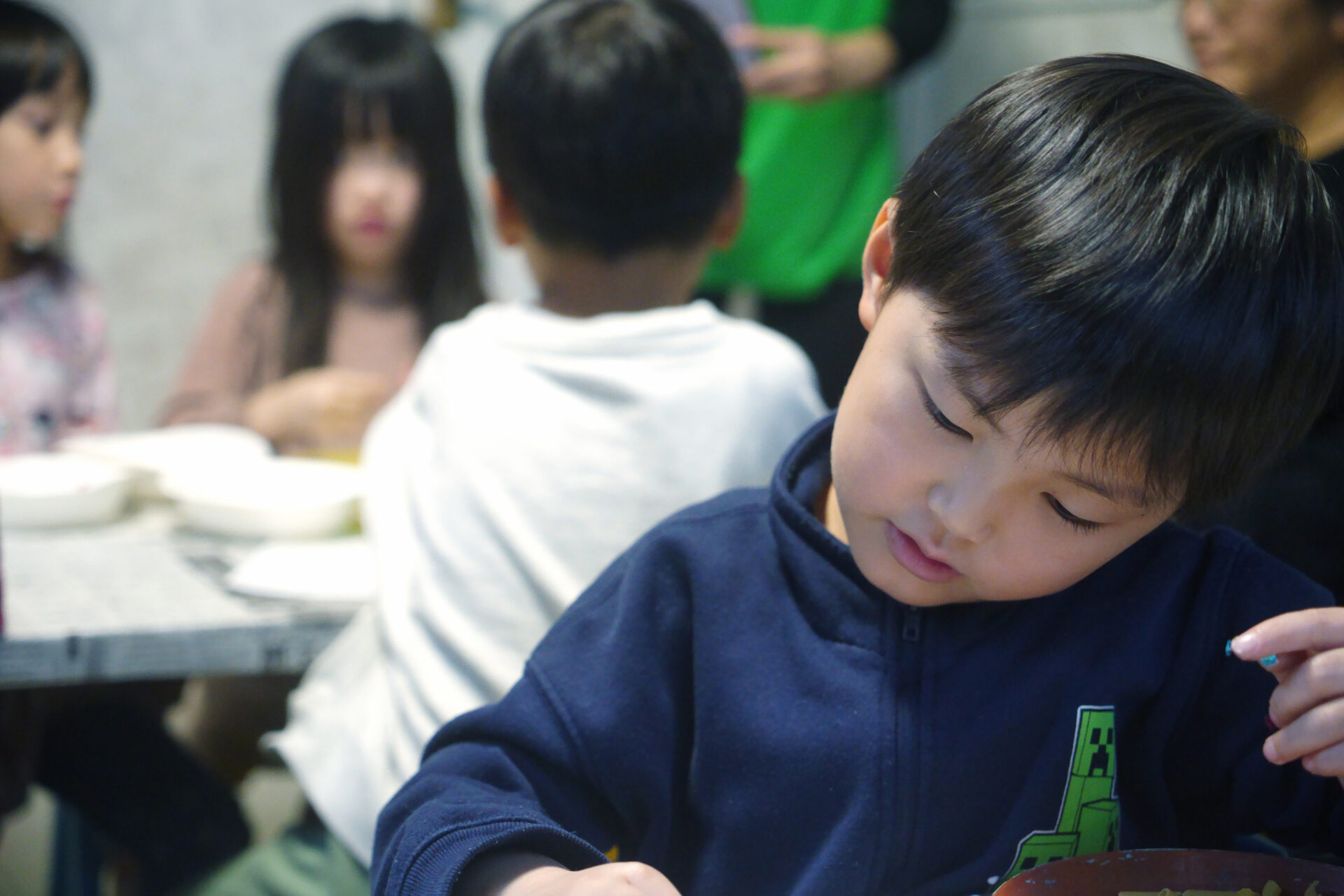
医たちが訪れた時には、乳児組は近所の公園に朝の野外活動に出かけていた。医とフォレストはやや緊張した面持ちで案内された2階で白井園長から園の説明を聞く。隣のクラスでは年中組が英語の授業を受けていた。日本人の保育士と、英語を話す教師と、モニターから流れる英語の歌が聞こえてくる。
Shirai had worked as a corporate planning manager while raising two children in a private daycare. She later founded the school based on American STEAM education, adopting a motto by rocket scientist Robert Goddard: Yesterday’s dreams are today’s hopes and tomorrow’s reality.
The daycare had technology integrated throughout, parents could monitor daily activities via an app. Morning classes were conducted in English, and afternoons in Japanese. Programs ranged from science and math to art, with experimental workshops run in collaboration with companies, as well as preparation for future private school entrance exams. In addition to caregivers, several international staff members taught in English.
Ei and Forrest were guided upstairs with slightly tense expressions, where Principal Shirai explained the facility. In the adjacent classroom, the middle-year group was having an English lesson. Japanese daycare staff, an English-speaking instructor, and English songs playing from monitors could be heard.
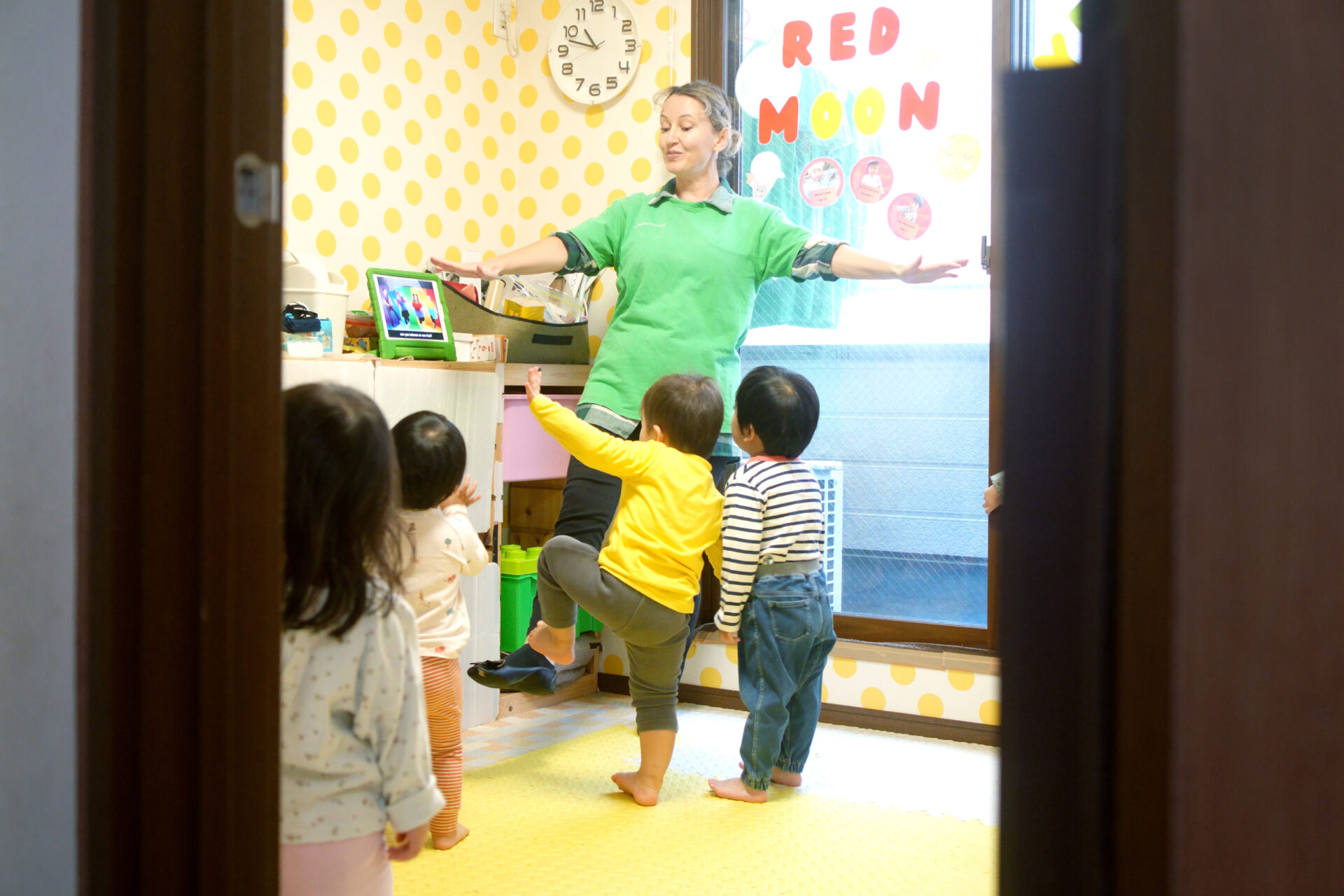
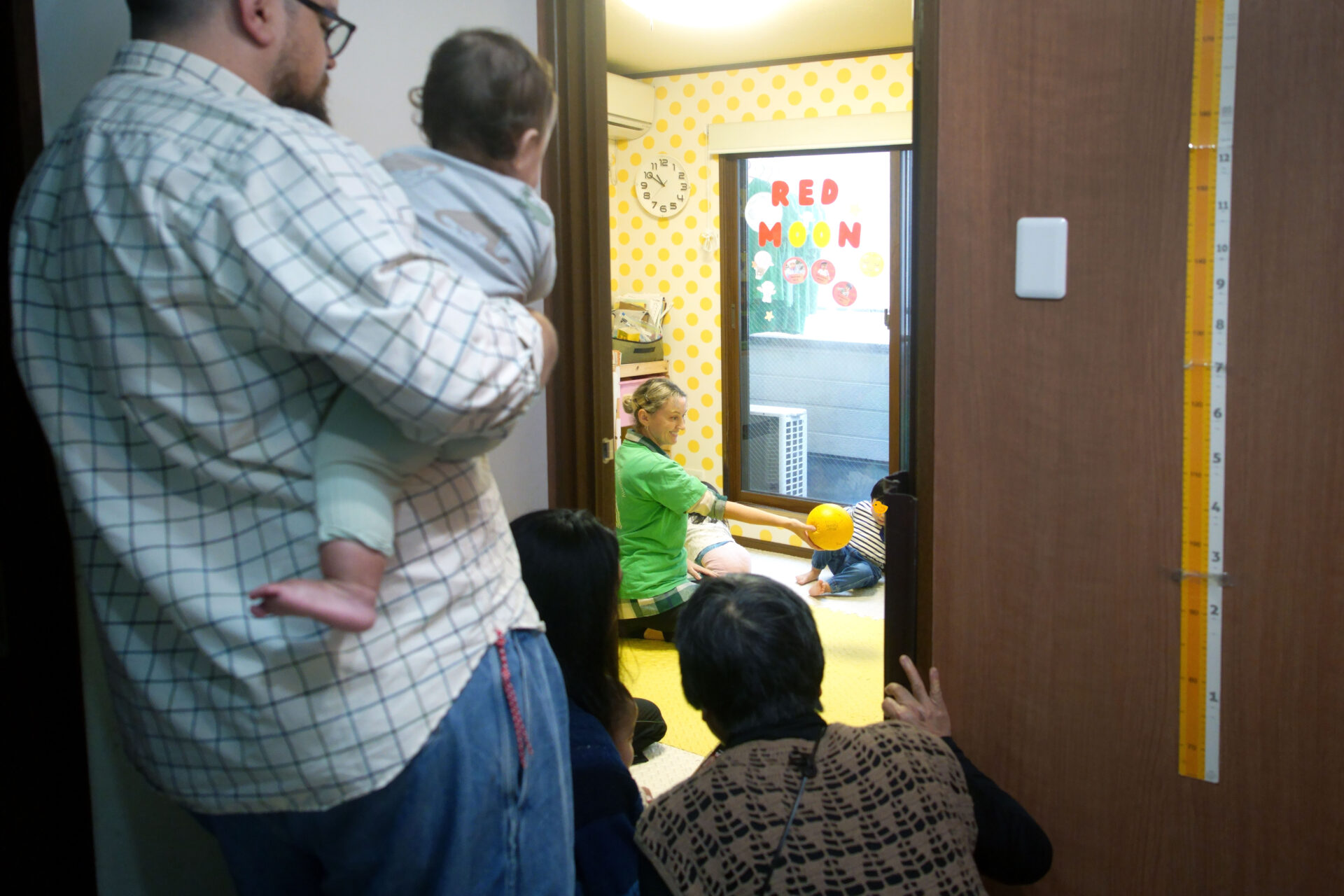
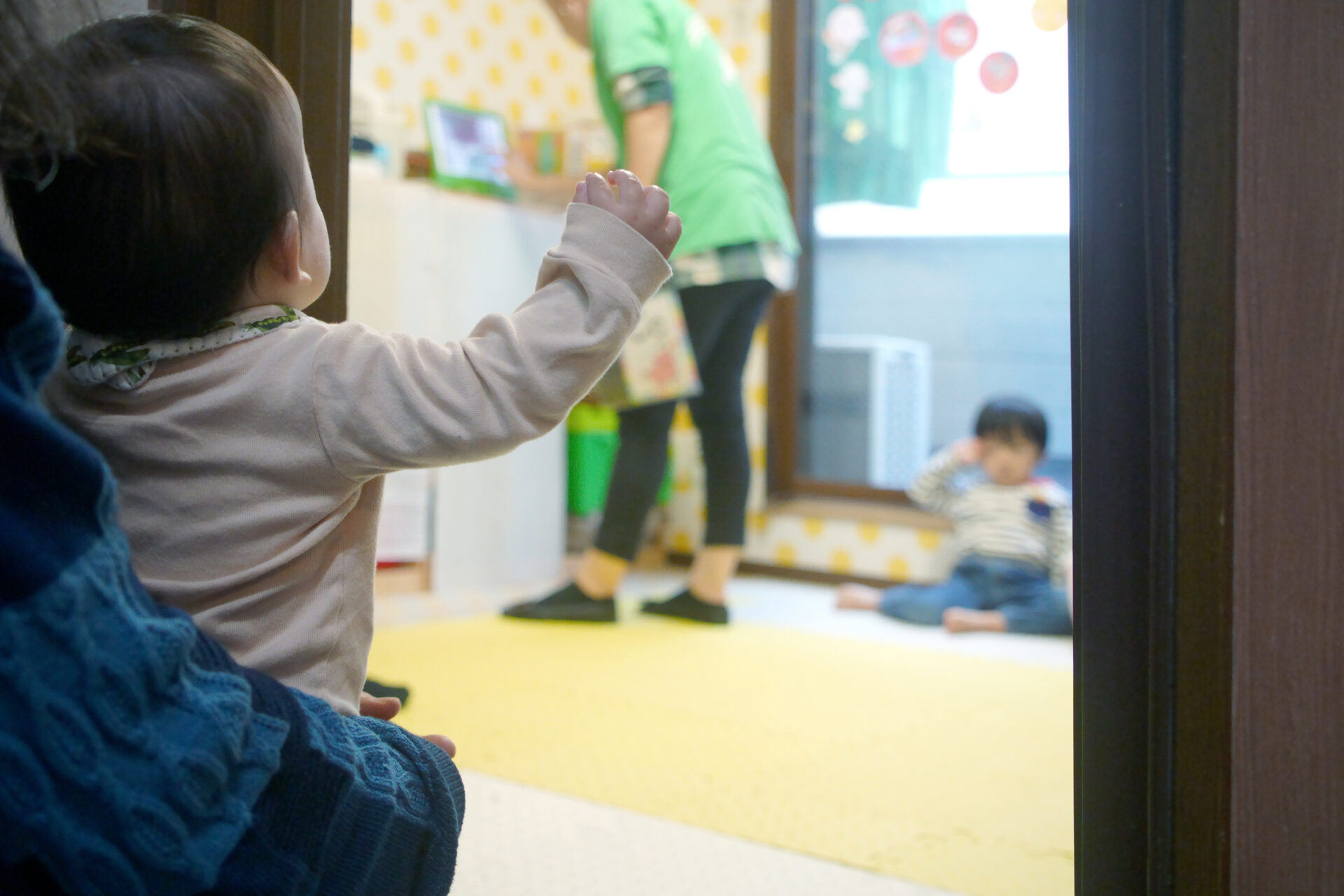
園児には外国籍の子どもも在籍し、子どもたちは日本語と英語でお互い会話している。「短期で来る双子たちが疎外感を感じないかも」と医は思った。
Children of foreign nationality and Japanese children are conversing easily in both Japanese and English. “Maybe the twins coming for a short stay wouldn’t feel like outsiders,” Ei said.
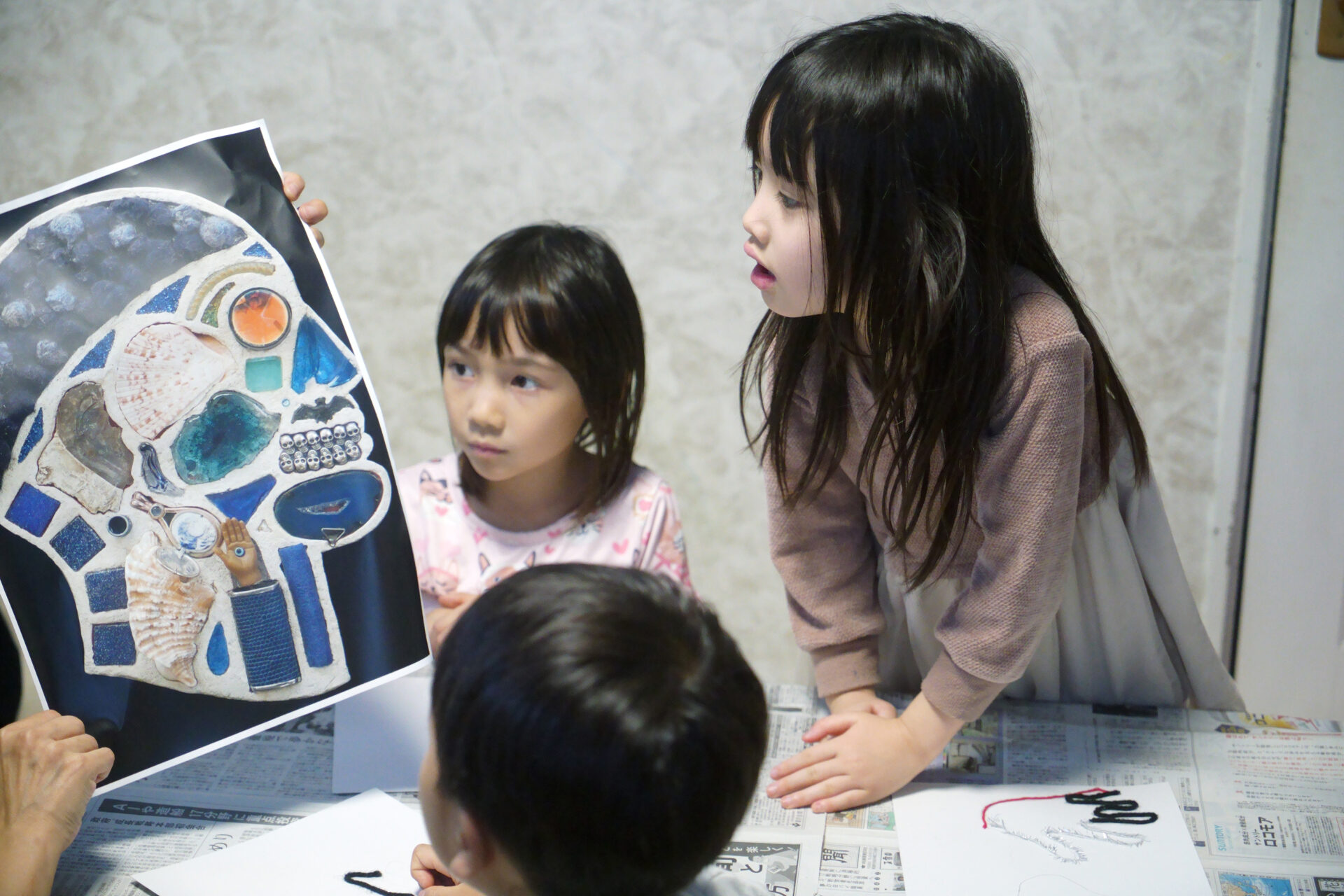

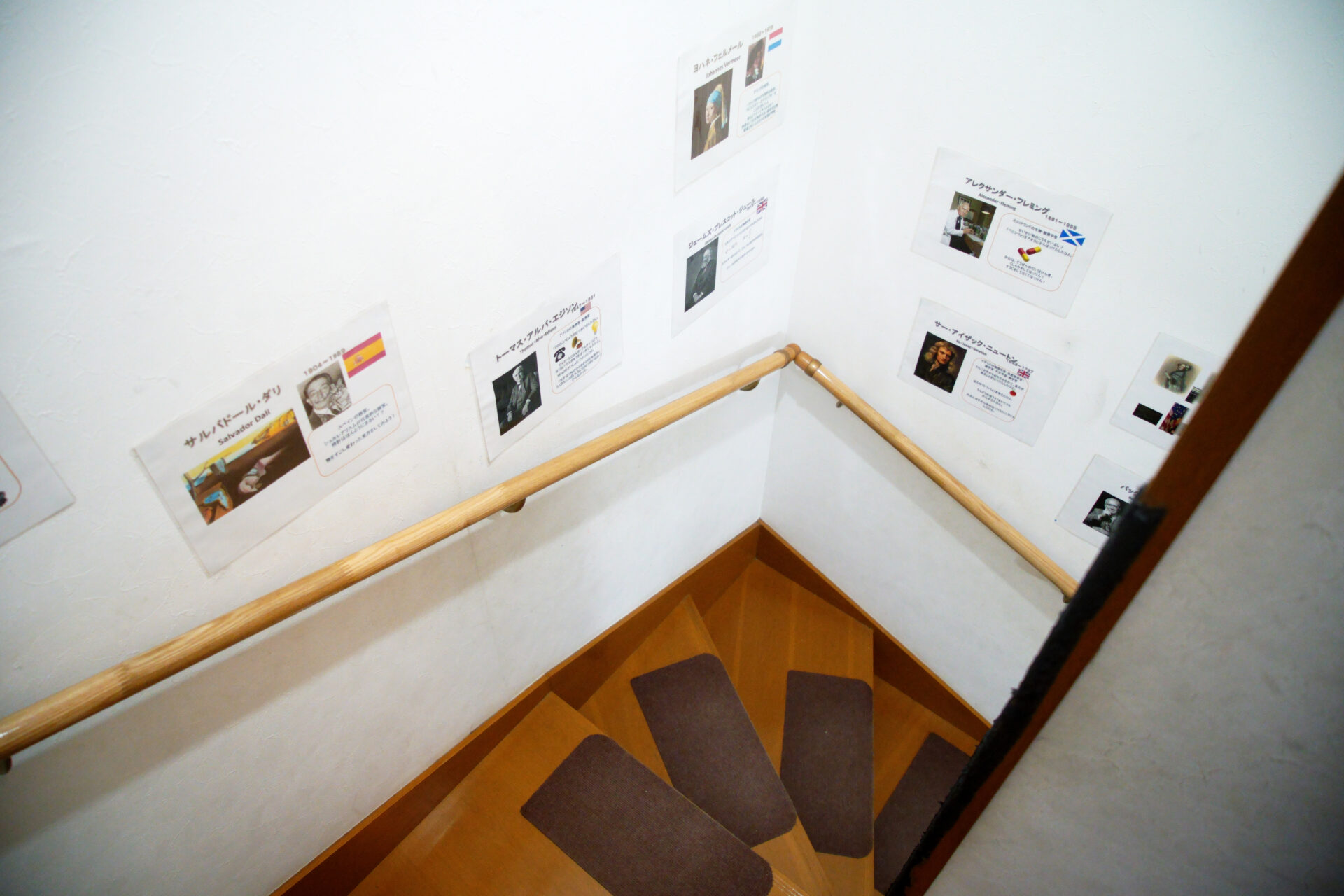
フォレストは階段を降りながら壁に飾られた世界の偉人のポスターを観察している。「科学者って白人男性しかいないもんだね」と彼はつぶやいた。ただ、園長が女性であること、ゲスト教師には男性がいること、外国人スタッフも多いことには安心した。
As Forrest climbed down the stairs, he studied the posters of historical figures lining the walls. “It’s all white male scientists,” he muttered. Still, he felt reassured by the presence of a female director, male guest teachers, and diverse international staff.
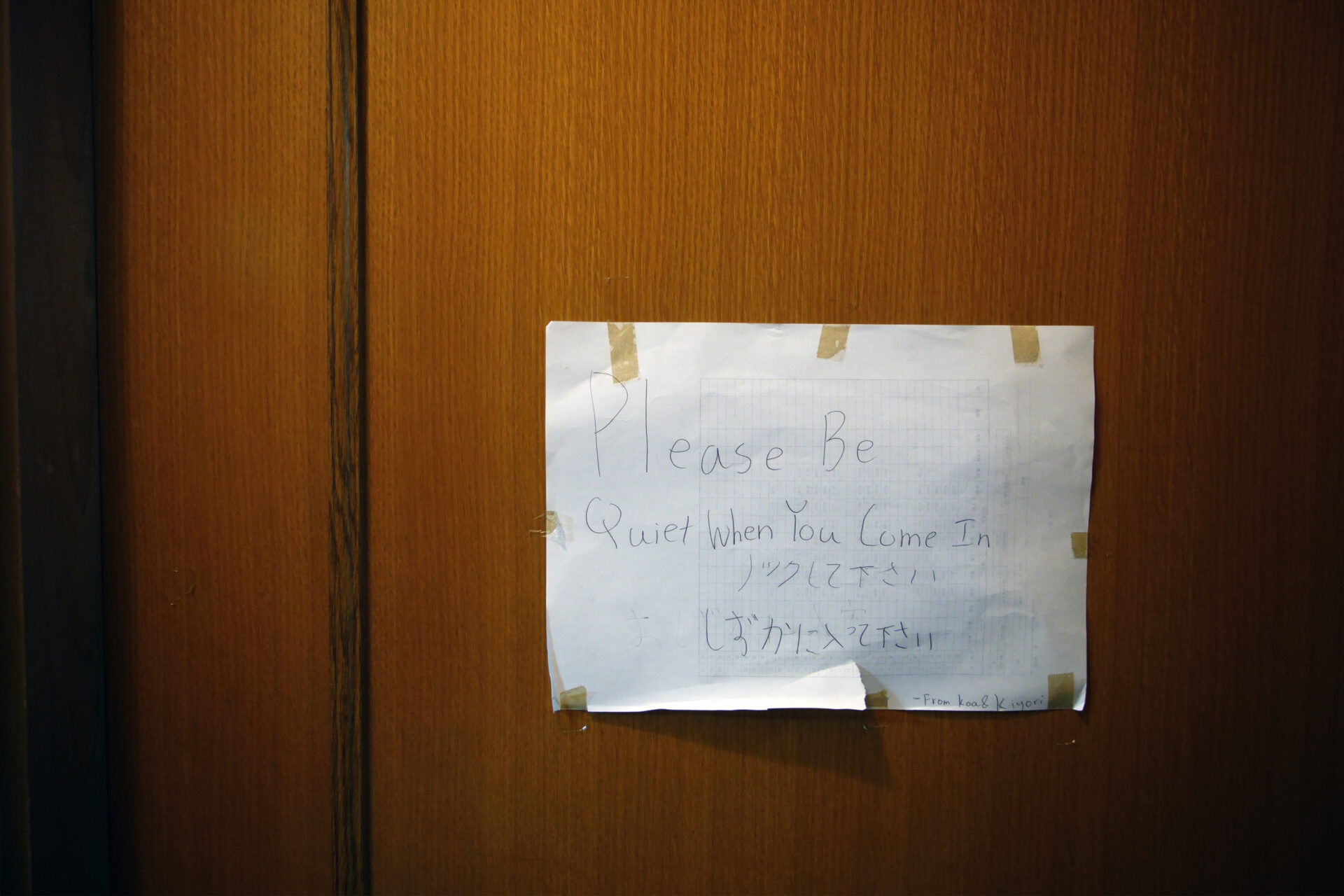
医は「これまで、二人の父を持つ子どもを受け入れたことはありますか?」と聞いた。白井氏は間をおかず「ありませんが、ここには、様々な職業の親、国籍の子どもたちがきています。多様性も私たちのテーマのひとつです」と話した。異なる壁紙の小さな部屋がいくつもあり、部屋ごとにイベントがあるので飽きやすい赤ちゃんたちにもいいかもしれない。
Ei asked whether the school had previously enrolled children with same-sex parents. “No,” Shirai replied without hesitation. “But we have parents from many professions and children of many nationalities. Diversity is one of our themes.” Small rooms with different wallpaper hosted different activities—perhaps ideal for easily bored babies.
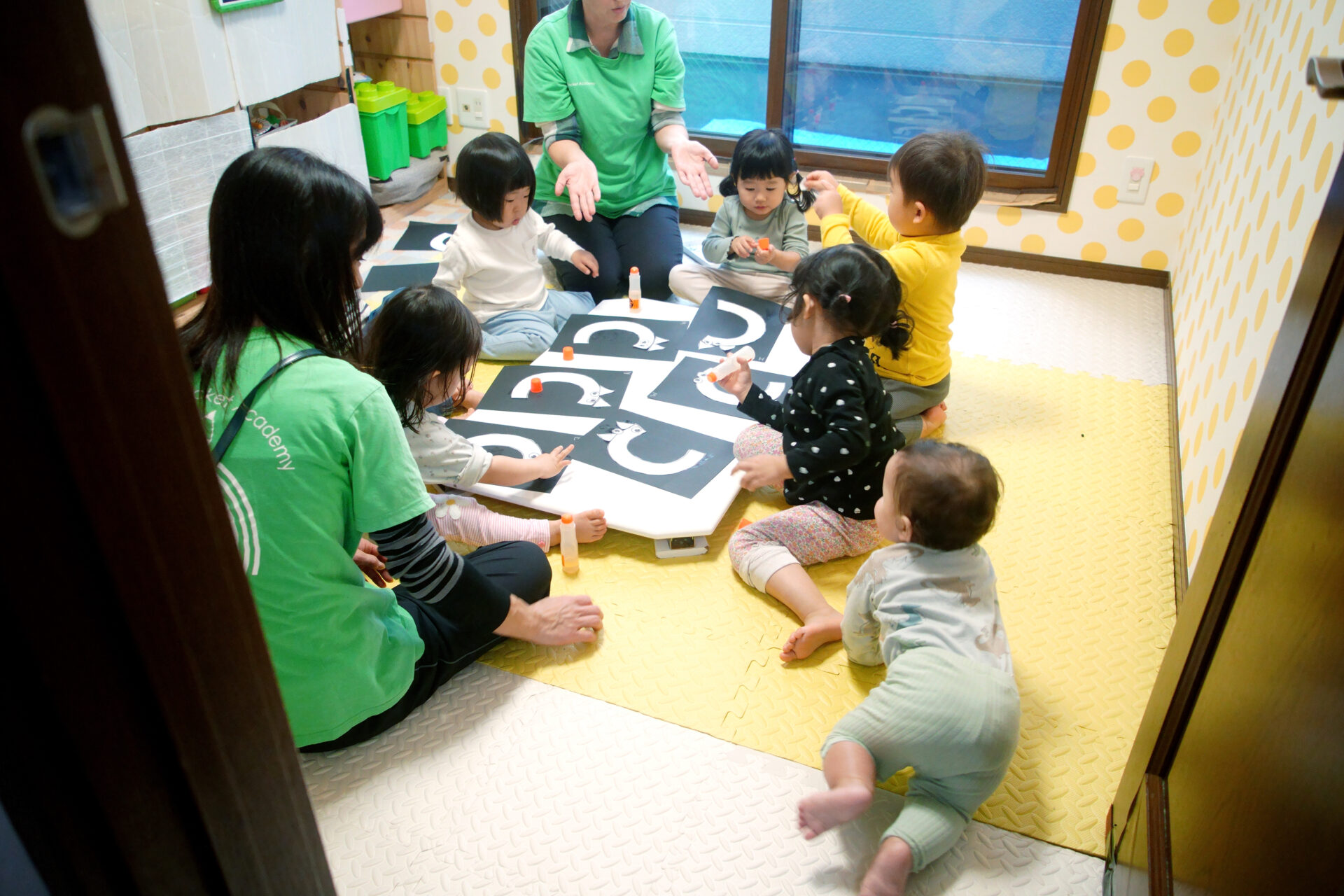
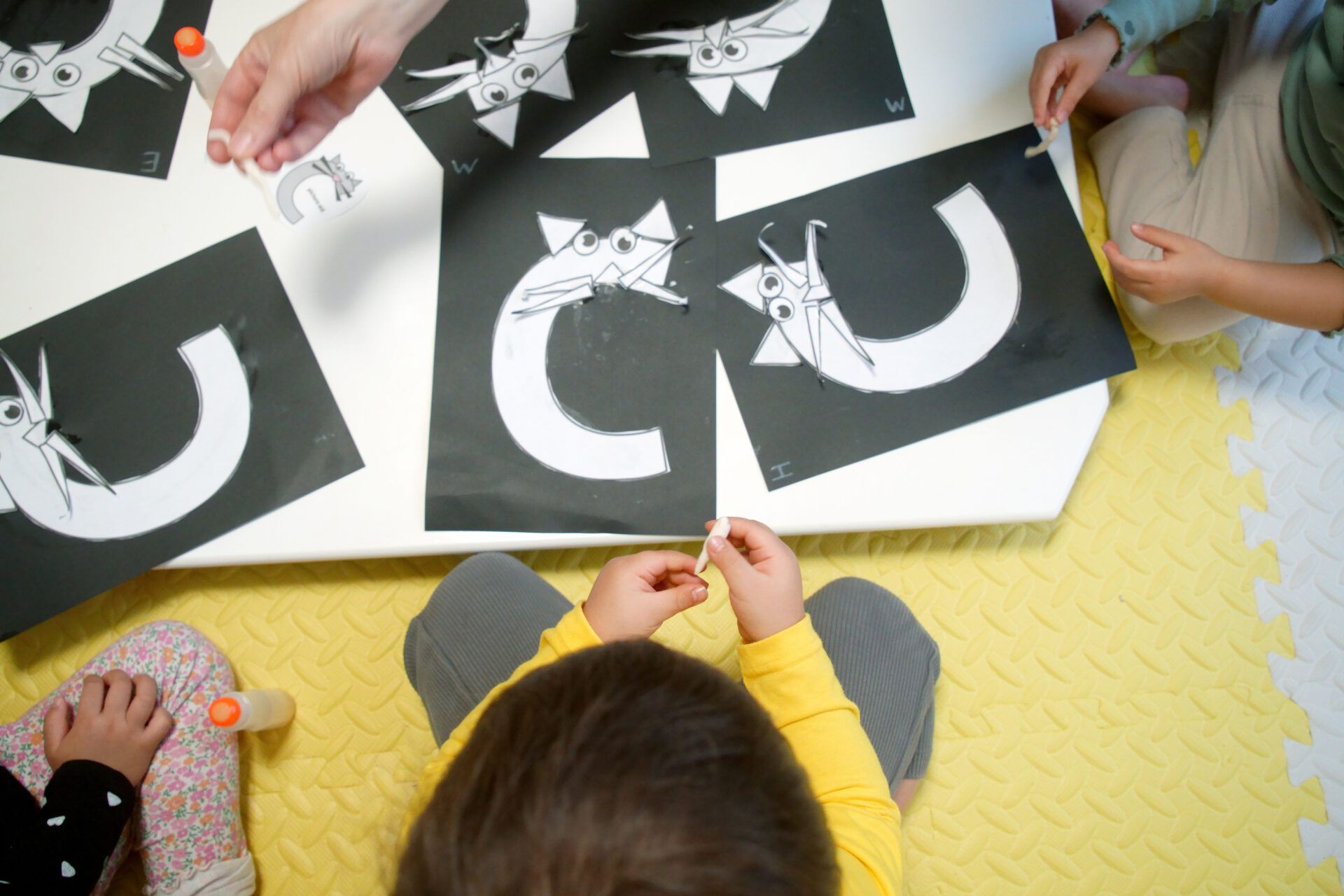

大人たちの会話に飽きた双子の一人がはいはいで隣の部屋に入って行き、気づけば遊戯に参加していた。やがて公園から乳児組が帰宅し、賑やかなランチの時間が始まり、見学は終わった。
One of the twins, tired of adult conversation, crawled into the next room and soon joined the play. When the infants returned from the park and lunch began, the visit came to an end.
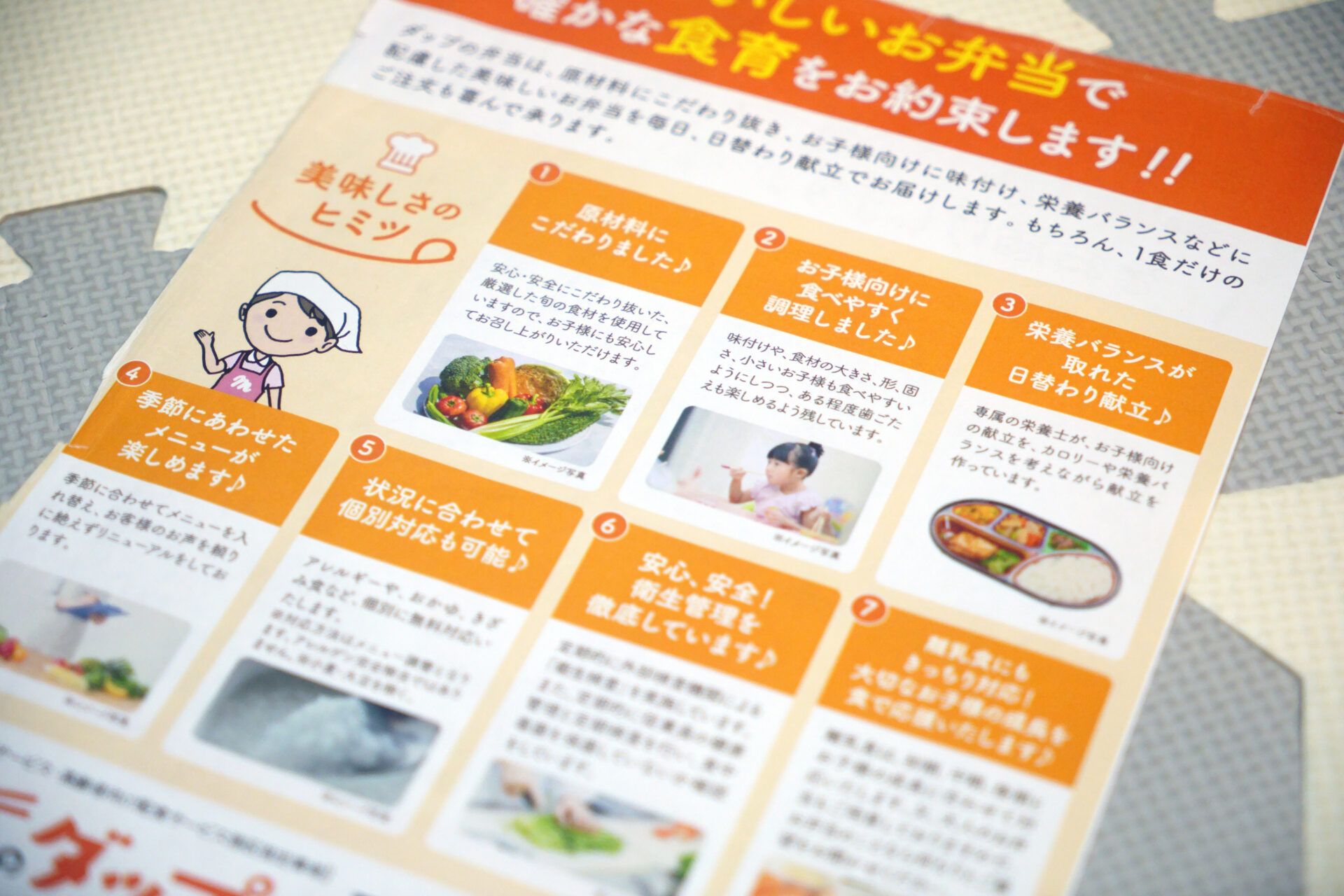
[保育料等]
No.1|つながりシェア保育園・代々木上原
一時預かり保育料:0、1歳児/1,200円/時間
給食費・離乳食:一食300円 おやつおよび補食:一食100円
No.2|まちの保育園 小竹向原
一時預かり保育料:6,000円/日 9:00-16:00 7時間 おむつ、おしりふき要持参
昼食代500円、おやつ代200円(計6,700円)
No.3|キッズロケットアカデミー 人形町
一時預かり保育料:0歳児~1歳児 3.000円/時間 12,000円/日(8:00〜18:00)
一時預かり保育の場合は要弁当持参 おむつ、おしりふき要持参
[Childcare Fees]
No.1|Tsunagari Share Nursery School Yoyogi-Uehara
Temporary Childcare Fees: Infants (0-1 years old) / ¥1,200 per hour
Meal Fees / Baby Food: ¥300 per meal Snacks and Supplementary Meals: ¥100 per meal
No.2|Machi-no-hoikuen Community School Kotake-Mukaihara
Temporary Childcare Fee: ¥6,000/day 9:00-16:00 (7 hours) Bring your own diapers and wipes
Lunch fee ¥500, Snack fee ¥200 (Total ¥6,700)
No.3|Kids Rocket Academy, Ningyocho
Temporary Childcare Fees: Infants (0-1 years): ¥3,000/hour, ¥12,000/day (8:00 AM – 6:00 PM)
Lunchbox required for temporary childcare. Bring your own diapers and wipes.
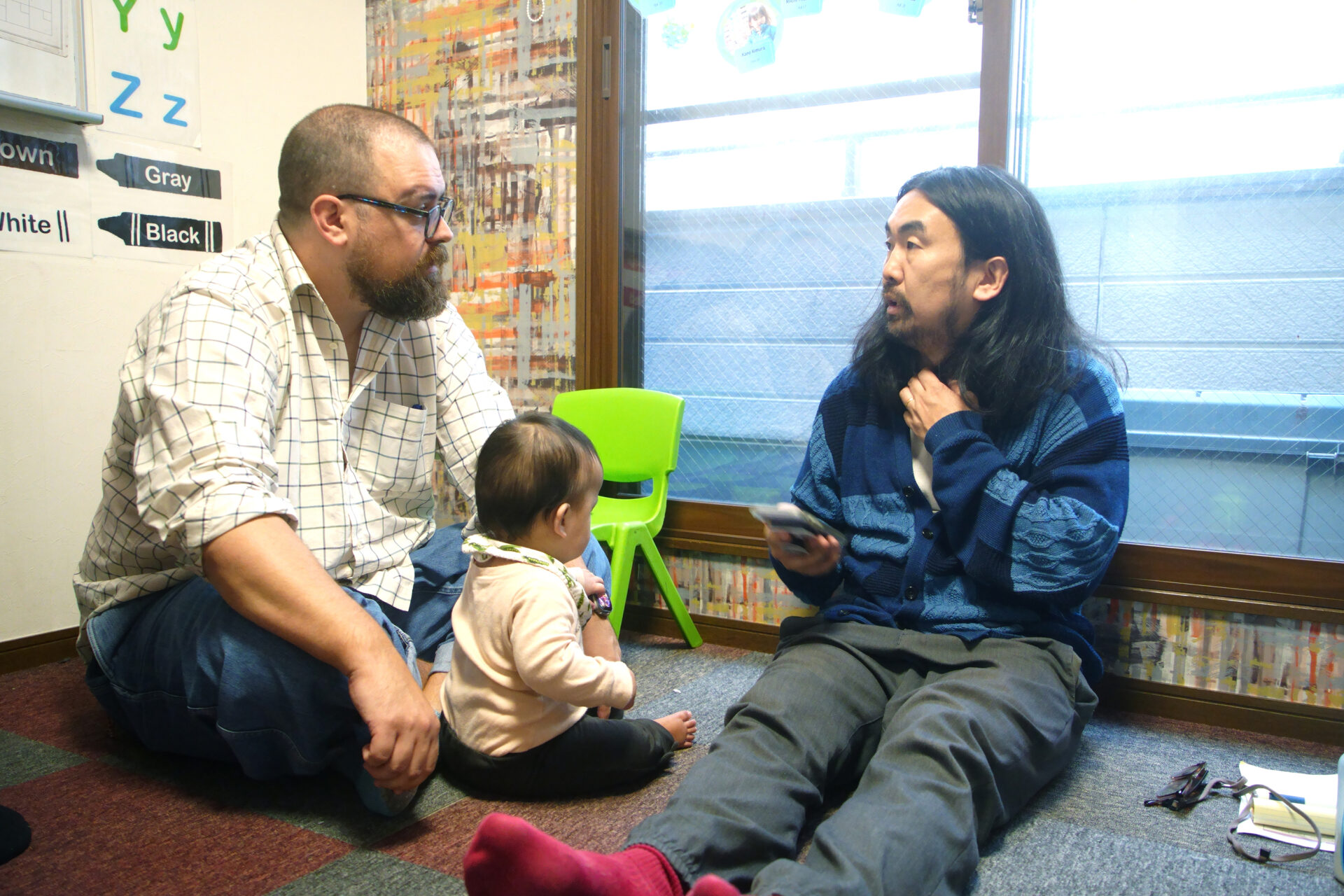
三日間の保育園見学で、二人は疲労困憊していた。双子が初めて親から長い時間を離れて過ごす場所を決める——それは想像以上に難しい選択だった。
「僕らとの絆が薄れてしまうんじゃないか」
「絶対ないけど、もし一日中Youtube漬けになってたりなんかしたら、、、」
「双子たちに嫌なことがあっても、それを僕らにちゃんと伝えられるかな」
新しい環境へ好奇心の塊のようになって飛び込んでいく双子を見つめながら、不安ばかりが膨らんでいく。
一旦、落ち着こう。
環境や理念は、どの園もよかった。それは疑いようのない事実だった。どこかに決めるという行為そのものが、本当に必要なのだろうか。乳児から入るなんて、早すぎるのかもしれない。双子にくじ引きで決めさせるか?あの園は近所に美味しいあんみつ屋があったよね。もはや疲れた頭で、思考は一向にまとまらない。
夜、双子を寝かしつけたあと、お互いの印象を率直に語り合った。見学した三つの園は想像以上に理念や空気も異なっていた。どの園でも、子どもたちは生き生きとしていた。同性カップルであることもさほど気にされなかった。
「なんか勝手に恥じらいを感じていたのかも。敵じゃないか確認してた、みたいな。」
では、誰目線で、どうやって、何を基準にえらぶべきなのか。
フォレストは、園舎の衛生面、空間に埋め込まれたジェンダーの気配、壁に掲げられた偉人の肖像の男女比、女性のみの保育士配置について。医は、男女で分けられたトイレ、「くん」「ちゃん」といった日本特有の接尾辞を使うこと、あるいは名札に性別を特定するジェンダーカラーを使わないという小さな選択について。どこまで気にすべきか?それとも気にしないべきか?
日本で身につけてほしいのは、日本語だけではない。規範がどのように身体に染み込み、いつ、どこで疑われるのか。混雑したホームで立ち止まり、誰かの動線に身を預けながら進むこと。路地で人とすれ違うとき、身体を少しだけ薄くして通り過ぎること。遊具の前で、自分の順番を視線と間合いで理解すること。
日本人は、いつ日本人になるのか。
その問いの答えは、国籍欄にも性別欄にもない。
改札前の一瞬のためらいと、 保育園の名札と、お昼寝マットと、「みんなで決めよう」という一言の中で——アイデンティティとは、そうした目に見えない力の流れの中を行き来しながら、自分の立つ場所を少しずつつくっていく、その時間の積み重ねなのかもしれない。
「規範を守る人になってほしいわけじゃない。でも、規範がどうやって身体に入ってくるのかを知っている人になってほしいよね」と医は言う。「自由になるために」
その感覚は、国籍や制度を越えて生きていく力になるだろう。
By the end of three days crisscrossing the metropolis with a double troller, they were utterly exhausted. Choosing the first place where their children would spend long hours away from them proved far more difficult than expected. Watching the twins dive into each new environment like small bundles of curiosity, their doubts only deepened.
Was deciding at all truly necessary? Was it too early to begin daycare in infancy? Should they let the twins choose by drawing lots? Or perhaps select the one near the best anmitsu shop?
Fatigue blurred their thinking; their thoughts refused to settle into anything resembling clarity.
“Would the bond between us weaken?”
“I know it’s a silly thought but how do we know they won’t just show them Youtube all day when we’re gone?”
“Will the babies be able to communicate to us if they don’t like it?”
They paused. Took a breath. Tried, at least, to think rationally.
Each daycare had its own philosophy, its own atmosphere. In all of them, the children seemed happy and vibrant. Their family structure drew little notice, at least that was the impression.
Perhaps the hesitation had been theirs alone. “Like I was checking to see if they were the enemy or something…” Ei said.
Then, from whose perspective, how, and based on what criteria should they choose? Forrest focused on hygiene in the building, hints about each daycare’s orientation to diversity, and the quality of the facilities. Ei focused on gender-segregated toilets, the use of uniquely Japanese suffixes like “-kun” and “-chan,” or the small choice of not using gender-specific colors on name tags. How much should we care? Or should we not care at all? What mattered was not only learning Japanese or its culture, but understanding how cultural context or social norms seep into the body—and when and where they can be questioned.
Stopping on a crowded train platform. Letting yourself be carried by someone else’s movement. Slightly thinning your body to let someone pass in a narrow alley. Reading distance and timing to know when it is your turn. Understanding your turn at the playground equipment through eye contact and personal space.
“We don’t want them to simply follow the rules. We want them to understand how it works—so they can be,” Ei said, “Free.” That understanding may one day grow into a power that transcends nationality, borders, and systems.
So when does one become Japanese?
Perhaps not at birth.
Not on a passport.
But somewhere in the liminal spaces of everyday life in between the silence of a crowded train, a moment of hesitation before a ticket gate, a daycare name tag, in the shared warmth of a nap mat, and the phrase —- “Let’s decide together.”
Identity, perhaps, is formed slowly—through the small, repeated but precious norms of everyday life.
3つの園を見学した後、果たして二人は最終的にどの園を選んだのでしょうか。あなたならどの園を選びますか。
下のアンケートで選択してみてください。
After visiting three daycare centers, which one did the two ultimately choose? Which would you choose?
Vote in the poll.
スクロールすると結果がわかります。
Scroll down to see the result.
[荒川ナッシュ家からのコメント]
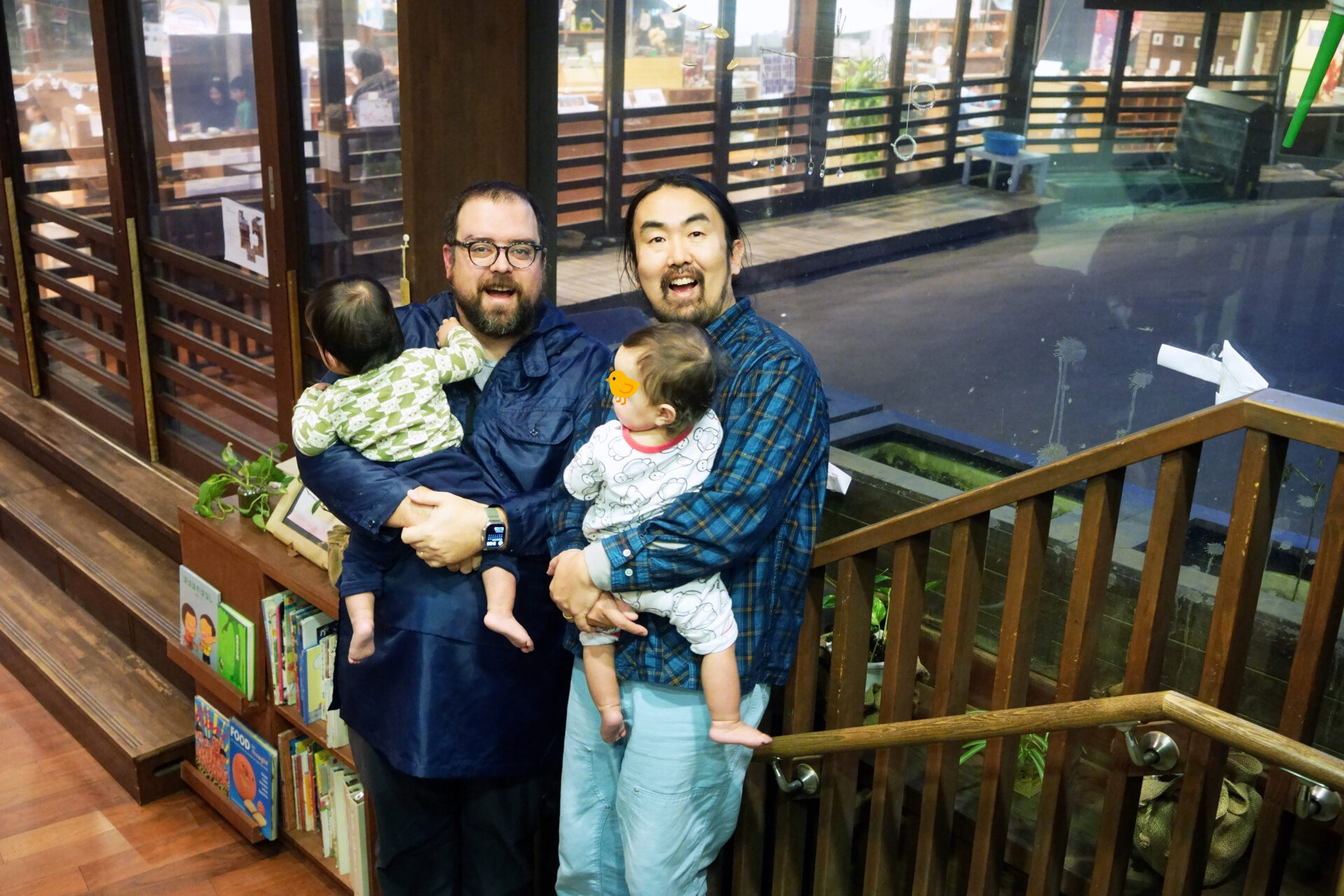
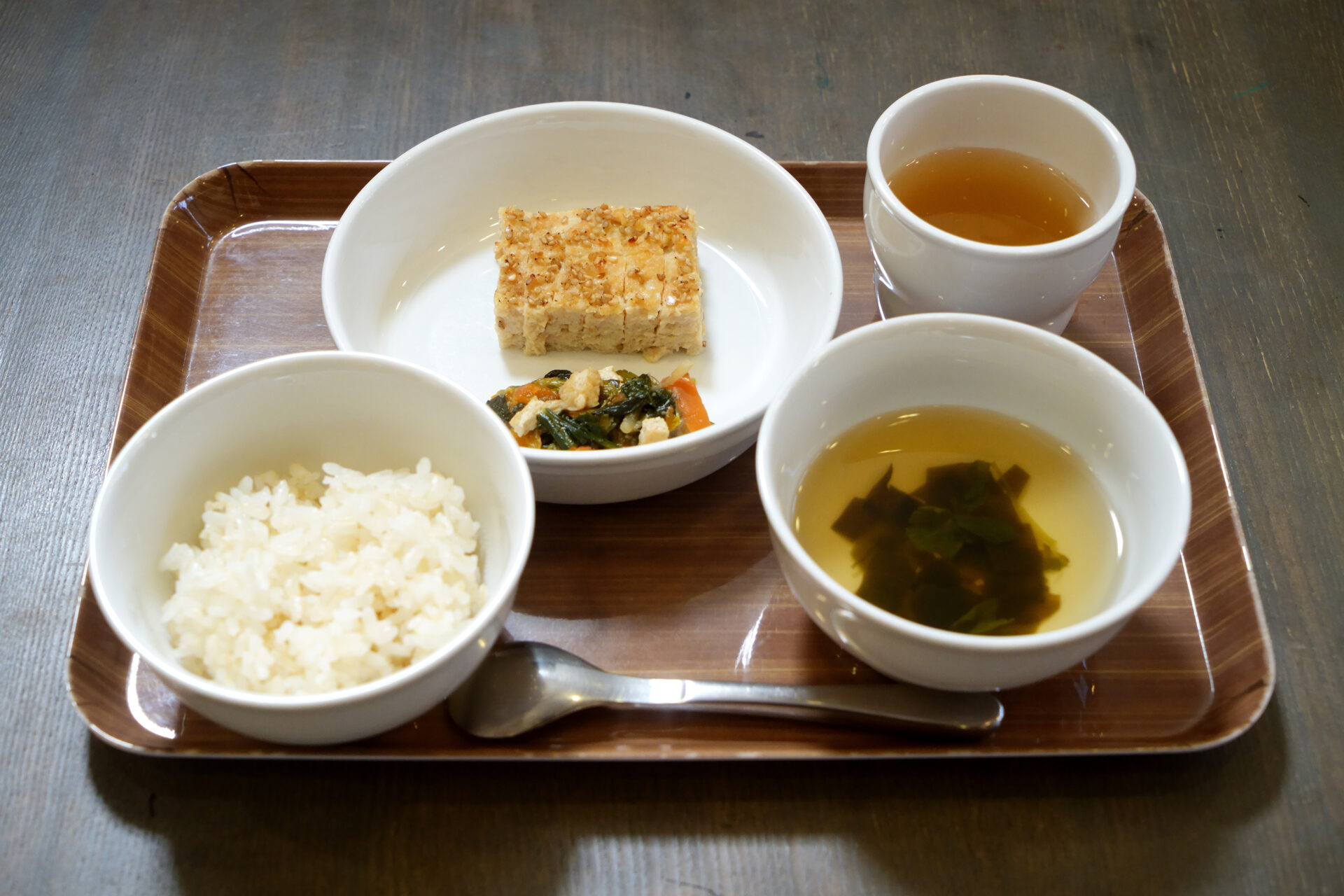
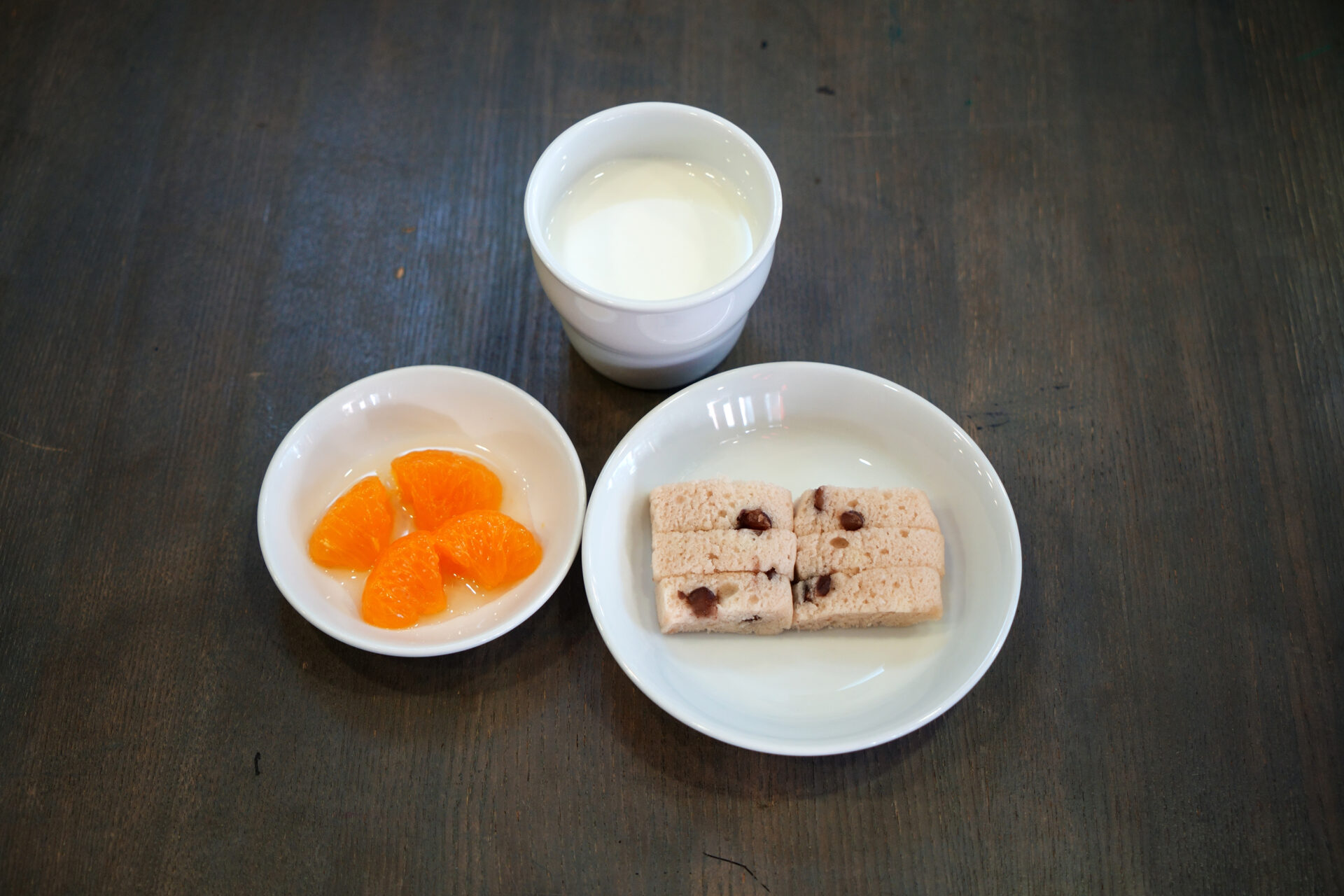
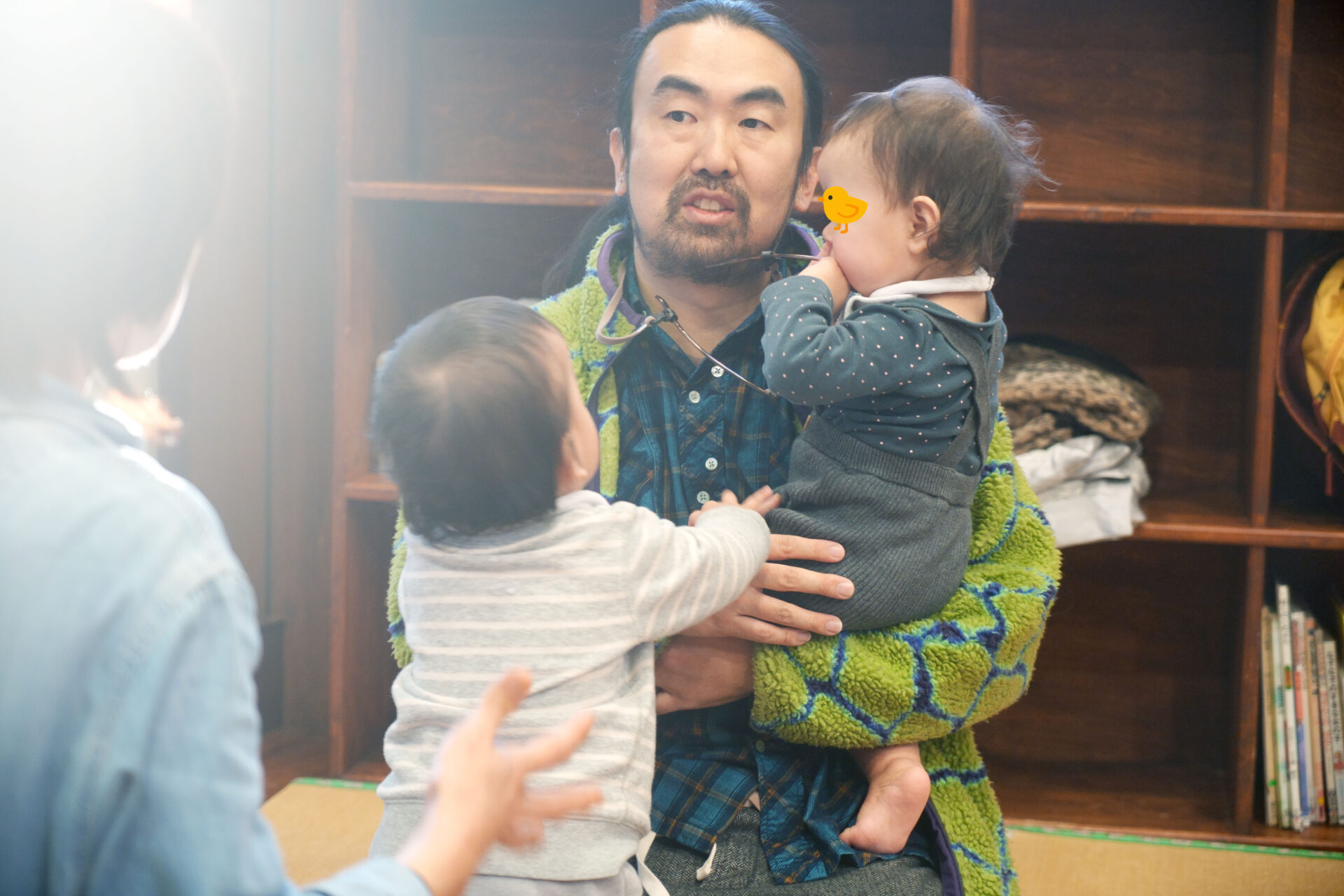
まちの保育園は園庭が建物の真ん中にあるので、よく外で遊ばせてもらえそう。ロサンゼルスの自宅は公園が少し遠いんです。あと、建物デザインが長屋っぽいというか、低めでよく見渡せるのも、なんかデモクラティックでいいと思いました。見通しがよくて、次に何が起こるか導線を感じてワクワクするかも。1日の終わりに親に向けて双子それぞれの写真と今日の様子が「ドキュメンテーション」としてアプリで送られてきて、感動しました。子どもから離れると初めは少し罪悪感を感じたりしますが、これを読んで子どもと繋がってる感じがしました。日本の保育園は、想像以上にすごいなぁ!!
[Comment from the Arakawa-Nashes’]
Because the courtyard at Machi-no-hoikuen is located in the center of the building, it feels like the children will get to play outside often. Our home in Los Angeles is a bit far from a park, so that really appealed to us. And the building design— feels a bit like a traditional Japanese nagaya row house—low in height and easy to see across—which somehow felt very democratic. Because everything is so open, you feel the rhythm of the space and feel excited about what happens next. At the end of the day, we received photos of each twin along with notes about the day through the app, presented as “documentation.” We were honestly moved. When you first leave your children, there’s a bit of guilt at first. But being able to know what they did throughout the day made us feel connected to them. Japanese daycare is even more amazing than we ever imagined!!


翻訳:向井麻理
編集:新田京子
Translation: Mari Mukai
Editor: Kyoko Nitta
荒川ナッシュ医
1977年福島県生まれ
現在、LAを拠点に活動
—
荒川ナッシュのパフォーマンスは、現代美術作家や美術史家をはじめとする多彩な人々との共同作業により生まれます。彼らが演者としてパフォーマンスに参加することもあれば、彼らの作品そのものがパフォーマンスに登場することもあります。西洋近代思想における個人主義を基盤とする現代美術において、他の作家らとの共同作業と観客との共同作業が交差する点を自身の作品とすることで、荒川ナッシュは「私」という主体の檻から作品を解放することを企図しています。具体、東京フルクサス、実験工房、ウィーン・アクショニズムなどから影響を受けた彼のパフォーマンスは、それら作品の意義を再考察しながら、現代における共同制作の政治性について問いかけます。
2026年5月より開催されるヴェネチア・ビエンナーレ日本館での展示においては、クィアの親としての視点から新作インスタレーションを発表します。ヴェネチア・ビエンナーレといういわば「アートのオリンピック」において、生まれたばかりの双子との新たな関係性を探求しながら、ナショナリズムと家父長制を脱中心化することに挑みます。
Ei Arakawa-Nash
Born in 1977 in Fukushima Prefecture.
Currently based in Los Angeles.
—
Arakawa’s performances are created through collaborations with a diverse range of people including contemporary artists and art historians. In the context of contemporary art that is based on notions of individualism as articulated in western modern ideology, Arakawa-Nash’s act of establishing the intersection between collaborations with other artists and the audience as his very practice, can be seen as an intention to liberate his works from the subjective framework of the “self.” His performances, influenced by postwar Japanese movements such as Gutai, Tokyo Fluxus, and Jikken Kobo (Experimental Workshop), as well as Viennese Actionism, reconsider the significance of these movements while interrogating the politics of collaboration in contemporary society.
For the Japan Pavilion at the 2026 Venice Biennale opening in May, Arakawa-Nash will develop a new installation derived from his perspective as a queer parent and seek new relationships with his newborn twins in order to decentralize nationalism and patriarchy at this so-called “Art Olympics.”
個展
「草の赤ちゃん、月の赤ちゃん」
—
[会期] 2026年5月9日[土] — 11月22日[日]
[会場] ヴェネチア・ビエンナーレ日本館(ジャルディーニ)
[コミッショナー] 国際交流基金
グループ展
「HOW WE MEET: Yuko Mohri & Ei Arakawa-Nash」
—
[会期] 2026年3月6日[金] — 5月31日[日]
[会場] Kunstmuseum Bochum、ドイツ
Solo
The 61st International Art Exhibition of La Biennale di Venezia, The Japan Pavilion
“Grass Babies, Moon Babies”
—
[Date] May 9 – November 22, 2026
[Venue] The Japan Pavilion, the Giardini della Biennale
[Commissioner] The Japan Foundation
Group
“HOW WE MEET: Yuko Mohri & Ei Arakawa-Nash”
—
[Date] March 6 – May 31, 2026
[Venue] Kunstmuseum Bochum, Germany