
page top


F
P
Nov 12, 2026
Nov 12, 2026

Photo: MOROKOSHI
Photo: MOROKOSHI
Photo: MOROKOSHI
Photo: MOROKOSHI
金沢21世紀美術館など約25年間にわたる美術館でのキャリアを経て、分野横断の移動型プロジェクト「No Centre」を始動させたキュレーター、黒澤浩美。ローンチ・プログラムとしてゲルハルト・リヒターとスティーヴ・ライヒによる映像・音楽作品《Moving Picture (946-3) Reich/Richter》の日本初演を2026年11月6日、7日に東京・草月ホールで開催した。1960年代を中心とした草月アートセンターの系譜を引き継ぎ、拠点を持たないことでそれぞれの土地の文化的背景と向き合う流動的なプログラムを目指す。 2002年に演劇ユニット「Port B」を結成し、2013年に「Port都市リサーチセンター」を設立して以来、観客自身の移動を作品の中心に据え、演劇の枠組みそのものを都市へと拡張してきた作家・演出家、高山明。美術館と劇場、それぞれの制度を離れた2人が「No Centre」の未来を描きながら現在の立ち位置についてタカ・イシイギャラリーで語りあった。
After some 25 years working in museums, including the 21st Century Museum of Contemporary Art, Kanazawa, curator Hiromi Kurosawa launched No Centre, a multidisciplinary project that moves from place to place. For its launch program, No Centre held the Japanese premiere of Moving Picture (946-3) Reich/Richter, a work combining moving images and music by Gerhard Richter and Steve Reich, at Sogetsu Hall in Tokyo on November 6 and 7, 2026. Building on the legacy of the Sogetsu Art Center of the 1960s, No Centre plans to work without a dedicated permanent location, developing a fluid program that responds to the cultural context of each place. Artist and director Akira Takayama founded the theater group Port B in 2002 and established Port Urban Research Center in 2013. He has put audience members’ movements at the center of his work, extending the boundaries of theater into the city. Working outside the institutions of museums and theaters, the two discussed where they stand today and envisioned the future of No Centre at Taka Ishii Gallery.
――「No Centre」のステイトメントに、「芸術の創造は、美術館や劇場だけでなく、もっと多様な空間や時間の経験に根差したものではないだろうか」という問いかけがありました。「芸術の制度は統合的で垂直的な語りによって、中心と周縁をつくりだしてきた」という言葉もありました。黒澤さんは約25年にわたる美術館での経験を経て、このプロジェクトをどのように発想されたのですか。
黒澤 長らく軸足を置いていた美術館という場所は、極めて目的がはっきりしていて、そこでの活動はすべて歴史として蓄積されていく。ただ、すべてを残すことはできないので誰かによって選択されることで置き去りにされるものもある。分類が曖昧だったものにもラベルをつけていくうちに、ジャンルやクラスがはっきりするようになる。近年では、残したい気持ちが強すぎて、あたかもそのために作品を作るかのような時代になってきたんじゃないかという窮屈さがありました。私は美術館愛好家ですし、美術館の活動を否定するわけではなくて、人類の知財として残していくことで、過去、現在、未来にわたって「私たちはどこから来て、どこへ行くのか」という問いに対して向き合う、それを果たす機能としてはとても重要だと思っていますが、まるでそれがすべての価値の頂点にあるかのようなものではなくて、もっと広く、いろんなものや関係性が創られているんじゃないか。あるいはそういう地平に自分も行きたいという気持ちがありまして。
――高山さんの活動を「No Centreの先輩」と話されていましたが、高山さんの作品は、移動してその場所で作品を成立させることがひとつの特徴だと思います。黒澤さんは移動することを美術のひとつのプラットフォームの中に取り入れたいということですか。
黒澤 高山さんの場合は、演劇のための劇場という制度があって、シアターピースももちろん手がけられますけれども、圧倒的にそうじゃない場所での作品制作が多い。私からすると、高山さんは No Centreそのものとも言えるかと思います。
Moving Beyond Museums and Theaters as Institutions
Q The No Centre statement asks, “Isn’t the creation of art rooted in experiences of space and time far more varied than museums and theaters alone can offer?” It also says, “Art institutions have created centers and peripheries through unified, hierarchical narratives.” Kurosawa-san, after some 25 years working in museums, how did you come up with the idea for No Centre?
Hiromi Kurosawa Museums, where I spent much of my career, have a very clear purpose, and everything they do becomes part of their history. But you can’t keep everything, so someone has to choose, and some things get left behind. Things that are hard to classify get labeled, and gradually the genres and categories become clearer. And lately I’ve found it stifling. The urge to preserve things has gotten so strong that it almost feels like works are being made just to be preserved. I’m a museum lover, so I’m not dismissing what they do. I think museums are really important. They preserve things as part of humanity’s intellectual heritage, giving us a way to think about the past, present, and future, and to ask, “Where have we come from, and where are we going?” But I don’t think that puts preservation above every other kind of value. I think all kinds of other things and relationships are taking shape beyond that. Or maybe I wanted to be part of that wider world myself.
Q Kurosawa-san, you’ve described Takayama-san’s work as a kind of forerunner to No Centre. It seems to me that one feature of his work is that he travels to a place and makes the work come together there. Are you hoping to bring that kind of movement into No Centre as a platform for art?
HK Takayama-san does make stage productions, of course, but far more of his work takes place outside theaters. To me, what he does is what No Centre is all about.

Photo: MOROKOSHI
Photo: MOROKOSHI
――高山さんが劇場を離れたきっかけは。
高山 最初は劇場に入りたいという気持ちが強かったと思うんですけど、一生懸命やってそれなりの舞台を作れるようになって、設えられた場所でやっていると、来てくれるお客さんがほとんど同じなんですね。全然、出会った気がしない。時間もあって趣味も良くて、理解をしてくれるお客さんが来るんです。当時は、巣鴨のにしすがも創造舎を稽古場にさせてもらっていて、そこから少し歩くと中山道沿いに巣鴨地蔵通り商店街があり、その先に猿田彦神社があるんです。近くにこんな場所があるのに、なんで稽古場でいつもやってるんだろう、中山道は江戸時代からいろんな人が通ってきたんだと考えると、「道」を主人公にした演劇を作ってみようと、ある日突然に思いついたんです。
最初歩いているだけじゃよくわからなくて、バイノーラルマイクという立体的に録音ができるマイクを耳に着けて、とげぬき地蔵から猿田彦神社まで500mくらいの道をひたすら歩くことから始めました。500回歩いてみたらどうなるだろうかって、500テイク録ってそれをひたすら聴くような生活を送って。まったくわけがわからない衝動です。それで、この音をうまく編集すれば僕が体験した都市の空気や音を第三者が体験できる「地図」が作れるんじゃないか、「道」を再現できるんじゃないかと思ったんです。最終的には観客にイヤフォンをつけてその道を歩いてもらう公演を行ったんですが、そしたら最終日に猿が出たんですよ。巣鴨に野生の猿が出たってニュースになったくらいなんですけど(笑)。猿田彦神社は猿が道案内をしてるんです。猿が出たってことは、これはやれってことだなと思って。そこからはもう外に出ました。
――観客の反応はどうでしたか。
高山 反応は良くて、まず知らない人たちがたくさん来てくれました。商店街の人たちや、挨拶に行った商店街の会長さんの幹部の方とか。街があって、そこを面白く見ることができれば役者さんは要らないなと思いました。観客が街を再発見できると、そのとき僕自身は感じました。
Q Takayama-san, what led you to take your work outside the theater?
Akira Takayama At first, I think I really wanted to work in a theater. I worked hard and eventually got to the point where I could put on a decent production. But when you’re working in an established theater, you find that it’s almost always the same people who come. I didn’t feel like I was really meeting anyone new. They had time to spare, good taste, and they understood what we were doing. Back then, we used Nishi-Sugamo Arts Factory in Sugamo as our rehearsal space. Just a short walk away was Sugamo Jizo-dori Shopping Street, which runs along the old Nakasendo route that used to link Tokyo and Kyoto, and farther along was Sarutahiko Shrine. I started thinking, why do we keep rehearsing indoors when we have all this just a short walk away? And then I thought about all the people who’d traveled the Nakasendo since the Edo period (1603–1868). One day, it suddenly came to me: why not make a piece of theater with the road as the main character?
At first, I couldn’t get much of a feel for the place just by walking through it. So I started walking the 500 meters or so from Togenuki Jizo (Koganji Temple) to Sarutahiko Shrine over and over, with a binaural microphone attached to my ears to record three-dimensional sound. I wondered what would happen if I walked it 500 times. I made 500 recordings and spent my days listening to them again and again. I have no idea what possessed me. But then I thought, if I could edit the recordings just right, maybe I could make a kind of “map” that would let other people experience the sounds and atmosphere of the city the way I had. Maybe I could recreate the road. Eventually, I staged a performance where audience members wore earphones and walked the same route. And then, on the final day, a monkey appeared! There was even a news story about a wild monkey turning up in Sugamo (laughs). Sarutahiko Shrine is dedicated to a god who guides travelers on the road, and monkeys are his messengers. So when one actually showed up, I took it as a sign I was meant to do this. From then on, I took my work outdoors.
Q What kind of response did you get from the audience?
AT The response was really good. For one thing, a lot of people I’d never met came, including people from the shopping street. The head of the shopping street association came, along with other senior members I’d gone to introduce myself to. It made me think that if you can find an interesting way to look at a city, you don’t need actors. The audience can rediscover the city on their own. That’s how I felt at the time.
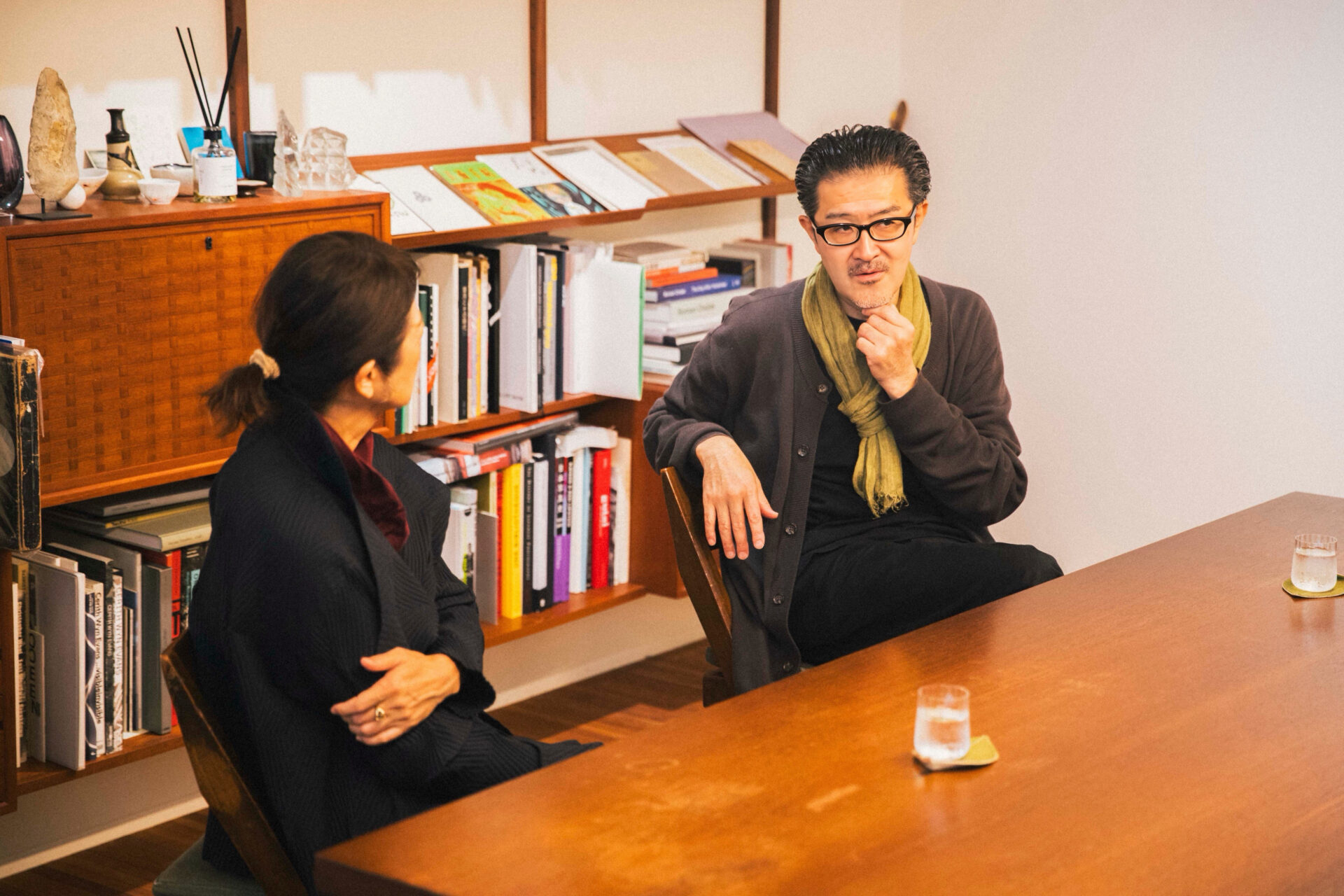
Photo: MOROKOSHI
Photo: MOROKOSHI
黒澤 純粋に私は高山さんのことが好きなので、作品というよりも高山さんの生き方がすごく好きなんですけど。現代美術といわれているものの過去には、いろいろな表現や作家がいて、だんだんと時代に合わせて変容してきていると思うんです。私が高山さんのお仕事の中でいつもすごいなと思うのは、現実との接点です。美術館で壁に掛けられた絵を見るときは距離があるわけです。おおよそ自分の日常に侵入してくるような、そういうやり取りはあまりない。けれども高山さんの作品は、そこが完全に接地してお互いに侵食し合っている。これに耐えられる強度がすごいなと、いつも思っています。劇場でも美術館でもなく、制度に守られているところを取っ払った、現実と距離のない状況。歯を磨くとか、ぐっすり眠るとか、学校や病院に行くとか、あるいは友達とゲームするといったことと圧倒的に地続きだなと思っています。これは結構理想というか、「こういうものです」と差し出されて「ありがとう」と受け取るんじゃなくて、そこにいること自体が何かを成立させてしまう。
高山 いろいろなことが起こるんですけど、道を歩いてるときには自分の身体感覚で歩くじゃないですか。すぐ隣が市場なので新鮮な野菜が売ってたり魚屋があったり、北海道物産店があったり、最初は面白くて仕方がないんですけど、20回も30回も歩いていくと退屈になってくる。でも実はそこからが本当は面白くて、マイクを持って何度も歩くのはどう考えても異形の人ですから、周りの人が話しかけてくる。僕が録音していることを伝えると、通り過ぎるときに「巣鴨で北海道〜」とか言ってくれるようになる。すると右側が巣鴨で北海道の物産店、左側が八百屋さんとわかるようになるんです。ヒントが散りばめられてくる。僕が歩いているだけで皆が巻き込まれてくる。それで500テイクくらい録って良いところを繋いで最終的に音の立体地図ができたんです。
HK I just really like Takayama-san. Even more than his work, it’s the way he lives that I love. If you look back at the history of what we call contemporary art, there have been all kinds of artists and ways of making art, and they’ve changed with the times. What always impresses me about Takayama-san’s work is how directly it connects with reality. There’s a certain distance between you and a painting hanging on a museum wall. It rarely intrudes on your everyday life. But with Takayama-san’s work, art and reality meet, and the boundaries between them start to disappear. I’m always struck by how well the work stands up to that. Without the protection of a theater or museum, there’s no separation from everyday life. His work feels closely connected to ordinary things like brushing your teeth, getting a good night’s sleep, going to school or the hospital, or playing games with friends. In a way, that’s my ideal. It’s not that you’re handed something, “Here you are,” and you say “Thank you.” Just being there makes something happen.
AT All sorts of things happen. When you walk down a street, you experience it through your own senses, right? There’s a market right nearby, with fresh vegetables for sale, a fishmonger, and a shop selling Hokkaido specialties. At first, you can’t get enough of it, but after you’ve walked the same stretch 20 or 30 times, you start to get bored. But that’s actually when it can get interesting. Someone walking the same route over and over carrying a microphone is bound to look strange, so people start talking to you. Once I told them I was recording, they’d call out things like “Hokkaido in Sugamo!” as I passed. And then you’d know: Hokkaido specialty shop on your right, greengrocer on your left. Little clues started popping up all along the route. Just by walking, I was drawing everyone around me into it. So I recorded about 500 takes, pieced together the best parts, and ended up with a three-dimensional sound map.
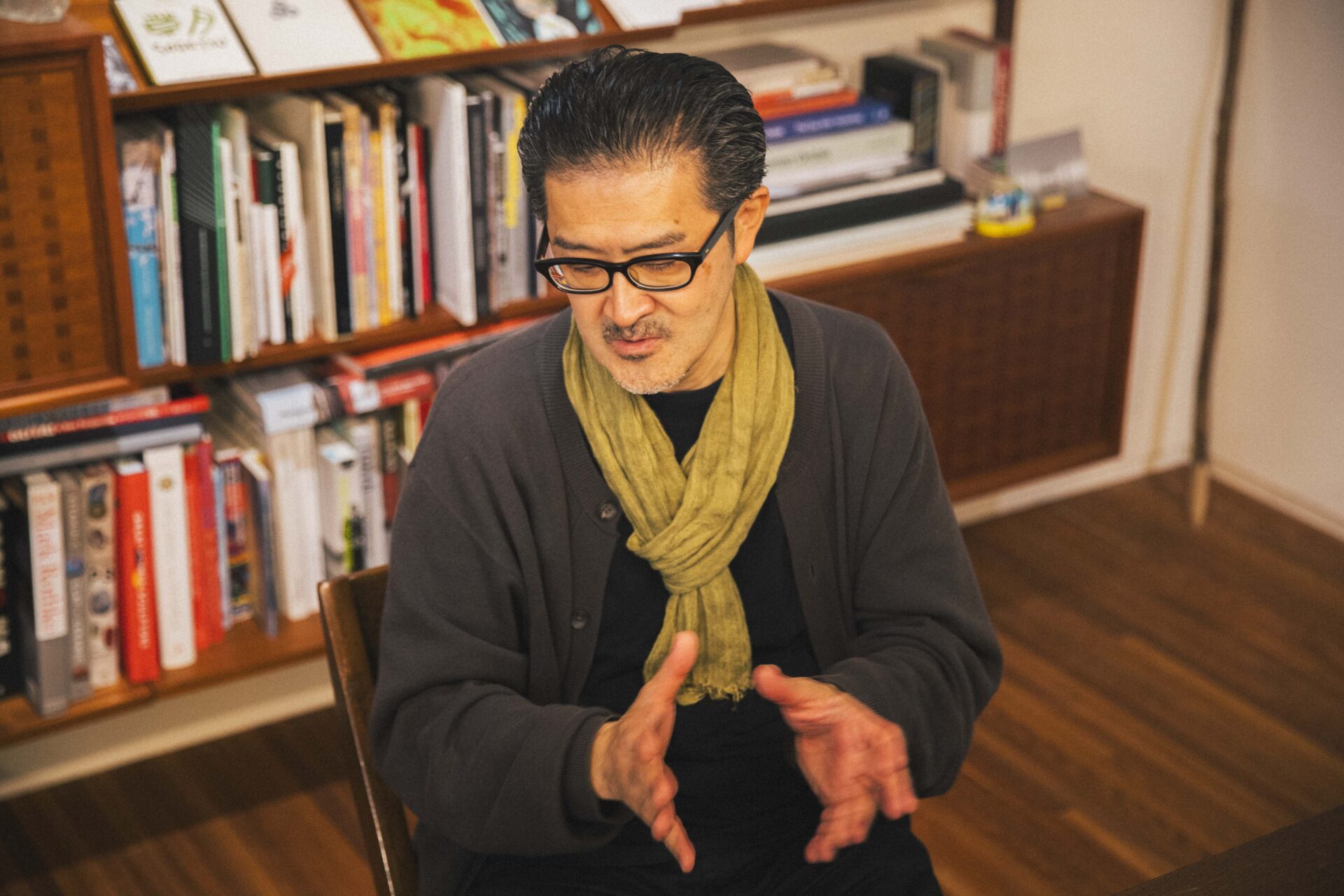
Photo: MOROKOSHI
Photo: MOROKOSHI
高山 お客さんが歩くという体験をしながら僕の歩行を追体験してもらうことは、幽霊が取り憑いてその人と一緒に僕が幽霊になって歩くみたいな感じだなと、そのときに思ったんです。ウィーンで別のツアー公演を作った際、記者会見でやたら鋭いおじいさんが質問してきたんです。「あなたがやっていることは非常に暴力的であることは分かっているか。人の身体の動きや身振りをあなたの分身でコントロールしようとしている」と。ずいぶん鋭いことを言うなと思ったんです。その人はヨーゼフ・ザイラーという演劇の教科書に必ず載っているような演出家で、そのとき僕は答えられなかったんです。自分の身体感覚を人にうつすことで、それを体験する人たちの日常が少しだけずれる。でも限りなく日常に近い。ちょっと変なずれが生じるようなその暴力性をどう考えるべきかと、そのあともずっと考えて、今はそれでいいと思っています。逆にある種の暴力性がないとずれが生まれないので。日常の視点にほんのちょっとずれた何かが幽霊として取り憑くことで、世界がちょっとずれてくる。それは、素晴らしい作品や素晴らしいステージを観て感激するのとは少し違った、自分が知っている何かが知らないものに一瞬見えてくるみたいな体験です。そのちょっと違って見えるときに得られる驚きや感動のほうにたぶん僕は興味があるんじゃないかなと思います。現実って触れているようで触れていないから。
黒澤 高山さんの作品は単線じゃないというか。スパイラル状に増幅していくような気がします。ひとつの脚本を最初から最後まで読むような平坦な道のりに脚色するんじゃなくて、高山さんの作品の中にいると一段ずつ上がっていく、位相を感じる。つまり、そのときだけ違う世界に行くというよりは、そのときは自分の現実と地続きにあるので、現実ごと、どこかに連れて行かれて、少なくともものの見方が元には戻らない。
高山 それって、どういう感覚なんですか?
黒澤 たとえば『マクドナルド放送大学』のプロジェクトは、録音されている、あるいは生で放送される話を最初から最後まで聴くという行為ですけど、その間にたぶん今おっしゃる裂け目がいろいろと見つかってしまうというか。自分の目の前にちょっとだけ開く。そうすると、そこへ入っていきますよね。話を聴きながら入っていくと、またその次も違うものも見つかって。ひとりで話を聴いているというよりは、その間にいろいろな時間や空間に連れていかれる、という感じですね。
高山 嬉しいです。
黒澤 聴いた後の変化も予想できない。難民の人の話を、単純な情報として聴く以上の、彼/彼女の事実を受け止める以上のものが、その場で生まれてしまうというか。
高山 身体感覚があまり開いていなかったりすると、そういうものを取り逃がしてしまう。舞台があって客席があるという劇場の制度がすごくうまく機能していた時代もあって、今も部分的には機能していると思うんです。でも、その環境ではつかめないものが今は出てきているので、そういうまだ名付けようのないものに出会うために動かないといけない。
AT At the time, it struck me that when audience members retraced my steps, it was almost like I’d become a ghost, possessing them and walking alongside them. Later, when I created another walking tour in Vienna, this really sharp older man asked me a question at a press conference. “Do you realize how violent what you’re doing is? You’re trying to control people’s movements and gestures through a doppelganger of yourself.” I thought, that’s a pretty astute thing to say. The man was Josef Szeiler, a director you read about in every theater textbook, and at the time I couldn’t answer him. It’s like I’m passing on my own sense of physical movement to someone else, and that shifts their everyday experience just a little. But it’s still so close to ordinary life. I kept thinking afterward about what to make of the violence involved in creating that small, strange shift. Now I think it’s okay. If anything, without a certain degree of violence, the shift wouldn’t happen. Something just a little different slips into your everyday way of seeing things, like a ghost possessing you, and the world starts to look different too. It’s not the same as being moved by a wonderful work of art or a great stage performance. For a moment, something familiar seems unfamiliar. I think what interests me more is the surprise and sense of wonder that come with seeing things a little differently. We think we’re in touch with reality, but we’re not really.
HK Takayama-san, your work doesn’t really unfold in a straight line. It seems to spiral outward, growing as it goes. It’s not like following a script straight through from beginning to end. When I’m inside one of your works, I can feel myself moving up one level at a time, as if passing into a different phase. My own reality comes along with me, and by the end, I can’t quite see things the same way anymore.
AT What does that feel like?
HK Take McDonald’s Radio University, for example, where McDonald’s customers listen to radio talks by refugees and migrants. You listen to a talk from beginning to end, either recorded or broadcast live. But as you listen, I think little openings start to appear, something like the shifts you were talking about. You find yourself drawn into one, and then you discover another, and another. So instead of feeling like you’re just sitting there listening on your own, you feel as though you’re experiencing all these different times and places.
AT I’m glad to hear you say that.
HK And you can’t predict how it will affect you afterward. When you listen to a refugee’s story, it’s more than just taking in information, or even accepting what that person has been through. Something else happens right there, in that moment.
AT If you’re not really in touch with your own senses, you can miss things like that. There was a time when the traditional theater setup, with a stage and an audience, worked really well. And I think it still does in some ways. But these days, there are things you just can’t experience in a theater like that. So we have to get out and move around to find things we don’t even know what to call yet.
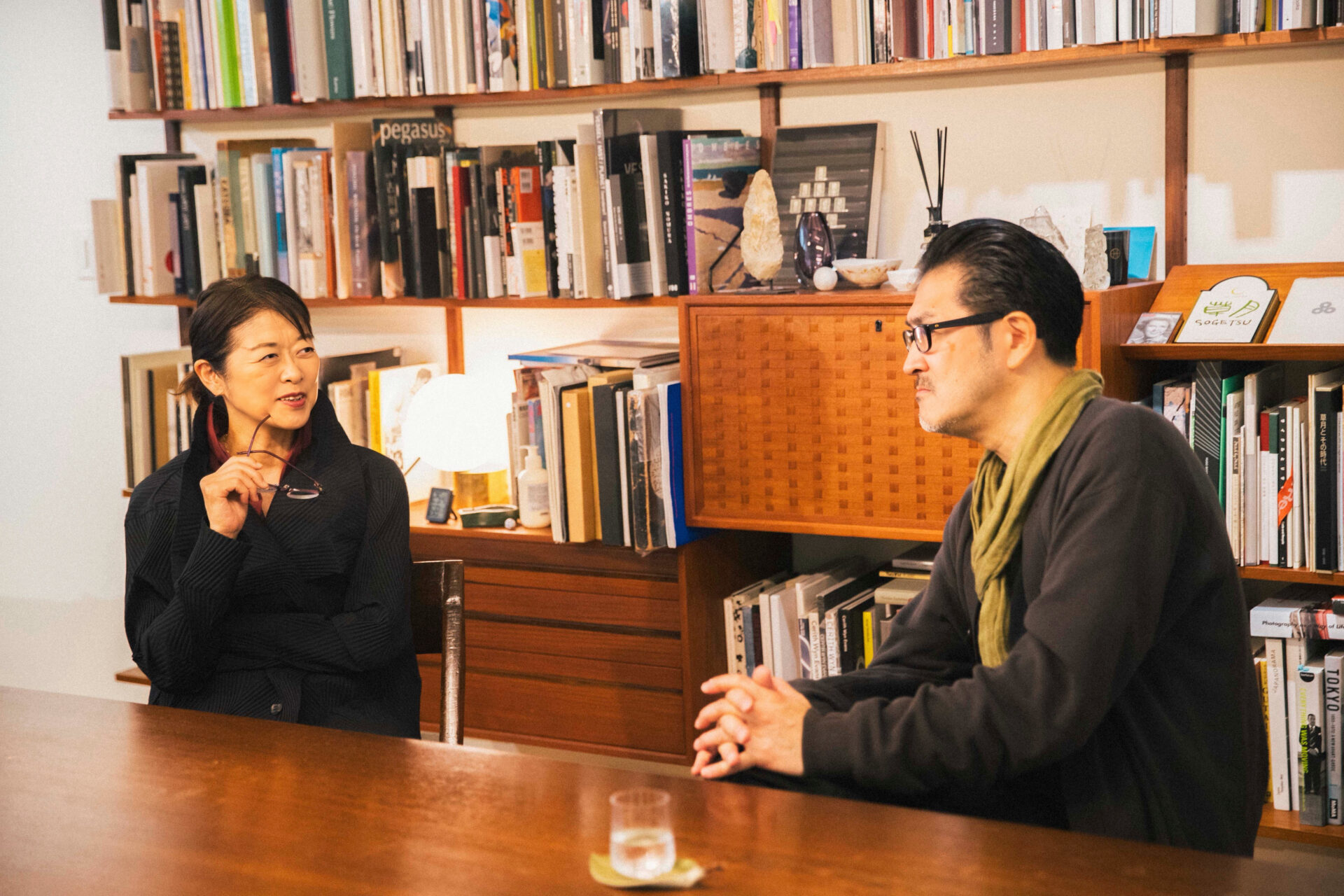
Photo: MOROKOSHI
Photo: MOROKOSHI
高山 前に黒澤さんとお話ししたときに「私は野心的なので、『マクドナルド放送大学』のような作品をコレクションしたいんです」とおっしゃってくださって。それがすごく嬉しかったんです。普段はこいつは眉唾だと思われることの方が多いですし。
黒澤 「野心的」は言葉の綾ですが(笑)。たとえば、家の中でお母さんがピアノを弾いて即興で子どもが歌う、みたいなことは、芸術の制度にはおよそ乗らない。でもだからといって、それは意味のないものかと問われると、そんなことはたぶんない。個人的な関係性の中では大切な時間だったり、記憶だったりする。舞台では、ピアノを置いて、お母さん役がいて子役がいて、ピアノを弾いてもらって子役が「お母さん、歌っていい?」みたいな台詞を言ってくださいって、台詞がつく。それを我々はわざわざ観に行く。これは人間行為のひとつのサンプルとして普遍的な何かに高めていくという行為かもしれないけど、果たしてそれで「人間は」とか語れるのだろうかと、最近、少し疑問でもあり。舞台を受容する側にも少し変化があって、それではなんだかありきたりというか、わざわざそれを観に行く意味も、自分の中にはあまり見当たらなくなっているのかもしれません。あたかも作家が時代を眺めたり牽引しているかのように舞台は作り続けられているけれど、実は受容するこちら側も、AIとか、いろいろあるから、それなりにものの見方や理解を更新していて。演劇や美術に向き合うとき、その変化は著しいなと感じています。
高山 僕はどちらかというと、受容する側の思考に興味が行くところがあって。むしろ作らなくても別にこの世界を豊かに経験できればそれでいい、という考えもあるから。どうすれば豊かな受容ができるのかということを考えていくと、そういう受容体になるプロセスみたいなものを作品の中に取り込めば、何もなかったとしても、お客さんの受容する感覚さえ変われば、世界が変わって見えるみたいなことが起こりうるんじゃないかと思っていて。
AT Kurosawa-san, when we spoke before, you said, “Call me ambitious, but I’d like to collect works like McDonald’s Radio University.” I was really happy to hear that. Most of the time, people seem pretty suspicious of what I’m doing.
HK Well, “ambitious” was just a figure of speech (laughs). Say a mother’s playing the piano at home and her child starts singing along, making up a song on the spot. That’s not the sort of thing that would normally be considered art. But does that make it meaningless? I don’t think so. For the people involved, it might be a really important moment, something they’ll always remember. Now imagine putting that same scene onstage. You bring in a piano, cast a mother and child, have the mother play, and give the child a line like “Mom, can I sing?” And then we go out of our way to watch it. Maybe the idea is to take an ordinary moment like that and turn it into something that says something about human nature. But lately I’ve been wondering, can a scene like that really tell us what people are like? I think audiences have changed too. Maybe that sort of thing just feels a bit predictable now. At least for me, I’m not sure I see much reason to go out of my way to watch it anymore. Theater is still being made as though it’s the artists who survey the times and lead the way. But those of us in the audience, with AI and everything else going on, have been updating the way we see and understand things, too. And I really notice how much we’ve changed when I go to the theater or look at art.
AT What really interests me is how people experience things. Sometimes I think, maybe we don’t need to make anything at all. If we can just fully experience the world as it is, isn’t that enough? So I keep thinking about how we can become more open to what’s around us. What if I made that process part of the work? Even if there was nothing else there, just changing how the audience experiences things might be enough to make the world look different.
Photo: MOROKOSHI
Photo: MOROKOSHI
――高山さんの最近のベルリンでのプロジェクトについてお聞かせください。
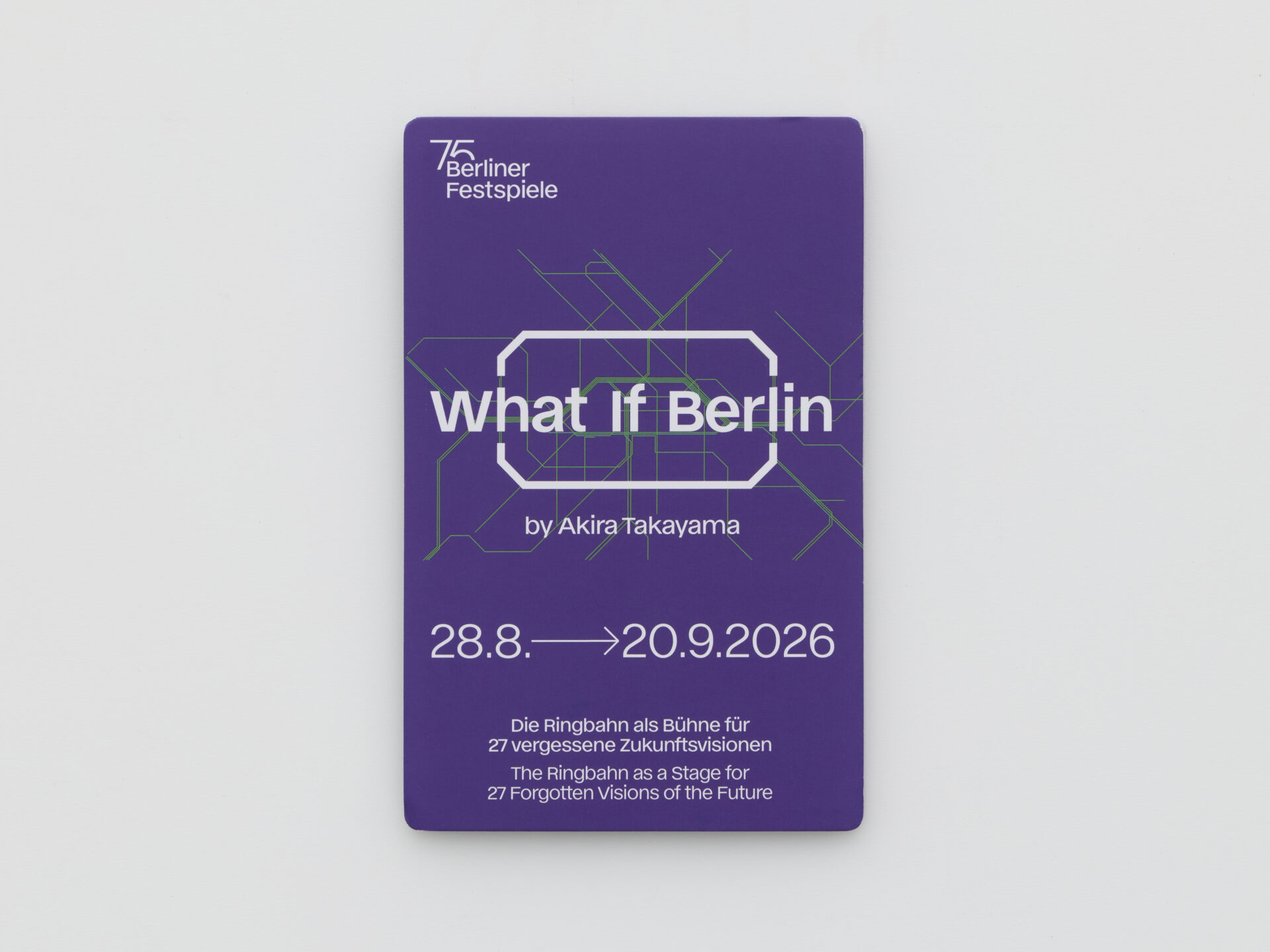
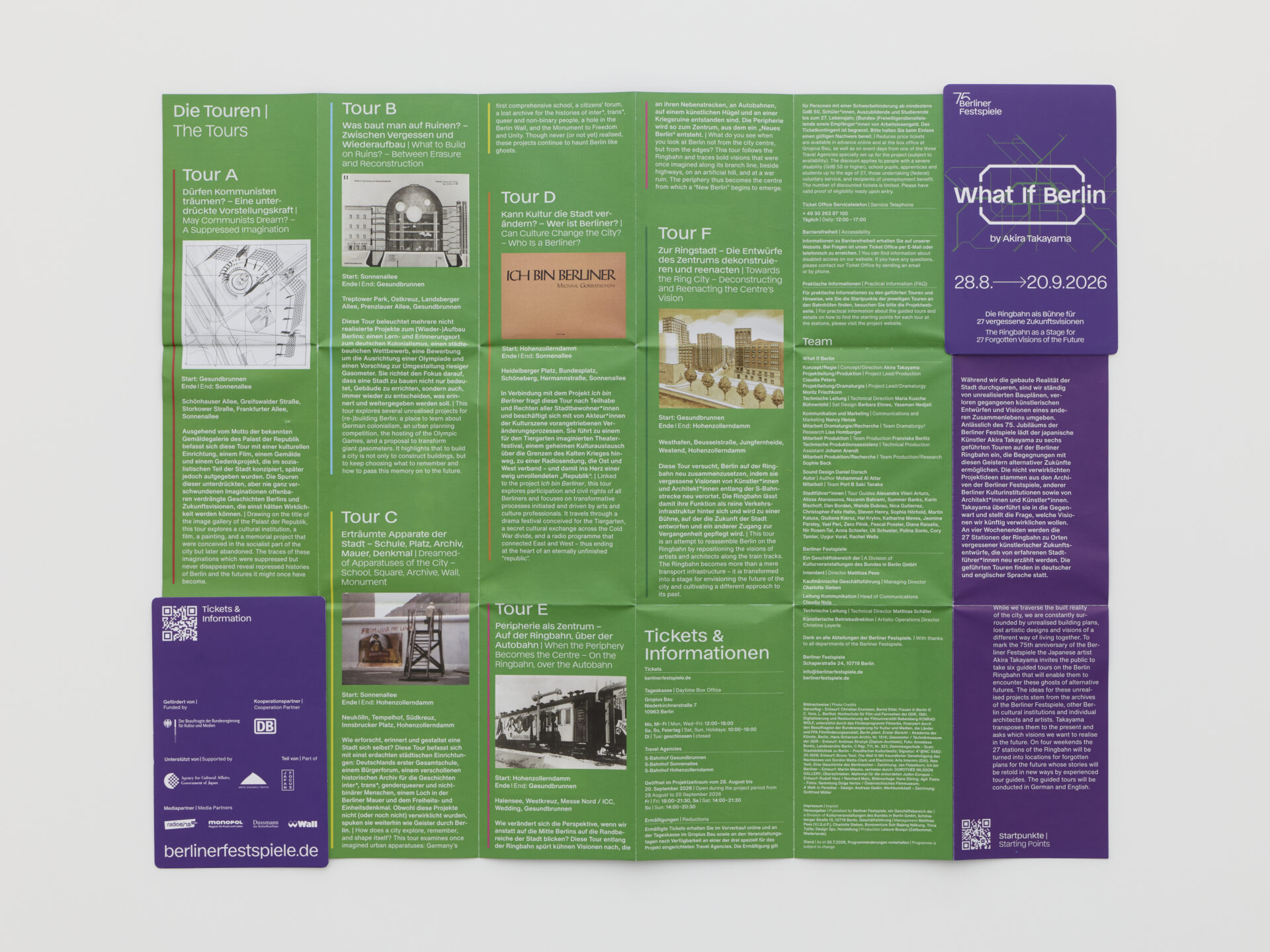
高山 ベルリナー・フェストシュピーレ(ベルリン芸術祭)という、僕が今まで仕事してきたなかで最も制度的な場所で、旧西ドイツを代表する国立の文化機関なんですが、これを旧東側に持っていくにはどうすればいいかと、そういう質問をディレクターからもらって。面白いな、やってみようと。今はベルリンの壁はなくなりましたけど、リングバーンという、山手線みたいな環状線があって、むしろそれが新しい壁みたいになっていると感じたんです。大雑把に言うと、内側はリベラルで国際的、外側は保守的なドイツ人や移民が多いんです。じゃあ、旧西側から旧東側に持っていくのではなく、このリングバーンにフェストシュピーレを移してしまえばいい。27の駅があるんですけど、27の小さい劇場がネットワークを作ってフェストシュピーレという大劇場に変わるようにしようと考えました。内容については、これまで実現されなかった幽霊プロジェクトがベルリンにはたくさんあって、今、実現してもいいんじゃないかと思われるような27個のプロジェクトをひとつひとつの駅に埋め込んで、27人のツアーガイドによるリングバーンツアーを作りました。
黒澤 どういうタイプの幽霊プロジェクトなんですか?
高山 アートプロジェクトもあって、ゴードン・マッタ=クラークがベルリンの壁を爆破するとか(笑)。それは、友達からそれやったら殺されちゃうと言われて止めたプランです。
黒澤 (笑)
高山 穴を開けたかったんだけど開けられなかったプロジェクトを、現代に、未来に、このベルリンでどう実現するか。僕の提案として、インスブルッカー・プラッツ駅の前の線路脇に高さ25mぐらいのアパートが200mくらいの距離でずっと壁のように建っていて、リングバーンの内外を分断しているんですが、この壁のアパートの内側に30mの高さの物見塔を作って、同時に外側にももうひとつ同じような物見塔を建てれば、同時に人が登ったらそこで視線が交わされる。そうすることで穴が開くんじゃないかなと。そんな少し子どもじみたアイディアを出しました。最後に「もし、今ベルリンで実現するとしたらあなたはどのプロジェクトが一番いいと思いますか?」という質問をして投票を行いました。そんな幽霊プロジェクトを紹介して、未来に繋いでベルリンの街をもう一度考える、ということをやりました。今、それが終わったばかりです。
Q Takayama-san, could you tell us about your recent project in Berlin?
AT Berliner Festspiele is one of the top national cultural institutions dating back to the days of West Germany, and it’s the most firmly established institution I’ve ever worked with. Its director asked me how we could bring it to the former East. I thought, that’s interesting, let’s give it a try. The Berlin Wall is gone now, but the city has a circular railway called the Ringbahn, a bit like the Yamanote Line in Tokyo. And if anything, I felt it had become a new kind of wall. Roughly speaking, the area inside the circle is liberal and cosmopolitan, while outside there are more conservative Germans as well as many immigrants. So rather than taking the festival from the former West to the former East, I thought, why not move it onto the Ringbahn? It has 27 stations, and I thought we could turn each one into a little theater. Together, they’d form a network that would become one big theater for Berliner Festspiele. As for what went in them, Berlin has lots of what I call ghost projects, plans that were never realized. I chose 27 that seemed worth pursuing now, put one at each station, and created a Ringbahn tour with 27 guides.
HK What kinds of ghost projects were they?
AT Some of them were art projects. For example, Gordon Matta-Clark, who was known for cutting holes in buildings, had a plan to blow up the Berlin Wall. (laughs) But a friend told him he’d get killed if he tried, so he dropped it.
HK (Laughs)
AT These were projects that had tried to make an opening but never managed to. So how could we make them happen here in Berlin, now or in the future? One idea I proposed involved a row of apartment buildings beside the tracks next to Innsbrucker Platz station. They’re about 25 meters tall and stretch for about 200 meters, making a kind of wall that separates the inside of the Ringbahn from the outside. I suggested building a 30-meter observation tower on each side of the buildings. If people climbed both towers at the same time, they could look across at each other. And I thought, wouldn’t that be a way of making a hole in the wall? Kind of a childish idea, really. At the end, we asked people, “If you could carry out one of these projects in Berlin today, which would you choose?” and held a vote. So we introduced these ghost projects as possibilities for the future and used them to get people thinking about Berlin again. That has only just finished.


黒澤 社会性のあるプロジェクトは、日本では実現する難しさはありますか?
高山 ここ15年ぐらい、日本の劇場からのオファーはたった1回しかなくて。美術のほうがありがたいことに声をかけてくださる機会が多いんですけど、劇場ベースで本当はやりたいんです。一度横浜の劇場からオファーが来て、フルでやらせてもらいました。そしたら一発でレッドカードでした(笑)。ヒップホップのプロジェクトでしたけど。
黒澤 (苦笑)
高山 分かんないことに対する警戒感があるようで。
黒澤 そこはなんだか、表裏が逆になっていますよね。昔は劇場や美術館こそが、ゴードン・マッタ=クラークのやったようなことができる場所として見做されていたのに、まったく保守的で、実験ができない場所になっている気はします。先週もある展覧会を観たんですけど、極めてクリーンでざわつかないというか。わざわざどういう人が行くのかなと思いながら。やっぱり表裏が逆になってるなと思って。
――No Centreで、そういう実験のできる場所を作りたいと思い描いていらっしゃいますか。
黒澤 最近は何事もプロジェクトとか名前がついて、壮大に語られるというか、すぐに評価されているような気がします。そんなに、すぐに意味深いとか、価値があるとか、わかるのかしら、と。ある種のお行儀の良さに対する皮肉ですが(笑)。No Centreは、できるだけ、あんなことも、こんなことも、それこそさらっとやってみたい。価値があるかどうかとか、いいか悪いかとか、わからないのに、決定版みたいな顔つきでやるのはやめたいなと思います。どうして起きないのかなと思うんですよね、とりあえずやってみる、みたいなことが。No Centreは、すごくスペクタクルなプロジェクトを手がけるというよりは、アーティストと一緒に考えてみるということを、いい意味でのカジュアルさで意見交換するところから。高山さんはアーティストとして500回毎日同じところを歩き続けることで何かを見つけることをする。私たちはそれを500回一緒に歩くことも辞さずに、どこかで接点を持ちながら一緒に歩いていく。追体験したり向き合ったり話し合ったりすることで、どういうことだったのか、ということをタネに、一緒に楽しみたいです。
高山 そういう楽しみ方を一緒にしてくれたらありがたいです。制度が絡むとひたすら管理されてしまうから。寄り添ってくれたらうまくいくに決まってんじゃん、どうしてそう考えられないの?と思ってしまいます。別にうまくいかなくてもいいわけで。散歩みたいにとりあえずやってみようと。ベルリンの後にインドネシアに行っていたんですけど、1か月前に1回打ち合わせしただけで一緒にものを作るんですよ。向こうもどんどん変わっていくし、僕も変わるし、その中で最後に出来上がって、じゃあこれで行こうかみたいな。数日前に公演日時も変えちゃうし、上演する場所まで変わっちゃったから、そんなカジュアルさでも成立するんだなと勉強になりました。ドイツでプロジェクトをやっているとそれを見失ってしまうので。
黒澤 前は、いろいろ心配があったところで、そこに行きたいとか、それをやってみたいという人間の欲望が制度に勝つと思っていたんだけれど(苦笑)。セルフマネジメントとかアンガーマネジメントとか、いろいろマネジメントという言葉がつく世の中で、マネジメントの文脈でアートやっているみたいな感じも受けます。もっと軽やかに行けるといいですね。東海道五十三次のプロジェクトとかね。
高山 あれをやりたくて、つい一昨日、もう一度読み直しました。京都から東京までのメインの道は東海道なんですけど、もうひとつ中山道があって、それは京都から琵琶湖の脇を通って岐阜、長野、埼玉を通って東京へ行くんですよね。歌川国芳が描いた『木曽街道六十九次』は、西洋近代の影響がちょっと入り始めたような勢いで、あの絵自体が面白いなと思います。中身はほとんど駄洒落なんですよ。たとえば、古事記や平家物語、伊勢物語や御伽草紙などなど、日本の古典の物語が勢揃いして、馬籠といった地名と物語が駄洒落でくっついているだけなんです。宿の景色は隅っこに小さく描かれていて、歌舞伎の決めのポーズが場面として大きく描いていたりします。その中山道を物語の街道にできたらいいなと思っています。宿に着くと楽しいんですけど、途中はなんでもない道が延々と続くので退屈なんですよね。そこで歌川国芳が描いた物語を、それは江戸で歌舞伎にされたものが多いんですが、耳から聴きながら歩くといいなと思って。江戸時代の名残を体験できる道で、数々の宝物のような物語たちと出会う。南海トラフ地震が起きたら、東海道での移動はいっとき中断されてしまうと思いますし。迂回路という意識を持って歩いておくと、獣道じゃないけど身体の中に道ができてくるから、避難経路制作としてやってもいいんじゃないかな。
黒澤 いいですね。一緒に歩いたら時空を越えられるかもしれない。楽しそうです。ぜひ、No Centreで書き下ろしていただいて。
高山 それこそ近代の「夜明け前」が書かれた山の中の道を、歩いて旅するのも面白いです。
HK Is it difficult to get socially engaged projects like that off the ground in Japan?
AT In the past 15 years or so, I’ve had exactly one invitation from a theater in Japan. Thankfully, I get more invitations from the art world, but I really want to work with theaters. That one time, a theater in Yokohama invited me to do a project and gave me a free hand. And that was it. I was out! (laughs) It was a hip-hop project.
HK (Smiles wryly)
AT People seem wary of anything they don’t understand.
HK Things seem to have been turned upside down, don’t they? Theaters and museums used to be seen as exactly the places where you could do the kinds of things Gordon Matta-Clark did. Now they seem so conservative that there’s no room for experimentation. I went to an exhibition just last week, and everything was so neat and orderly, with nothing to disturb anyone. I found myself wondering who would go out of their way to see it. Things really have been turned on their head.
Q Do you see No Centre as a way of making space for that kind of experimentation?
HK These days, it seems like everything has to be called a “project,” and then it gets talked up as something grand and judged almost immediately. But how can you tell so quickly whether something’s meaningful or valuable? I suppose I’m poking fun a little at how proper everything has become (laughs). With No Centre, I’d rather just try all sorts of things without making such a big deal of them. We don’t even know yet whether they’ll be worthwhile, or any good, so why act as though we’re making some definitive statement? I wish people would just say, “Let’s give it a try and see what happens.” That’s what I’d like No Centre to be about. Not putting on big, spectacular projects, but starting with informal conversations with artists, exchanging ideas and figuring things out together. Takayama-san walks the same route 500 times, day after day, to see what he can discover. Well, we should be willing to walk those 500 times with him, finding common ground as we go. I’d like us to share those experiences, think about them, talk them through, and enjoy trying to make sense of what happened together.
AT I’d love it if people could share that sense of fun with me. The trouble is, once institutions get involved, everything gets managed to death. I always think, why can’t they just work alongside us? Surely things would work out if they did. And even if they didn’t, so what? Why not just give it a try, like going for a walk? After Berlin, I went to Indonesia, where we made something together even though we’d only had one meeting a month earlier. Their ideas kept changing, and mine did too. We just went with it until something came together, and then we said, “Okay, let’s do this.” We even changed the performance date and time just a few days beforehand, and the venue changed too. It was a real eye-opener for me, seeing how well things could work with that kind of flexibility. When you’re working on projects in Germany, it’s easy to forget that.
HK I used to think that, whatever the concerns, if people really wanted to go somewhere or try something, that desire would win out over institutional restrictions (smiles wryly). But these days, everything seems to be about management. Self-management, anger management, you name it. Sometimes it feels like we even approach art as something to be managed. I wish we could be a bit more relaxed about things. Like that project about The Fifty-three Stations of the Tokaido note1 , the old post towns between Edo and Kyoto, for example.
AT I really want to do that. In fact, I went back and read through it all again just the day before yesterday. The main route from Kyoto to Tokyo is the Tokaido, but there’s also the Nakasendo, which goes from Kyoto past Lake Biwa, through Gifu, Nagano, and Saitama, and on to Tokyo. I find Utagawa Kuniyoshi’s The Sixty-nine Stations of the Kisokaido note2 fascinating. There’s something about the energy of those pictures. It almost feels as though the influence of Western modernity was starting to creep in. And most of the pictures are basically puns! You’ve got all these stories from Japanese classics, like the Kojiki, The Tale of the Heike, The Tales of Ise, and the Otogi-zoshi, and they’re linked to place names like Magome, one of the post towns, through wordplay. Sometimes the actual scenery around the post town is tucked away in a little corner, while a dramatic kabuki pose takes up most of the picture. So I’d love to turn the Nakasendo into a road full of stories. It’s fun when you get to a post town, but the stretches in between are just ordinary road going on and on, and they can get pretty boring. So I thought, what if you could listen to the stories Kuniyoshi depicted as you walked? A lot of them were adapted for kabuki in Edo. You’d be following a road where you can still experience traces of the Edo period, discovering all these wonderful stories along the way. And if the Nankai Trough earthquake strikes, like they’re saying, travel along the Tokaido will probably be disrupted for a while. So if you’ve already walked the Nakasendo with the idea that it could be an alternative route, you start to know it almost instinctively. It’s not quite like an animal trail, but the route becomes something your body remembers. So maybe we could even think of the project as a way of creating an evacuation route.
HK That’s great. Maybe if we walked it together, we could travel through time and space. It sounds like fun. I’d love for you to create a new work for No Centre.
AT It would also be interesting to travel on foot along the mountain roads described in
Before the Dawn, Toson Shimazaki’s novel about the early days of modern Japan.

Photo: MOROKOSHI
Photo: MOROKOSHI
黒澤 日本近代美術は一部を除いて、美術の業界では今はあまりトレンディーじゃない。近代から現代までの美術家の活動は、すごく豊かだったと思うのだけれど、今は美術館の常設展くらいしか知る機会もあまりないですね。
高山 演劇もね、一昨年に創設100年を迎えた築地小劇場という、演劇が近代化した劇場があるんですけど、誰も扱わないんですよ。
黒澤 近代までいけるかどうかわかりませんが、少なくとも、いわゆる戦後日本美術など、少し前の時代についても、レクチャーなどで深めていくこともしてみたいです。No Centreを考えたときに、たとえば1960年代を中心とした草月アートセンターのような活動は、ひとつの歴史的所産として重要だったわけですが、あまり目立って取り上げられることはここ最近はない。サロン的でカジュアルで、でもジョン・ケージ、オノ・ヨーコ、武満徹、錚々たる人たちが関わっていたわけですが、勅使河原宏氏の友人や繋がりの中で、うち(草月)で一緒にやらないか、というようなカジュアルな試みはいいなと思っていて。
高山 なるほど。最近インドネシアに行っていたのは、演劇祭「Terap Festival」に参加するためでもあったんですけど、「修学旅行プロジェクト」というもうひとつ違うプロジェクトもやっていました。これは京都芸術大学から依頼されたもので、学生の美術研究旅行をつくるとしたらどこがいいだろうということで、行き先を考えました。第一弾は、タイとラオスとミャンマーの国境のゴールデントライアングルです。タイは今、麻薬の生産を止めて国策で観光とアートを中心に据えています。メコン川を渡ってラオスに入ると中国の投資による経済特区になっていて、巨大なカジノやホテル、その近くに新しい中華街ができているんですが、その裏側は特殊詐欺や人身売買がある世界です。ミャンマーに行くと軍事政権に入るんですけど、ゾミアのあたりは無政府主義の人々がいろいろなところから入ってきてぐちゃぐちゃになっていて、まるで美術が自明にならないような面白い場所です。第二弾はインドネシアのバンドンです。バンドン工科大学というエリート大学があって、元々の教育方針は基本的にバウハウスなんですが、ザ・近代、ザ・西洋の薫陶を受けたキュレーターやアーティストの多くが育っている場所です。一方で、それに反発するかたちでジャカルタやジョグジャカルタではコレクティブが発達しました。バンドンへ行くとそういう人たちが混在しているんです。これを学生が見たほうがいいと思いました。第三弾はインドを考えています。これは岡倉天心がテーマです。第一弾のゴールデントライアングルには、地域のアートを身近にある素材を使って作っていこうというチェンマイ・ソーシャル・インスタレーションというパブリックアート・プロジェクトが運営されているお寺を訪ねるんですが、そのプロジェクトを主導したモンティエさんは、パリのエコール・デ・ボザールに留学していたんですよ。やはり西洋を一度通って戻ってきている。岡倉天心もそうです。岡倉天心は日本の美術を制度化した人の一人ですが、「アジアは一つ」という思想を持っていたアジア主義者でもあったので、その源流としてのインドへたびたび旅行していました。東京藝大の古美術研究旅行で京都や奈良へ行くのとは反対に、インドのブッダガヤで岡倉天心が何を見たのかを体験しなおすのがいいと思いました。この仏像にはインドからの影響があり、この建物には中国から朝鮮に渡ってきた痕跡があり、といった解説を京都奈良の研究旅行では聞くけれど、逆回りに日本からインドへ行ってしまえばもっと別の発想が広がると思います。美術が近代化・制度化されていく歴史を学ぶことでそこから外れるのか、そのなかでやっていくのかということを学生が自分で判断する。そしてアジア主義というものについて、自分の頭と体を使って、批判的に考え直す。そういう旅行を3回に分けてやろうと思っています。
黒澤 そういった変化や異文化とのエンカウンターが、前はわりと時間をかけて起きていたから、その間に反芻したり変容したり、別の関係性ができたりする可能性があったと思うのだけれども、今は何事もグローバルにクイックに出てきては消えて。学生もすぐ答えを出すのではなく、遠い修学旅行みたいな感じになるといいかもしれないです。
高山 うん、遠回りが大事だと思うので。それしかないんじゃないのと思うくらい。
黒澤 さっきタイの話が出たんですけど、たとえば韓国と日本の近代化は起きた時期が違うし、かけた時間も違う。短期間に起きると決定版として取り込まれがちなのではないかしら。もはや世界中が、そんなに時間をかけなくてもいろいろ手に入れられるし、取り込めてしまったりする。そうすると時代の流れも、かつてと同じ道筋ではないんでしょうね。
高山 とんでもないスピードで。
黒澤 数百年かけて海の向こうから渡ってきたものが、インターネットで明日に手に入るみたいな。
HK With a few exceptions, modern Japanese art isn’t really in fashion in the art world these days. But I think artists have done so much rich and varied work, from the modern period right up to today. And these days, you hardly get a chance to learn about it unless you visit a museum’s permanent collection display.
AT It’s the same with theater. The Tsukiji Little Theatre helped modernize Japanese theater, and the year before last was 100 years since its founding. But nobody seems to be talking about it.
HK I’m not sure we could go all the way back to the beginning of the modern period, but I’d at least like to take a closer look at more recent history, including postwar Japanese art, through lectures and things like that. When I was thinking about No Centre, I kept coming back to the Sogetsu Art Center. It was so important historically, but you hardly hear about it these days. Everything was really casual, almost like a salon, and yet you had people like John Cage, Yoko Ono, and Toru Takemitsu taking part. And I love the idea of Hiroshi Teshigahara, who ran the center, just saying to his friends and acquaintances, “Why don’t we do something together at our place (Sogetsu)?”
AT I see. Actually, I was in Indonesia recently partly for a theater festival called Terap Festival. But I was also working on another project, the School Excursion Project. Kyoto University of the Arts had asked me to put together an art study trip for students, so I started thinking about where to take them. For the first trip, I thought of the Golden Triangle, where Thailand, Laos, and Myanmar meet. Thailand has largely moved away from opium production and is now making tourism and art central to its national policy. Cross the Mekong River into Laos, and you find a special economic zone developed with Chinese investment. You’ve got huge casinos and hotels, and a new Chinatown nearby, but behind all that you’ve got scam operations and human trafficking. And when you enter Myanmar, you’re under military rule. But around Zomia, in the highlands, anarchists have come in from all over, and things are pretty chaotic. It’s a fascinating place where you can’t simply take art for granted. For the second trip, I chose Bandung in Indonesia. There’s an elite university there, the Bandung Institute of Technology, where the approach to education was originally modeled on the Bauhaus. It’s produced a lot of curators and artists who’ve been heavily influenced by Western modernism. Meanwhile, collectives developed in Jakarta and Yogyakarta partly in reaction against that tradition. And in Bandung, you find people from these different backgrounds all mixed together, and I thought the students really ought to see that. For the third trip, I’m thinking of India, with Tenshin Okakura (known as Kakuzo Okakura) as the focus. Now, going back to the first trip, to the Golden Triangle, we will be visiting a temple that hosts Chiang Mai Social Installation, a public art project focused on making art with locally available materials. Montien Boonma, the Thai artist who led that project, studied at the École des Beaux-Arts in Paris. So he too went through the West before returning home. And Tenshin Okakura did something similar. He was one of the people who helped establish Japan’s modern art institutions, but he was also a Pan-Asianist who believed that “Asia is one.” He traveled to India several times, looking for the roots of that idea. Tokyo University of the Arts takes students to Kyoto and Nara on a “Kobiken Trip” (Ancient Art Research Trip). But I thought it would be interesting to go the other way, tracing the influences on Japanese art back to India, and see for ourselves what Tenshin Okakura saw in Bodh Gaya, where the Buddha attained enlightenment. On a study trip to Kyoto and Nara, you hear things like, “This Buddhist statue shows Indian influences,” or “This building shows traces of influences that came through China and Korea.” But what if you went the other way, from Japan to India? I think that could open up a whole different way of thinking. I want students to understand how art became modernized and institutionalized, and then decide for themselves whether they want to work within those institutions or outside them. And I want them to reconsider Pan-Asianism critically, not just in theory but through their own experiences. That’s what I’m planning to do with these three trips.
HK Those kinds of changes and encounters with other cultures used to unfold much more slowly, didn’t they? And I think that gave people time to think things over, be changed by the experience, and form new relationships along the way. But now everything seems to appear and disappear in a flash, no matter where you go. Maybe a school trip somewhere far away would give students a chance to take their time, rather than feeling they have to come up with answers right away.
AT Yeah, because I think taking the long way round matters. So much so that I almost think it’s the only way.
HK You mentioned Thailand earlier, but take Korea and Japan, for example. They went through modernization at different times, and it took different amounts of time in each country. When it all happens so quickly, I wonder if people tend to accept what they’ve seen and heard as the only version of events. These days, people all over the world can get hold of all sorts of things and absorb them without taking nearly as much time. So I suppose the course of history isn’t the same as it was in earlier eras.
AT And everything happens at an unbelievable speed.
HK Things that once took hundreds of years to reach us from overseas, you can now get by tomorrow on the internet.
Photo: MOROKOSHI
Photo: MOROKOSHI
高山 No Centreには場所がない、僕もそうなんですけど、いわゆる拠点はあるんですか。
黒澤 今のところないですね。
高山 いいですね。僕も複数でやるのがいいなといつも思うんですけど、ひとつに統合するのではなくて、解体するほうに興味が湧いてしまいます。
黒澤 No Centreも、各地で活動しているNPOの人たちや場所を持っている人と一緒にできることを今後は見つけたいなと思います。なんでもかんでも主催で行うのではなくて。
AT No Centre doesn’t have a space of its own, and neither do I, really. But do you have a base of operations, so to speak?
HK Not at the moment.
AT That’s great. I’ve always liked the idea of working with other people, too. But rather than bringing everything together into one, I find myself more interested in taking things apart.
HK Going forward, I’d like No Centre to see what we can do with people working at NPOs (nonprofit organizations) around the country, or with people who have spaces of their own. We don’t have to organize absolutely everything ourselves.

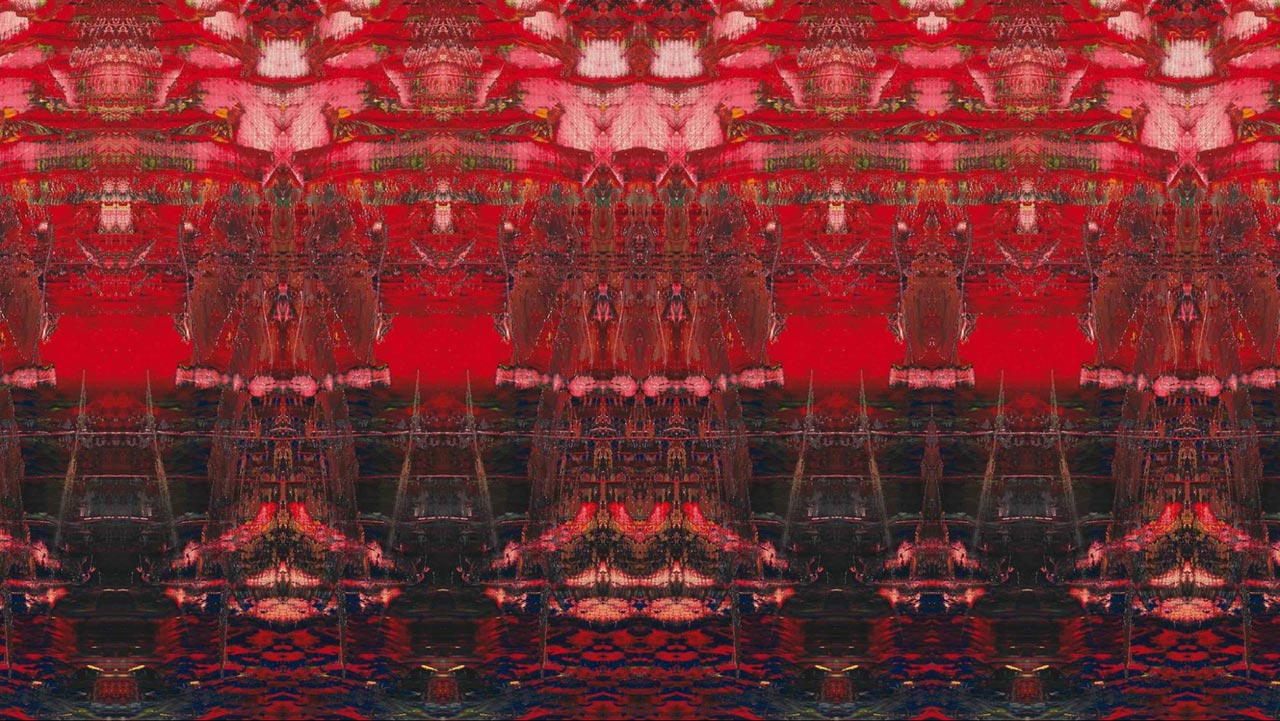
“Moving Picture (946-3)”
Film by Gerhard Richter & Corinna Belz
Music: Steve Reich
Montage: Rudi Heinen
© Gerhard Richter and Corinna Belz
Curated by Hans Ulrich Obrist and Alex Poots
“Moving Picture (946-3)”
Film by Gerhard Richter & Corinna Belz
Music: Steve Reich
Montage: Rudi Heinen
© Gerhard Richter and Corinna Belz
Curated by Hans Ulrich Obrist and Alex Poots
――ローンチ・プログラムとして、ゲルハルト・リヒターとスティーブ・ライヒによる 「Moving Picture (946-3)」(2026年11月6日、7日 東京・草月ホール)を選ばれたのはなぜですか?
黒澤 あれは、ハンス・ウルリッヒ・オブリストがプロジェクトしたときのプログラムを日本だったらどういう演奏家や曲が良いかと、チーム4人――マーティン・ゲルマン、住友文彦、石井さんとで話し合って決めました。このプログラムはいくつもバージョンがあって、私がニューヨークで観たときのバージョンは合唱がありました。座席のない場所に観客を入れて、その周りを合唱の人たちが動きながら歌うんです。あるところではハーモニーが厚くなったり、まばらなところではソロになったりするんですけど、それは観客の立つ位置を見ながら合唱が回るので、波のように変化する。偶然の余地がある作品でした。観客がその場に織り込まれていて、それを想像するアーティストはすごい。さっきの高山さんの話ね、身体を借りて、何かが憑依しながらコントロールをしていると指摘されるけれど、ところが受容する側も空っぽではないので、いろいろその場で変化が起きる。
高山 ずれてくる。
黒澤 そう。そこでなにがしかが起きてしまうんです。決して一方的に暴力的に乗っかられているわけじゃなくて、そこで反応が常に起き続けている。
高山 その人なりにまったく違ったものになるんですよ。だから、ヨーゼフ・ザイラーの問いに対する答えは、それでいい、ということになると思います。最初の一歩は暴力的かもしれない。でも最終的に観客はそれをずらしたり、自分のものにしたり、場合によってはそこから離れることもできるから。むしろ観客の可能性に賭けるというか。道を歩いても、一周したらいつの間にか全然違ったところに出てきちゃったということもよくあると思うので。それは僕が計算したり、デザインしたものではまったくなくて、それぞれの人が抱いているものが違う世界を用意してくれていると感じるんですよね。
黒澤 そうですね。
Q Kurosawa-san, why did you choose the performance of Moving Picture (946-3) by Gerhard Richter and Steve Reich for the No Centre’s launch at Sogetsu Hall in Tokyo on November 6 and 7, 2026?
HK We worked out the program as a team of four: Martin Germann, Fumihiko Sumitomo, me, and the gallerist Takayuki Ishii. We took the program Hans Ulrich Obrist had put together as our starting point and talked about which performers and pieces of music would work best in Japan. There are several versions of this program. When I saw it in New York, there was a choir. The audience stood in a space with no seats, and the singers moved around them as they sang. Depending on where you were standing, you might hear these rich harmonies, or just a single voice. The choir kept moving around the audience, watching where people were standing, so the sound kept shifting, almost like waves. There was room for chance. And the audience was woven right into the work. I think it’s amazing that an artist could come up with something like that. It reminds me of what you were saying earlier, Takayama-san. People might say you’re taking control of other people’s bodies, almost as though you were possessing them. But the people experiencing the work aren’t empty vessels, either. They bring something of their own, and that means all sorts of things can change right there in the moment.
AT Things start to shift.
HK Exactly. And something happens as a result. It’s not like the audience is just having something forced on them. They’re constantly reacting to what’s going on.
AT And it becomes something completely different for each person. So I think my answer to Josef Szeiler’s question would be, “Yes, and that’s fine.” The first step might be violent. But after that, the audience can take it in a different direction, make it their own, or even walk away. I guess it comes down to trusting what the audience can do. It’s like walking a loop. You end up right back where you started, but somehow you feel as though you’ve arrived somewhere completely different. I think that happens quite often in my work, and it’s certainly not something I’ve planned or designed. It’s what each person brings to the experience that opens up a different world for them.
HK Yes, I think so too.
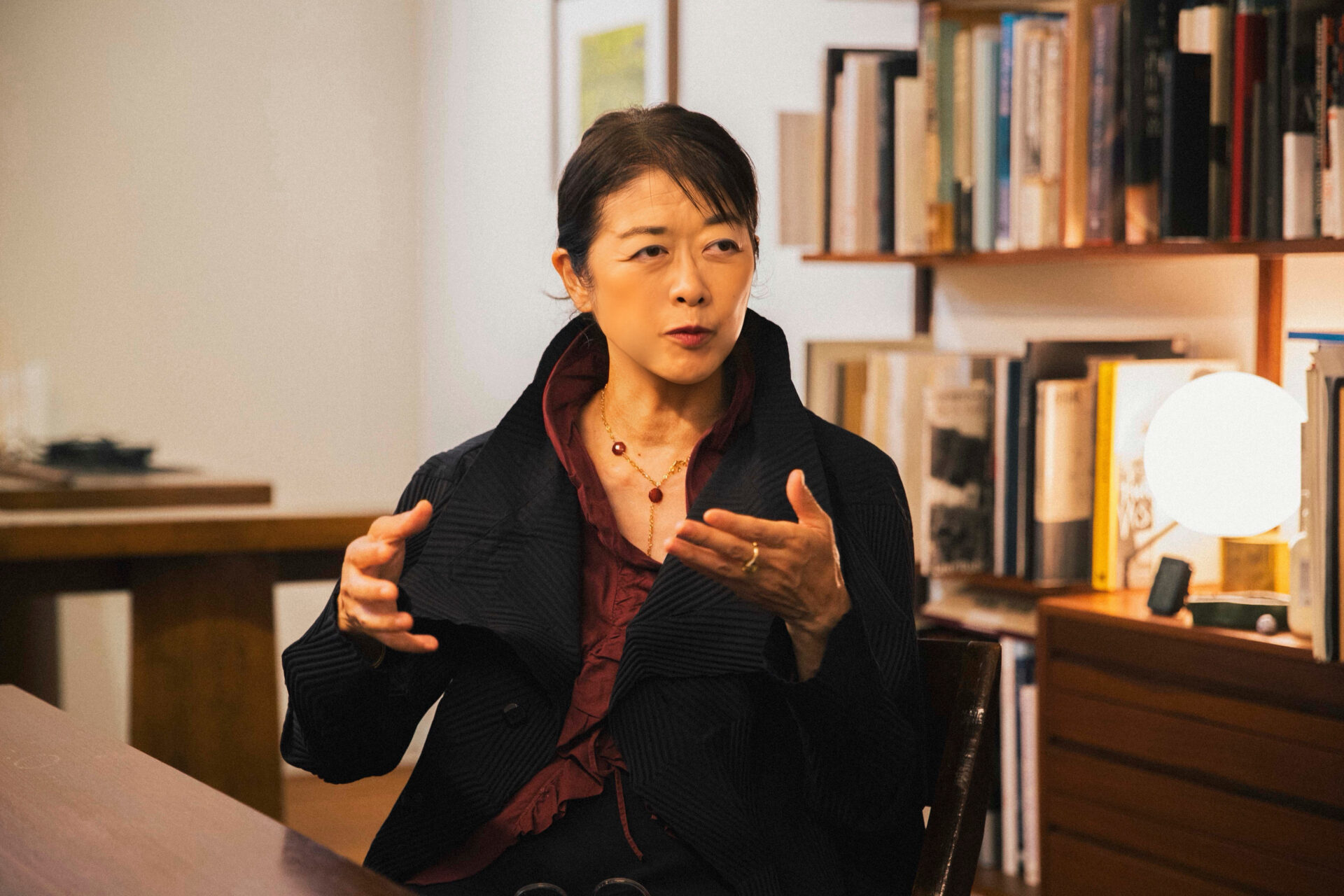
Photo: MOROKOSHI
Photo: MOROKOSHI
――今後のプログラムについてお聞かせください。
黒澤 今は10人ぐらいのアーティストに、高山さんもその一人なんですけど、声をかけながら3人のキュレーターが何か面白いことができそうかそれぞれにやっている感じですね。高山さん、本も出しませんか。
高山 あっ、いいですね。
黒澤 No Centreでは、アーカイブについてもう一度考えたいと思っています。誰かがセレクトして残していくという強い意志があると残っていくので、強い意志で残していくということをやろうと思っています。
――RAM CHANNELの対談で黒澤さんが「高山さんの作品は非常に優れた作品なのですが、お金で交換するマーケットでは今は認められないかもしれない。でも私は、今にお金みたいなことで測れない価値のほうが高くなるに決まっている、いずれいろんな価値は逆転するんじゃないかと思うんです。あるいは人間が死ぬときに気づくんじゃないかなと。代えられないもの、手放せないものへの愛情のかけ方が、毎日深くなっていく。だから私はそういうものに先行投資しようと思っているんです。」そうおっしゃっていた言葉が印象に残っています。
黒澤 人間は、結局皆、いずれ死んでしまうまでの時間をどう過ごすかということかなと思うんです。なぜ自分がこのアートの領域に関心を持ってるのかという理由は「わからなさすぎて面白い」ということがひとつと、もうひとつは今千円です、1億円ですという価値とは違うところに価値があるということを、なぜかアーティストといると信じられるところがあるからです。たくさん世の中に生み出される、たとえばテスラ300台みたいなものでは代え難い時間を過ごしてるという実感でしょうか。アーティストは、あまりにも極端に変わったことをしているから興味が湧く、そこから何か違う裂け目が見えることがあるんじゃないかなと期待して届けているんですね。アーティストに質問して、そうかと思って文章を書いたりするけれども、すごく正直に告白すれば、結局はよくわからないです。なぜそのような絵を描いたのかもわからないし、それが何かもわからない。つまり同じように私の目には見えないし、私の頭の中にはそのように像を結ばない。それが却っておもしろくて。高山さんの話も、どうしてそんなこと考えるのかなと思うし、でも聞いていておもしろそうだから、一緒にやりたい、でもいつも、どうしてかなと不思議に思いながらいます。
Q What programs do you have coming up?
HK Right now, we’re reaching out to around 10 artists, including you, Takayama-san, and the three of us curators are each seeing what we might be able to do together. And Takayama-san, how about putting out a book, too?
AT That’s a great idea.
HK At No Centre, I want to rethink what it means to archive things. Things survive because someone makes a conscious decision about what to keep and is determined to preserve it. I want us to bring that same determination to what we do.
Q Kurosawa-san, there’s something you said during a conversation on the online talk series RAM Channel, that’s really stayed with me: “Takayama’s work is incredible, but the market might not recognize its value yet, because it’s a market where everything is bought and sold. But I’m convinced that one day, things you can’t put a price on will matter more. I think our whole idea of what’s valuable might eventually be turned upside down. Or maybe it’s only when we’re dying that we realize what really matters. Our love for things that can’t be replaced, things we can’t bear to let go of, grows deeper every day. That’s why I want to invest in those things now, before their value is widely recognized.”
HK I suppose, in the end, it’s about how we spend the time we’ve got, because we’re all going to die someday. One reason art fascinates me is that there’s so much I don’t understand. Another is that somehow, being around artists makes me believe in a kind of value that has nothing to do with whether something costs about $10 or $1 million. It makes me feel like I’m spending my time on something that no amount of mass-produced stuff could replace, not even 300 Tesla cars. Artists do such extreme and bizarre things that I can’t look away. And I want to share their work because I hope it might open up a crack somewhere, a glimpse of something different. I’ll ask artists about their work and think, “Oh, I get it.” I might even go off and write about it. But the truth is, I’m still left wondering. Why did they paint that particular picture? What exactly is it? I just don’t see things the way they do, and I’d never come up with an image like that myself. And that’s what makes it so exciting. It’s the same when I listen to you, Takayama-san. I keep wondering, “What makes you think of things like that?” But when I hear what you have in mind, I can’t help wanting to join in. And all the while, I’m still wondering what makes you think the way you do.
Note
| The Fifty-three Stations of the Tokaido is a series of ukiyo-e woodblock prints created by Utagawa Hiroshige in the 1830s, depicting the 53 post towns along the Tokaido, the coastal road that connected Edo (modern-day Tokyo) and Kyoto. back | |
| 2. |
The Sixty-nine Stations of the Kisokaido is a series of ukiyo-e woodblock prints created by Utagawa Kuniyoshi in the 1850s, depicting the 69 post towns along the Nakasendo (also known as the Kisokaido), the road that connected Edo and Kyoto and took an inland route through the mountains of central Japan. back |

Photo: MOROKOSHI
Photo: MOROKOSHI
No Centreは、日本および世界各地で芸術実践と文化プログラムを展開する分野横断の移動型プロジェクトです。それぞれの場所に根差した歴史、物質、文化的背景と向き合い、表現の主題やその成立を支える条件を捉え、ジャンルにとらわれない多様なプログラムを企画/実施します。私たちの活動は、それを取り巻くコミュニティや、そこに作用する社会的・経済的な力、さらには人間の活動を超えて存在する素材や生態系にも目を向けます。こうした要素を創造の基盤とし、芸術と環境との関わりから新たな知や価値が生まれる可能性を探ります。
芸術の創造や出会いを美術館や劇場だけでなく、もっと多様な空間や時間の経験に根差したものではないだろうか。No Centreは、例えば1950年代後半から70年代にかけて音楽、映像、美術、舞台が一つの場所で出会っていた草月アートセンターのようにジャンルの区分を必要としない系譜を引き継いでいます。
芸術の制度は統合的で垂直的な語りによって、中心と周縁をつくりだしてきました。No Centreは、場所、ジャンル、文化を水平的に横断することで、流動的で柔軟なプログラムを実施します。
メンバーシップによる参加者に対して、作家の招聘/派遣、共同制作、記録の公開を通じて、互いの関心が往復する回路を設計します。また、完成した作品の提示だけでなく、トーク、公開リハーサル、ワークショップ、そして記録の継続的な公開を通じて、制作の過程を共有します。
No Centre is an interdisciplinary, itinerant project that develops artistic practices and cultural programmes in Japan and elsewhere in the world. In each location we engage with the histories, materials, and cultural conditions particular to that place, treating them both as subjects of artistic work and as the conditions that allow such work to come into being. The programmes we plan and realise are wide-ranging and not bound by genre.
Our work attends to the communities that surround it, to the social and economic forces acting within them, and to the materials and ecologies that exist beyond human activity. Taking these as the ground of creation, we explore how new forms of knowledge and value might emerge from the relation between art and its environment.
—
Might the making of art, and the encounters it occasions, be rooted not only in museums and theatres but in a far wider range of spatial and temporal experience? No Centre continues a lineage that had no need for the divisions of genre — the lineage of the Sogetsu Art Center, where from the late 1950s through the 1970s music, film, visual art, and performance met in a single place.
—
Artistic institutions have produced centres and peripheries through integrative, vertical narratives. No Centre moves horizontally across places, genres, and cultures, and works through programmes that remain fluid and adaptable.
—
For those who take part through membership, we design circuits along which interests travel in both directions: inviting artists and sending them out, co-producing work, and making documentation public. Beyond the presentation of completed works, we share the process of making through talks, open rehearsals, workshops, and the continuous release of documentation.
No Centre 1
Moving Picture (946-3) Reich/Richter
[日程]2026年11月6日[金]-11月7日[土]【全2回】 ※終了
No Centre 2
Avec Le Balcon, Lecture & Performance
シェーンベルク《月に憑かれたピエロ》を起点に、東京藝術大学の若手アーティストたちの発想や実践から生まれる新たな作品及びパフォーマンスの試演会を2027年1月に開催します。
メンバーシップ特典イベント
[Le Balcon × 松岡大]Croisements: Lecture & Performance
—
[日時]2027年1月11日(月・祝)14:00
[会場]東京藝術大学大学美術館(東京都台東区上野公園12-8)
[登壇者・出演者]ガスパール・キエジュマン(ル・バルコン)、アルフォンス・セマン(ル・バルコン)、松岡大 ほか
[主催]一般社団法人No Centre、東京藝術大学大学院国際芸術創造研究科
[参加申込]詳細及び申込は、メンバーシップページにてご確認ください。
関連事業:「Avec Le Balcon」試演会
フランスの音楽集団ル・バルコンのメンバーと山海塾舞踏手の松岡大を講師に迎え、音楽、身体表現、映像、美術など、異なる領域で活動する若手アーティストたちが協働し、約半年間にわたるワークショップと創作プロセスを重ねてきました。その成果を発表する試演会を、2027年1月10日(日)に東京藝術大学上野校地にて開催予定です。本試演会は、東京藝術大学大学院国際芸術創造研究科による若手芸術家育成プログラム「Avec Le Balcon」の一環として実施されます。
—
[日時]2027年1月10日[日] 17:00-19:00(予定)
[会場]東京藝術大学上野校地
[入場料]無料
[主催]東京藝術大学大学院国際芸術創造研究科
[協賛]一般社団法人 No Centre
[助成]文化庁文化芸術振興費補助金(舞台芸術等総合支援事業(芸術家等人材育成))、独立行政法人日本芸術文化振興会
[URL] https://alb.geidai.ac.jp/
[お問い合わせ]alb@ml.geidai.ac.jp
No Centre 3
シネマ|レオノール・テレス/ポール・ヴァーホーヴェン
[企画]澤隆志
[主催]一般社団法人No Centre
[協力]駐日ポルトガル大使館、カモンイス・ポルトガル文化センター、駐日オランダ王国大使館
[会場]未定
—
2027年4月開催予定
→ プログラムの詳細は、No Centre WEBサイトにてお知らせします。
[メンバーシップについて]https://www.no-centre.art/membership/
[Follow Us / 公式 Instagram]@no_centre.art
No Centre 1
Moving Picture (946-3) Reich/Richter
[Date] November 6 (Fri) – 7 (Sat), 2026 [2 performances] *Ended
[URL] https://www.no-centre.art/
No Centre 2
Avec Le Balcon, Lecture & Performance
In January 2027, we will hold a preview of new works and performances that emerging artists at Tokyo University of the Arts have conceived and developed with Arnold Schoenberg’s Pierrot lunaire as a starting point.
Member-Exclusive Event
[Le Balcon × Dai Matsuoka] Croisements: Lecture & Performance
[Date] January 11 (Mon, National Holiday), 2027, 2:00 p.m.
[Venue] The University Art Museum, Tokyo University of the Arts (12-8 Ueno Park, Taito-ku, Tokyo)
[Speakers / Performers] Gaspard Kiejman (Le Balcon), Alphonse Cemin (Le Balcon), Dai Matsuoka, and others
[Organized by] No Centre, Graduate School of Global Arts, Tokyo University of the Arts
[Registration] Details and booking via the Membership page.
Related Program: Avec Le Balcon Preview Performance
Over approximately six months, emerging artists working in different fields such as music, movement, moving image, and the visual arts have taken part in workshops and developed work together under the guidance of members of the French musical ensemble Le Balcon and Dai Matsuoka, a dancer with the butoh company Sankai Juku. They will share the results of their collaboration at a preview performance scheduled for Sunday, January 10, 2027, at the Ueno Campus of Tokyo University of the Arts. The event is part of Avec Le Balcon, a development program for emerging artists run by the Graduate School of Global Arts, Tokyo University of the Arts.
[Date] January 10 (Sun), 2027, 5:00–7:00 p.m. (schedule subject to change)
[Venue] Ueno Campus, Tokyo University of the Arts
[Admission] Free
[Organized by] Graduate School of Global Arts, Tokyo University of the Arts
[Sponsored by] No Centre
[Supported by] Agency for Cultural Affairs, Government of Japan, Subsidy for the Promotion of Culture and the Arts (Performing Arts General Support Project – Artist Training Program); Japan Arts Council
[URL] https://alb.geidai.ac.jp/
[Contact] alb@ml.geidai.ac.jp
No Centre 3
Cinema: Leonor Teles / Paul Verhoeven
[Curated by] Takashi Sawa
[Organized by] No Centre
[In cooperation with] Embassy of Portugal in Japan; Camões Portuguese Cultural Centre; Embassy of the Kingdom of the Netherlands in Japan
[Venue] TBA
[Date] Scheduled for April 2027
—
Further details of the program will be announced on the No Centre website.
[About Membership] https://www.no-centre.art/membership/
[Follow Us / Instagram] @no_centre.art
黒澤浩美
—
ボストン大学(アメリカ合衆国)卒業後、水戸芸術館(水戸)、草月美術館(東京)を経て2003年金沢21世紀美術館建設準備室(金沢)に参加。建築、コミッションワークの企画設置に関わる。2004年の開館記念展以降、「オラファー・エリアソン」「フィオナ・タン」「ジャネット・カーディフ&ジョージ・ビュレス・ミラー」「マーク・マンダース」など、国内外で活躍する多数の現代美術作家の展覧会を企画。ミュージアム・コレクションの選定や、学校連携など、多様なニーズに向けた教育普及プログラムも企画実施。2011年City_Net Asia(ソウル、韓国)、2017年OpenArt(エレブルー、スウェーデン)、2018年東アジア文化都市(金沢)にて総合キュレーターを務める。2025年4月より株式会社ヘラルボニーCAO(Chief Art Officer)、Rabbit Hole(公益財団法人石川文化振興財団)ディレクター。
高山明
—
2002年、演劇ユニットPort B(ポルト・ビー)を結成。実際の都市を使ったインスタレーション、 ツアー・パフォーマンス、社会実験プロジェクトなど、現実の都市や社会に介入する活動を世界各地で展開している。近年で は、美術、観光、文学、建築、都市リサーチといった異分野とのコラボレーションに活動の領域を拡げ、演劇的発想・思考によって様々なジャンルでの可能性の開拓に取り組んでいる。主な作品に「ワーグナー・プロジェクト」(横浜、大分、フランク フルト)、「マクドナルド放送大学」(フランクフルト、ベルリン、東京、金沢、香港、ブリュッセル)、「東京修学旅行プロジェ クト」、「ヘテロトピア」(東京、アテネ、台北、ベイルート他)、「国民投票プロジェクト」(東京、福島、ウィーンほか)、「完全避難マニュアル」(東京、フランクフルト)など多数。また、横浜トリエンナーレ(2014年)、銀座メゾンエルメス(2015 年、東京)、森美術館(2016年、東京)、シャルジャ・ビエンナーレ(2017年)、シドニー・ビエンナーレ(2018年)などの展覧会にも参加。2022年1月に金沢21世紀美術館にてワーグナー・プロジェクトを開催。
Hiromi Kurosawa
—
After graduating from Boston University (USA), Hiromi Kurosawa worked at the Contemporary Art Gallery, Art Tower Mito (Mito) and the Sogetsu Art Museum (Tokyo). In 2003 she joined the preparatory office for the 21st Century Museum of Contemporary Art, Kanazawa, where she worked on the building and on planning and installing its commissioned works. Since the museum’s inaugural exhibition in 2004, she has curated exhibitions of many contemporary artists working in Japan and internationally, including Olafur Eliasson, Fiona Tan, Janet Cardiff & George Bures Miller, and Mark Manders. She has also selected works for the museum collection and developed education and outreach programs for a wide range of audiences, including partnerships with schools. She served as chief curator of City_net Asia 2011 (Seoul, South Korea), OpenArt 2017 (Örebro, Sweden), and Culture City of East Asia 2018 Kanazawa. Since April 2025 she has been Chief Art Officer (CAO) of HERALBONY Co., Ltd. and Director of Rabbit Hole (Okayama), Ishikawa Cultural Promotion Foundation.
Akira Takayama
—
Takayama formed the theater company Port B, and since then has been producing installations, touring performances and social experiments utilizing urban spaces as a way of engaging with cities and societies across the world. In recent years, collaboration with those from other fields including visual art, tourism, literature, architecture, and urban research has seen the scope of his practice broadening further, and he has applied his theatrical philosophy and methodology to opening up new possibilities in a variety of fields. Major works include the Wagner Project (Yokohama, Oita, Frankfurt), McDonald’s Radio University (Frankfurt, Berlin, Tokyo, Kanazawa, Hong Kong), Heterotopia (Tokyo, Athens, Taipei etc.), Compartment City – Vienna (Vienna), Referendum Project (Tokyo, Fukushima, Vienna etc.), and The Complete Manual of Evacuation (Tokyo, Frankfurt). He has participated in major exhibitions, such as Yokohama Triennale (2014), Maison Hermès (2015, Tokyo), Roppongi Crossing (2016, Mori Art Museum, Tokyo), Sharjah Biennial (2017), Biennale of Sydney (2018) and WAGNER PROJECT (2022, 21st Century Museum of Contemporary Art, Kanazawa).
撮影 MOROKOSHI
編集 新田京子
翻訳 クリストファー・スティヴンズ
Photo: MOROKOSHI
Editor: Kyoko Nitta
Translation: Christopher Stephens

